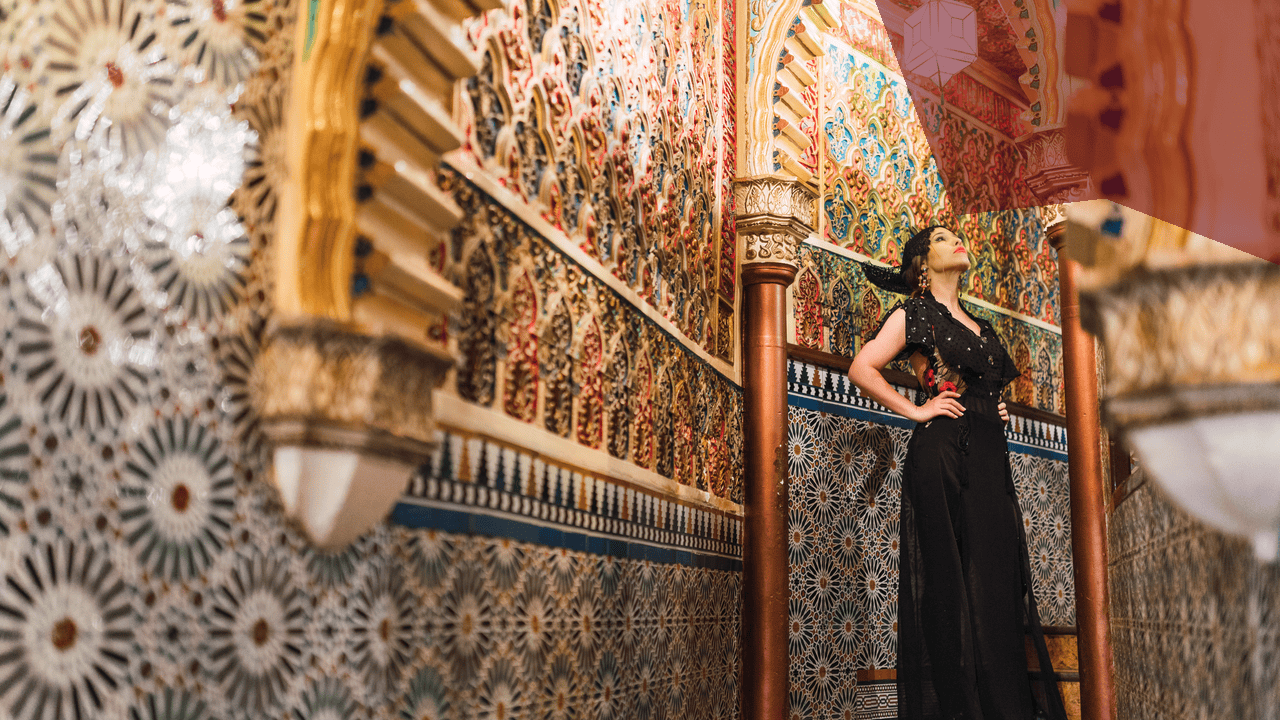
The Spanish nobility: grandeur, tradition and history
The historical origins and the Iberian kingdoms
Spanish nobility evolved from the medieval structures of power and military conflicts during the Reconquista in the Christian kingdoms of the Iberian Peninsula. This lengthy process resulted in a multifaceted and deeply rooted aristocracy that played a formative role in the history and culture of Spain over the centuries.. The traditional hierarchy of the titled Spanish nobility includes ascending ranks. baron (Baron), vizconde (Visegraf), Count (Graf), Marqués (Markgraf), duque (Herzog) as well as at the top the prince (Prince). These ranks formed the institutional framework on which the power of the great families was based..
An absolutely unique and elevated position within this system is occupied by the historical The greatness of Spain (the greatness) one. It is a special dignity that can be closely associated with certain Adelstiteln's, but is not conceptually and legally identical to the title itself.. Historically, the Grandezza expressed the closest protocol-based proximity and the highest rank to the royal household.. The transfer, inheritance and registration of titles and Grandezza are still subject to strict government regulations and controls.. Following modern legal reforms, in Spain the absolute primogeniture principle applies in principle to inheritance, whereby the eldest child, regardless of gender, can inherit a title, unless during the monarch’s lifetime transfers to descendants are made with the consent of the monarch..
The Granden, the Hidalgos and the change in the 19th century
Over the centuries, Spanish nobility was inextricably linked to land ownership, military service, colonial administration, and high positions in the royal court.. In addition to the titled nobility, there also existed the Hidalgos large groups of the lower, mostly untitled nobility, to which the Knights and Escuderos counted. The group of pure-blood nobility – the Hidalgos of Blood – could only be acquired through noble lineage and could not be granted by the King. Although the Hidalgos formed a numerically significant population group, their nobility was of little legal significance, as they possessed no titles and gradually lost their privileges in the late 18th and early 19th centuries.. The descendants of these historical groups have developed in modern times, among other things, in the Real Association of Hydrogeologists of Spain joined together to document the observance of the historical law of nobility.
In the 19th century, the traditional structures of Spanish nobility came under strong pressure. Liberal constitutional reforms – especially from 1837 onwards – abolished all the privileges, taxes, and tax exemption enjoyed by the nobility, and placed all citizens under the same legal system.. A particularly severe economic blow was the abolition of the majorettes in 1855, which led to numerous noble families, including many grandees, being left without secure financial means and losing their wealth.. Nevertheless, historical and societal designations persisted Title of nobility, even though the political changes in Spanish history – such as the proclamation of the republics in the 19th and 20th centuries or the dictatorship – repeatedly postponed and restored their legal recognition..
The presence of the Spanish aristocracy
Spain is today a parliamentary hereditary monarchy, in which the 1978 constitution guarantees the general principle of equality, but at the same time leaves the king the constitutional right Title of nobility to grant titles.. The awarding and management of titles are subject to strict government administration by the Ministry of Justice, and every official title must be applied for and confirmed by the legitimate heir..
Due to the historical practice of some families inheriting several titles simultaneously, enormous chains of titles sometimes emerged in Spain; a famous historical example was the 18th Duchess of Alba, which united a dozen titles and dignities during her lifetime.. Until the present day, the rich history of Spanish nobility is evident in the form of magnificent palaces, significant art collections, archives, and foundations.. A traditional one Title of nobility Although it no longer has political privileges in Spain today, it is cherished as a treasured historical heritage and as an expression of family tradition..
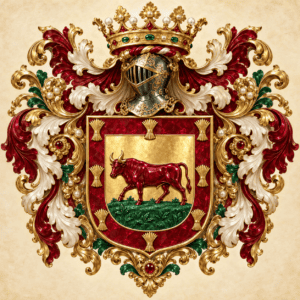
Duke of Gandía
99,90 €
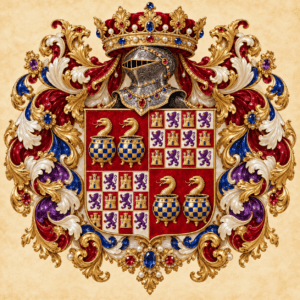
Duke of Nájera
24,90 €
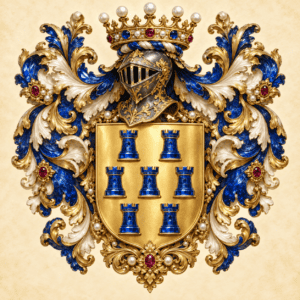
Viscount of Rocabertí
39,90 €