
The French nobility: Glory, power and the legacy of the Ancien Régime
The structure of French nobility in the Ancien Régime
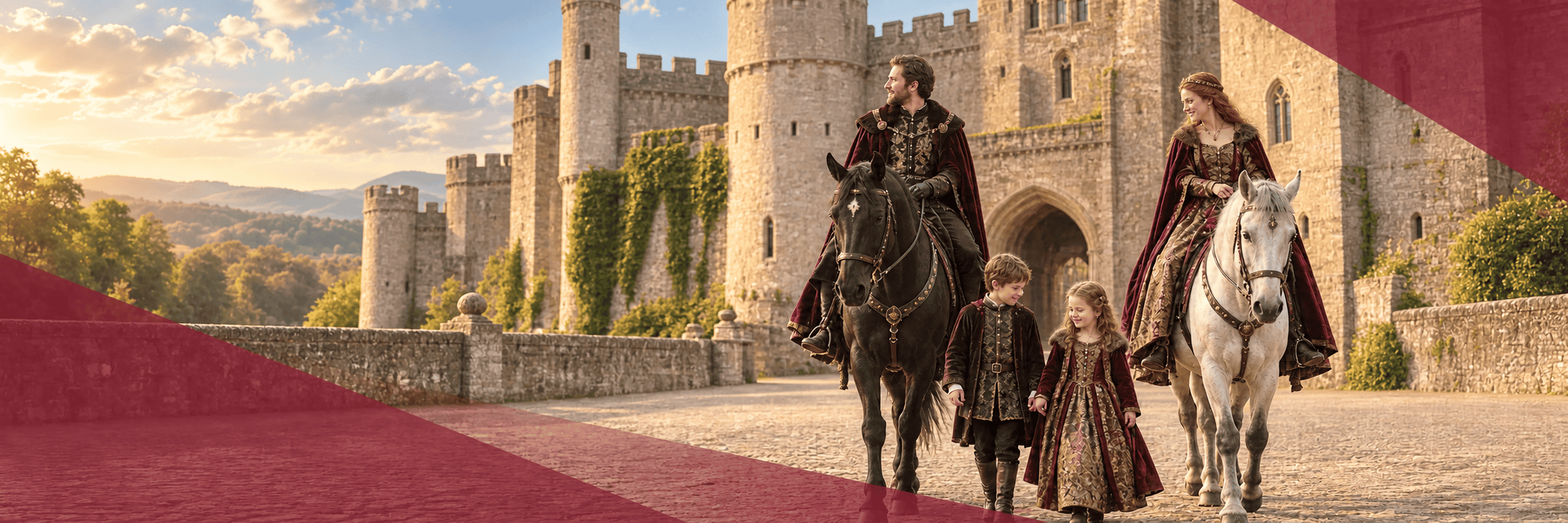
Before the revolutionary upheaval of 1789, the French nobility was by no means a homogeneous, closed group, but a multifaceted class organized according to strict ranks and privileges.. When the Second Rank—standing directly behind the clergy and far above the Third Rank—based its elevated status on ancient origins, extensive land ownership, the exercise of royal offices, and exclusive special privileges.. At the absolute top of this aristocratic hierarchy stood the historical Pairie of France, which originally encompassed a small, select circle of the most powerful and influential houses. The members of the Pairie enjoyed significant protocol privileges, took on a central advisory role for the Crown, and were deeply involved in the state's decision-making processes..
Below the Pairie, the nobility divided into various traditional ranks that shaped the social structure: the duke (Herzog) as the owner of large estates and often considerable wealth, marquis (Markgraf), the Count (Graf), the vicomte (Visegraf) as well as the baron (Baron) and the group of chivalrous dignitaries. Historically, this French nobility was strongly influenced by the principle of first-born (Primogeniture) characterized. Unlike some other European countries, this system was designed to keep and increase the ownership of land, castles, and historical names within the family..
In addition, traditionally there was a distinction between the old sword nobility (noblesse d’épée), whose roots lay in the knightly feudalism of the Middle Ages, and the office or letter nobility (noblesse of robe). The latter arose through the acquisition of certain state, juridical or administrative offices associated with the elevation to the nobility, which also enabled deserving citizens and scholars to rise to the upper ranks of the aristocratic class..
The Palace of Versailles and the center of power
A unique chapter in the history of European nobility is the era of absolutist court life, especially under the reign of King Louis XIV, the „Sun King“, who ruled from 1643 to 1715.. Louis XIV transformed the magnificent palace of Versailles from a simple hunting lodge into the undisputed political, cultural, and social center of France..
The King masterfully managed to bind the ambitious high nobility through an elaborate system of court offices, pensions, protocol rules, and constant presence at the royal court.. The polite ceremonial, glamorous balls, theatrical performances and ballets were not only expressions of noble splendor but also a targeted instrument of power concentration.. The permanent presence in Versailles neutralized potential regional unrest or power struggles among the nobility. Nevertheless, the idea is too narrow; the entire French nobility lived exclusively in Versailles; numerous nobles continued to operate their regional estates, manage local territories, or serve as officers in the royal military, thereby maintaining the connection between provincial roots and central court culture..
Culture, patronage and the fascination of historical titles
The era of the Ancien Régime was inextricably linked in France to an unprecedented flowering of art, architecture, literature, and science. The noble elite acted as important patrons and promoted outstanding personalities such as Molière, Racine, and Lully, creating a cultural heritage of European stature that continues to influence today..
The fascination that emanates from this glorious era, the historical ranks and the traditional European Adelstitelnobility, is undiminished even in the present day. Historical designations Coat of arms and noble attributes convey a sense of timeless elegance, historical depth and exclusive style. Today, those who are interested in the fascinating world of historical nobility or who, in the context of hobbyist activities and genealogical representation, seek to acquire a noble name or a historical Title of nobility (as transmitted from French tradition) those who wish to cultivate or acquire a connection with this historically rich European era. Engaging with the historical houses of France allows us to keep the aesthetics, cultural aspirations, and nobility of a bygone era alive, completely independent of modern political structures.
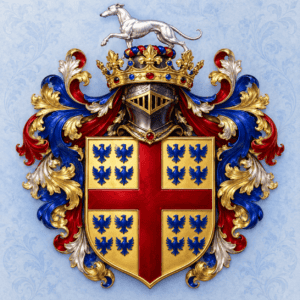
Duke of Montmorency
89,90 €
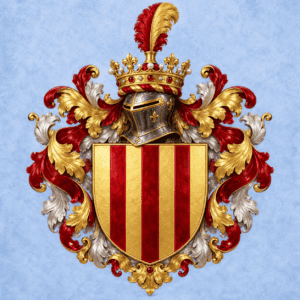
Count of Foix
49,90 €
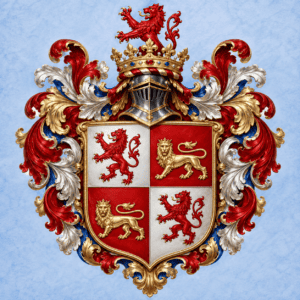
Count d’Armagnac
59,90 €
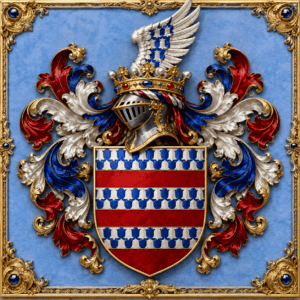
Baron of Coucy
129,90 €
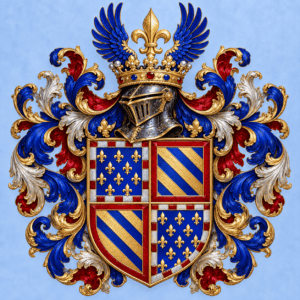
Baron of Burgund
64,90 €
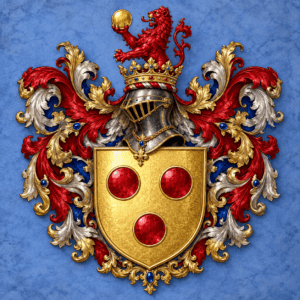
Knight of Boulogne
44,90 €