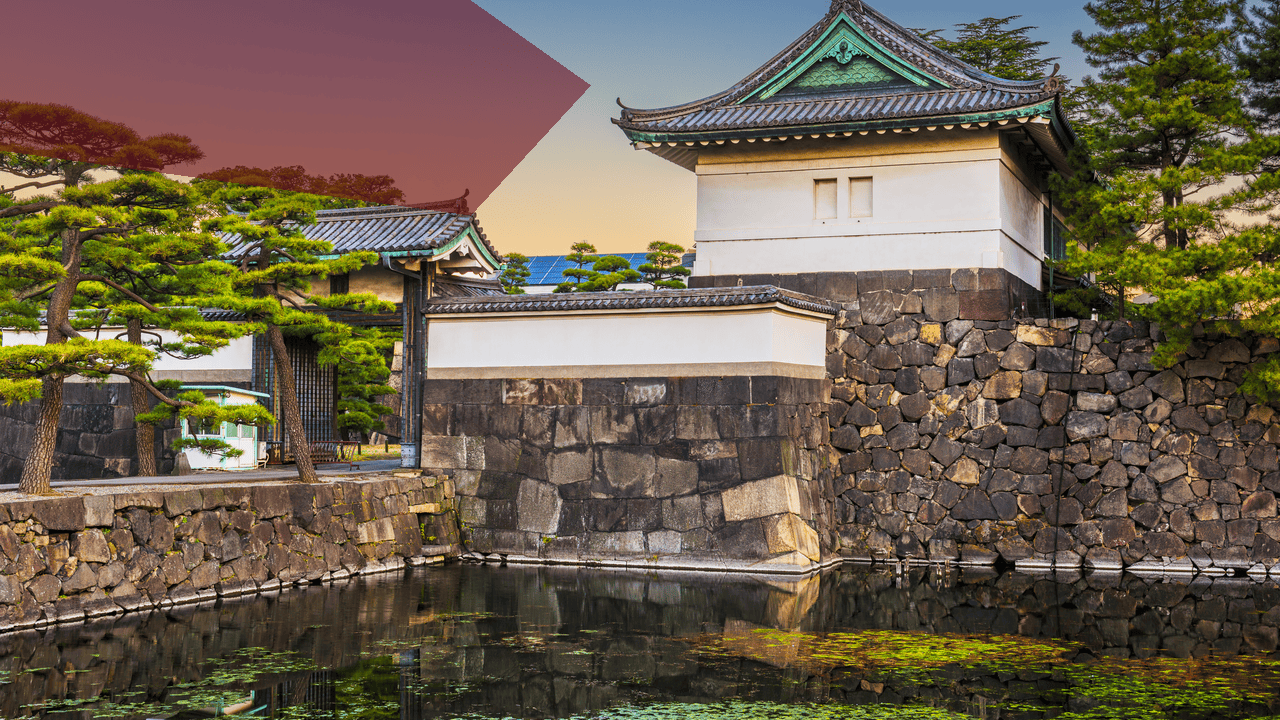
The Japanese monarchy
The Imperial House and the Historical Tradition
The Japanese monarchy is one of the most traditional and enduring institutions in the history of the world.. For over one and a half millennia, the country has been continuously ruled by an imperial dynasty that, according to traditional and centuries-old tradition, has continued without any break in succession.. The imperial family traces its lineage in this traditional context to the legendary Emperor Jimmu.. Although this early mythological tradition does not meet the strict criteria of modern historical source criticism, However, as a cultural and spiritual foundation, it has developed an invaluable identity-forming force over the centuries. Historically, what is particularly secure is the enduring institutional and religious anchoring of the Imperial Court, which in the fabric of Japanese society always formed a superior spiritual framework.
However, over vast stretches of Japanese history, real political power was by no means linear or centralized with the ruler.. During the Kaiser (TennōAs the spiritual head and supreme priest of Shintoism, the actual power of government was temporarily located elsewhere. In the 12th century, with the first Shogun, Minamoto no Yoritomo, established a new form of military rule.. In the following centuries, alternating military rulers, the so-called Shōgune, dominated the affairs of the state.. The imperial court in Kyoto retained, in this era, primarily a highly revered religious, ceremonial and dynastic significance.. At the same time, noble families emerged as powerful landowners, founded rural settlements and rallied regional vassals to their side, who swore allegiance to them..
Transformations in the changing eras: From feudalism to the Kazoku system
With the beginning of the Edo era in 1603 under the rule of the Tokugawa Shōgunate, the position of the court aristocracy changed drastically.. Many members of the traditional upper class stepped down from direct government positions and left the administration to the military structures.. As a result, the nobility came under increasing pressure; its social role was largely limited to representative duties, which continuously reduced its direct political influence over generations.. The Emperor himself, however, remained untouched at the top of the entire system – even though he was politically powerless, he embodied the moral and traditional authority of Japan for the population..
The sweeping modernization of the country in the late 19th century ultimately brought about a complete redesign of the social order. Following the Meiji Restoration of 1868, which sealed the end of the Shōgunate, the Japanese leadership sought to measure itself internationally with the major European powers. In the process, Japan created in 1884 a modern, European-oriented aristocratic system of government known as the Kazoku. This system led to the old feudal aristocracy (Kuge) and the important feudal warrior and landholding families (Daimyo) together in a uniform structure.
That Kazoku-The system divided the new high nobility into five European-inspired ranks – from princes and margraves to counts, viscounts and barons. These ranks were tied to specific duties, protocol rights, and access to exclusive land ownership and special status.. However, according to historical records, this system was strictly linked to the direct lineage line, which essentially denied outsiders access..
The profound change after 1945 and the present
A historic turning point of global significance was the end of World War II. The Allied occupation power, led by the United States, pressed for a fundamental democratization of the Japanese state. The new post-war constitution of 1947 stripped the Emperor of any political governing power and instead defined him as a mere „symbol of the state and the unity of the people“.“. At the same time, the traditional institution Kazoku-Complete abolition of the nobility system from the constitution, which also extinguished the hereditary titles and the associated legal privileges.
The Japanese Imperial House has continued to exist to this day despite these profound political changes and enjoys exceptional high esteem among the general population.. The members of the imperial family today perform purely representative, diplomatic, scientific and cultural tasks.. Through this gentle change, the institution has succeeded in integrating its millennia-old historical tradition into a modern, democratic constitutional order and in continuing to be a vibrant part of Japanese identity..
Hatamoto of Kai
119,90 €
Count of Mino
74,90 €
Shogun to Taishi
129,90 €