The nobility in the Benelux: Belgium, the Netherlands and Luxembourg
A closely intertwined historical foundation and national paths
The Benelux countries – Belgium, the Netherlands and Luxembourg – share a fascinating, centuries-long history of close ties.. Formed by the eras of Burgundian rule, Habsburg influence and the Dutch General States, these regions for a long time formed a common geopolitical and cultural space.. Nevertheless, after their differentiation and self-conception as independent states, the three modern states developed very distinct forms of monarchy, social organization, and noble law.. While in Belgium the royal granting of titles still plays an active role today, the system in the Netherlands is strictly regulated by law, and Luxembourg is characterized by its own grand ducal dynasty..
Belgium: Constitutional monarchy and active conferral of rights
Belgian nobility has its deep roots in the feudal counties and duchies of the Middle Ages, which once divided the territory of today's country.. Even under the subsequent Burgundian and Habsburg rule, the noble families remained an influential and powerful component of the political and social order.. After Belgian independence and the establishment of the constitutional monarchy in 1830 – whose first king, Leopold I., came from the German house of Saxe-Coburg and Gotha – the noble class underwent a state reorganization.
Belgian law distinguishes between two main types of nobility: hereditary nobility, where the title is inherited by all descendants, and personal nobility, which is passed on to the next generation according to the law of primogeniture.. Until the First World War and the founding of the modern state, the nobility was closely linked to political influence, which however largely declined with the introduction of universal suffrage and the social upheavals of the world wars.. Nevertheless, to this day it is a traditional prerogative of the King of Belgium to grant non-noble persons Title of nobility a title..
The Belgian title system is extremely multifaceted and includes the unnamed nobility, the Junker (Jonkheer or Ecuyer), the Knight (Ridder or Chevalier), the Baron, the Burgrave (Burggraaf or Vicomte), the Count (Graaf or Count), the Marquis and the Prince (Prince or Prince). Historically, there were also Duke titles in the Belgian system, although in the modern constitution no ruling Dukes or independent princely houses are enshrined within the country.. The Belgian King himself is descended from the House of Saxe-Coburg and Gotha, And although he no longer exercises direct political power, he serves as a representative head of state., while the traditional Title of nobility in Belgium can still be awarded by the Crown.
The Netherlands: From the urban patrician class to the legally regulated nobility
In the Netherlands, the nobility was historically divided into the rural land nobility and the powerful urban patriciate.. Together, these groups dominated political affairs until in 1795, with the Batavian Republic, the old system and privileges were abolished.. Although Louis Bonaparte made attempts during his brief reign as King of Holland to return the titles to the nobility, this was strongly restricted by Napoleon Bonaparte.. With the constitutional reform of 1848 and later laws, noble privileges were finally eliminated, and the Dutch monarch lost the right to grant large-scale nobility..
Today, Dutch law recognizes a strictly regulated nobility, which is kept in an official nobility register.. The system distinguishes between the titled nobility and the untitled nobility.. Traditional Dutch noble ranks include the Junker (Jonkheer), the Knight (Ridder), the Baron, the Burgrave (Burggraaf), the Count (Graaf), the Duke (Hertog) and the Prince (Prince). Particles like „van“ or „de“ are very common in the Netherlands and are also found in bourgeois families.. They therefore in no way necessarily indicate a noble status.. New appointments to the nobility are now only made by the King in absolute exceptional cases., This has resulted in the historical nobility in the Netherlands today having primarily family law and historical-cultural significance..
Luxembourg: The Grand Duchy and the House of Nassau
The Grand Duchy of Luxembourg has a history dating back to the 10th century, which began with Siegfried von Luxemburg as the first count.. Over the centuries, the country's sovereignty changed hands between Burgundian, Habsburgian, French and German rulers, before Luxembourg became an entirely independent state in 1890..
In Luxembourg, the concept of nobility differs fundamentally from that of its neighbors: In the narrower sense, the Grand Ducal family is almost exclusively understood as nobility.. Outside the ruling dynasty, there are no more indigenous princely or ducal families in modern Luxembourg.. The constitutional right Title of nobility to grant pardons is reserved solely for the Grand Duke or the Grand Duchess.. In practice, this right is exercised extremely sparingly and is essentially limited to family dignifications within the narrower circle.. A prominent historical example of this is the decision of Grand Duchess Charlotte in 1951 to elevate her relative Gustaf Lennart Nicolaus Paul Bernadotte to the title of Count and make him the „Comte de Wisborg“.. The ruling Nassau House is inextricably linked to the Luxembourgian identity., and while the political power lies with the elected government, The Grand Ducal Family continues to represent the country in a representative manner..
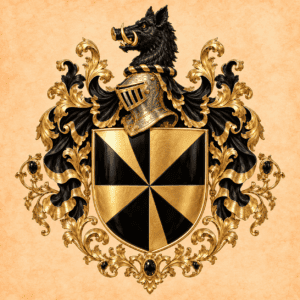
Baron of Loudon
54,90 €
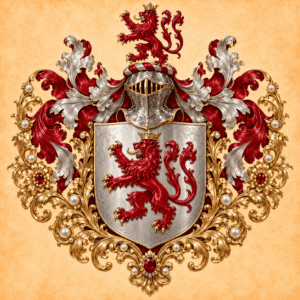
Duke of Valkenburg
24,90 €
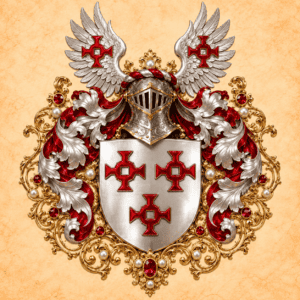
Count of Montfoort
24,90 €