Title of nobility |Ranking
Duke, Prince, Count or Baron: A single word can give a name a completely different effect. In addition, suffixes such as „von“, „zu“ or „von und zu“ make the origin, place of residence and possessions sound in just a few syllables. A Title of nobility title is therefore not just a rank; it is a small linguistic composition.
Historically, these forms were by no means interchangeable. They denoted very different positions within a hierarchically organized society. A duke had different duties and rights than a count, a „to“ could express a connection to a present seat, and a „of“ referred to ancestry or family names.
Today’s personal selection is not about restoring a historical ranking. What matters are the sound, style, and the story you want to connect with your title. This page explains the differences openly and clearly—so that you not only know which title sounds impressive, but also why.
Three things that are often confused with each other
Those who Title of nobility speak often mean more than one level at the same time. For a clear overview, a simple distinction helps:
- The rank refers to the historical rank, such as duke, prince, count or baron.
- The form of the name connects rank and personal name, for example „Graf Max von Falkenstein“.
- The title of nobility is a component such as „from“, „to“ or „from and to“, which could reveal a certain development within historical names.
In addition, there are Addressing like „Your Grace“ or „Your Highness“. They were part of courtly and social conventions, but are not identical with the title itself. A prince remained a prince even when no one had time for a fully formed address.
Historical ranking – why not every title meant the same thing
There was no single, identical ranking list of European nobility that was applicable everywhere and at all times. Rich families, kingdoms, and regions developed their own rules. Titles could be inherited, granted, tied to an office, or associated with a specific territory. Even similar ranks had very different political significance depending on the era.
As a rough guide, emperors and kings were at the forefront of monarchical orders. Below them, various princely ranks followed in the German-speaking area, followed by earlly and free-lordly forms, knights, and the so-called untitled nobility. Within these groups, there were also gradations, special forms, and regional peculiarities.
The ranking therefore does not tell a simple ladder on which each title stands exactly one step higher or lower. It is rather a historical map. Those who look more closely discover imperial princes, feudal lords, landgrants, margraves, Pfalzgrafen, and numerous forms whose actual influence depended far more on time, possession, and the political environment than solely on the title itself.
A rough guide
- Emperor and King
- Elector, Archduke and Grand Duke
- Duke
- Prince
- Markgraf, Landgraf and Pfalzgraf
- Count
- Baron and Herr
- Knights, nobles and unnamed nobility
This overview is deliberately simplified. The complete historical context always depends on the country and the era.
Emperor, King and Elector – Titles at the Top of the State Order
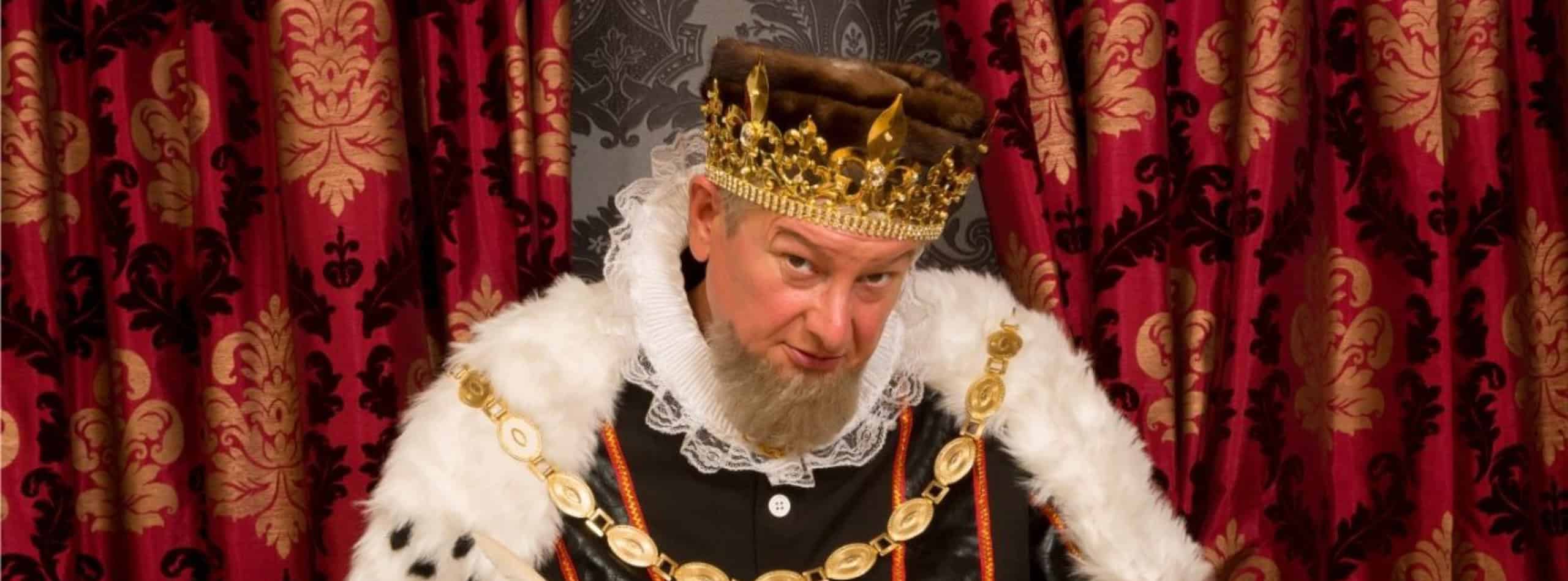
Emperors and kings were not mere ranks of nobility; they were titles of royalty. They represented the top of a kingdom or empire and were associated with state sovereignty. Precisely for this reason, they are fundamentally different from a personal title Title of nobility. A modern title purchase does not make anyone the head of state – and fortunately, it also eliminates the need to write a coronation speech.
The Electorate played a special role in the Holy Roman Empire. The Electorates formed a small circle of powerful imperial princes who had the right to choose the Roman-German King. The word „Elector“ in this context comes from the word „küren“, which means to choose. The title therefore not only expresses high rank but also a very specific political function.
Erzherzog was primarily associated with the House of Habsburg and Austria. Grand Duke referred to the ruler of a grand duchy. Both terms sound like an extension of the title of the duke, but they arose within specific dynastic and state contexts. Historical titles cannot always be neatly sorted from „big“ to „even bigger“.

The medieval hierarchy was by no means a rigid, peaceful framework, but often a highly absurd, driven by vanity and bizarre formalities minefield.
Behind the so-called precedent dispute lay a veritable diplomatic nightmare, which often ended in outright fistfights. Since the reputation of an aristocrat was directly measured by who entered a room first, who sat closest to the monarch, or whose carriage was at the head of the convoy, envoys blocked the city gates for hours during solemn processions. No one wanted to give the other even a millimeter of the right of way, because surrendering before a united army would have meant a permanent loss of rank for the entire dynasty. If good-natured persuasion did not work, the riders would simply pull out their whips or deliberately twist their stirrups to stop the rival. In royal banquets, such arrogance regularly escalated into outright fistfights with flying pewter mugs, simply because two counts claimed the same seat next to the ruler at the same time.
In the Holy Roman Empire, the law of the imperial prefects led to even more bizarre practices, as the most powerful men defined their superior status over seemingly trivial servant jobs in the imperial court. At the coronation ceremonies in Frankfurt, the King of Bohemia was adamant that, as the royal butler, he himself fill the cup with the Emperor’s wine. The Pfalz governor in Rhine served the food as a butler, the Duke of Saxon knight as an archer with a silver measure of grain, and the Margrave of Brandenburg carried a wash basin and linen cloth as the imperial chamberlain. These symbolic hand-holding services were so eagerly sought that decades of feuding broke out over them. No other prince would ever have dared to offer the emperor an empty cup of water without being asked, for that would have been considered a grave insult and would have sparked a serious crisis in the state.
Those at the very top read their social status directly from their feet – and that was through the absurd dimensions of the tassel shoes, which were also known as Poulaines. Around 1360, meticulous dress codes regulated exactly to the centimeter who was allowed to walk the streets with spikes protruding from their shoes. A simple citizen had to settle for a cap no longer than half a foot, while a baron could already reach all the way to the ankles, and princes or kings wore lace that was more than twice their actual shoe size. Because with lace of up to sixty centimeters, one could only waddle like a duck, they used walrus legs, chains, or silk ribbons that were tied directly under the knees. Even when dancing, the fabric tubes caused embarrassing belly landings in front of the aristocratic ladies, and in serious combat, the noble knights had to quickly cut off their status symbols with the sword in order not to stumble over their own prestige.
Even the hunting, by far the most beloved pastime of the nobility, was hierarchically censored down to the smallest detail – especially by the strict privilege of bear hunting. The legendary English Boke of Saint Albans The law laid down exactly which birds of prey were allowed to land on which hands. The eagle was the prerogative of a king; a king wore the majestic golden eagle; a count had to make do with the much smaller peregrine falcon; a simple knight was politely instructed to avoid the agile hunting falcon; and clergy were assigned their own, strictly defined birds after their consecration. Anyone caught sneaking away to take a royal bird for the loot was committing a serious offense against the divinely ordained order and risked, in addition to a draconian fine, the immediate loss of their painstakingly acquired coat of arms.
Duke and Duchess – powerful, high-ranking and unmistakable
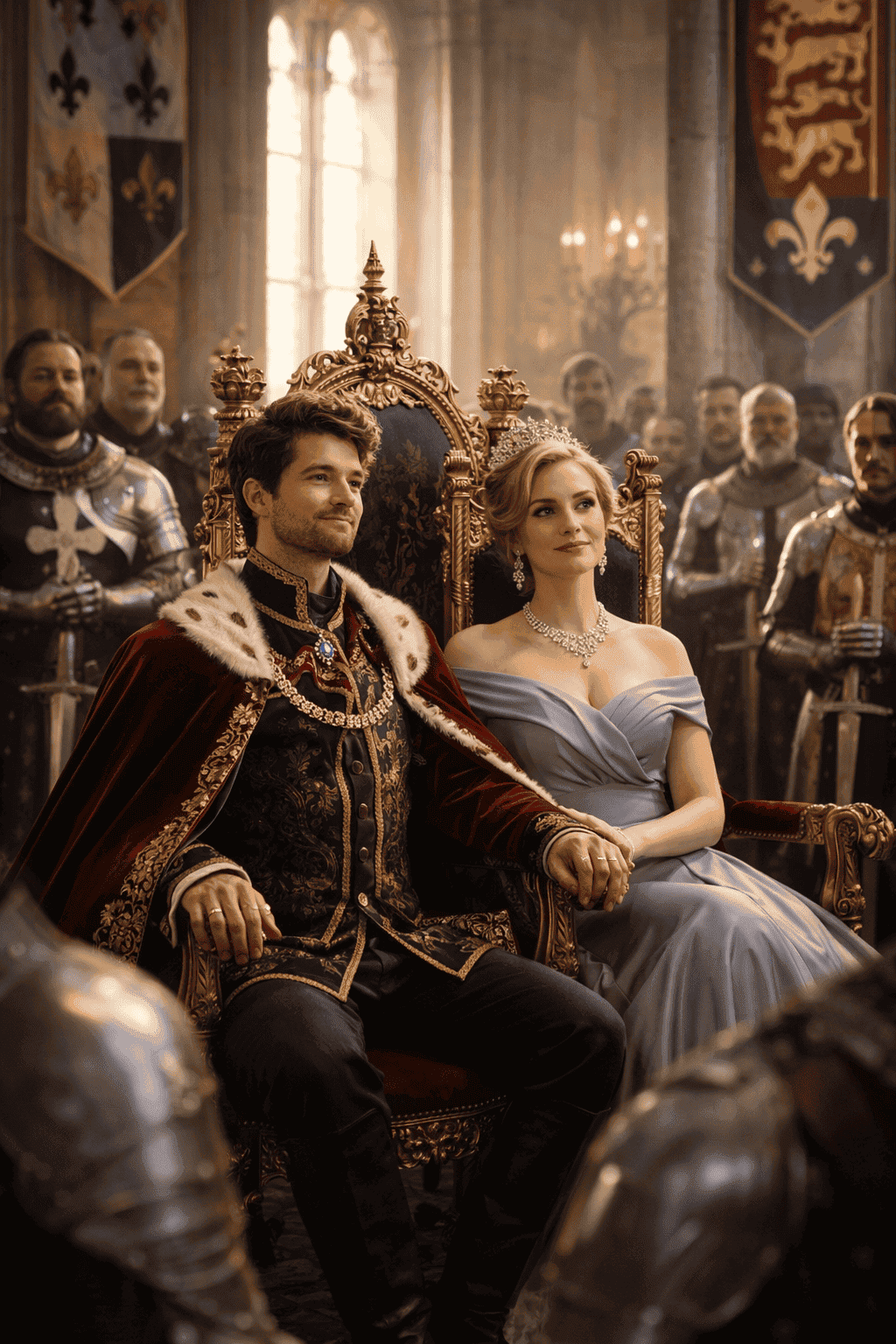
The title of Duke is among the highest and most distinctive in Europe Adelstitel. The German word comes from the word „Heerführer“. In the early Middle Ages, it referred to a person who led an army; later, duchies became important territorial domains of rule.
Linguistically, „Herzog“ has a clear, powerful effect. The feminine form of “Herzogin” sounds festive and self-assured. Both are suitable for people who may appreciate a title with historical significance and a clear presence. Reticence is possible – but the name itself has already entered the grand hall.
On our detailed page Duke & Duchess You can find history, examples of names, and the variants currently offered.
Prince and Princess – between rule and special elegance
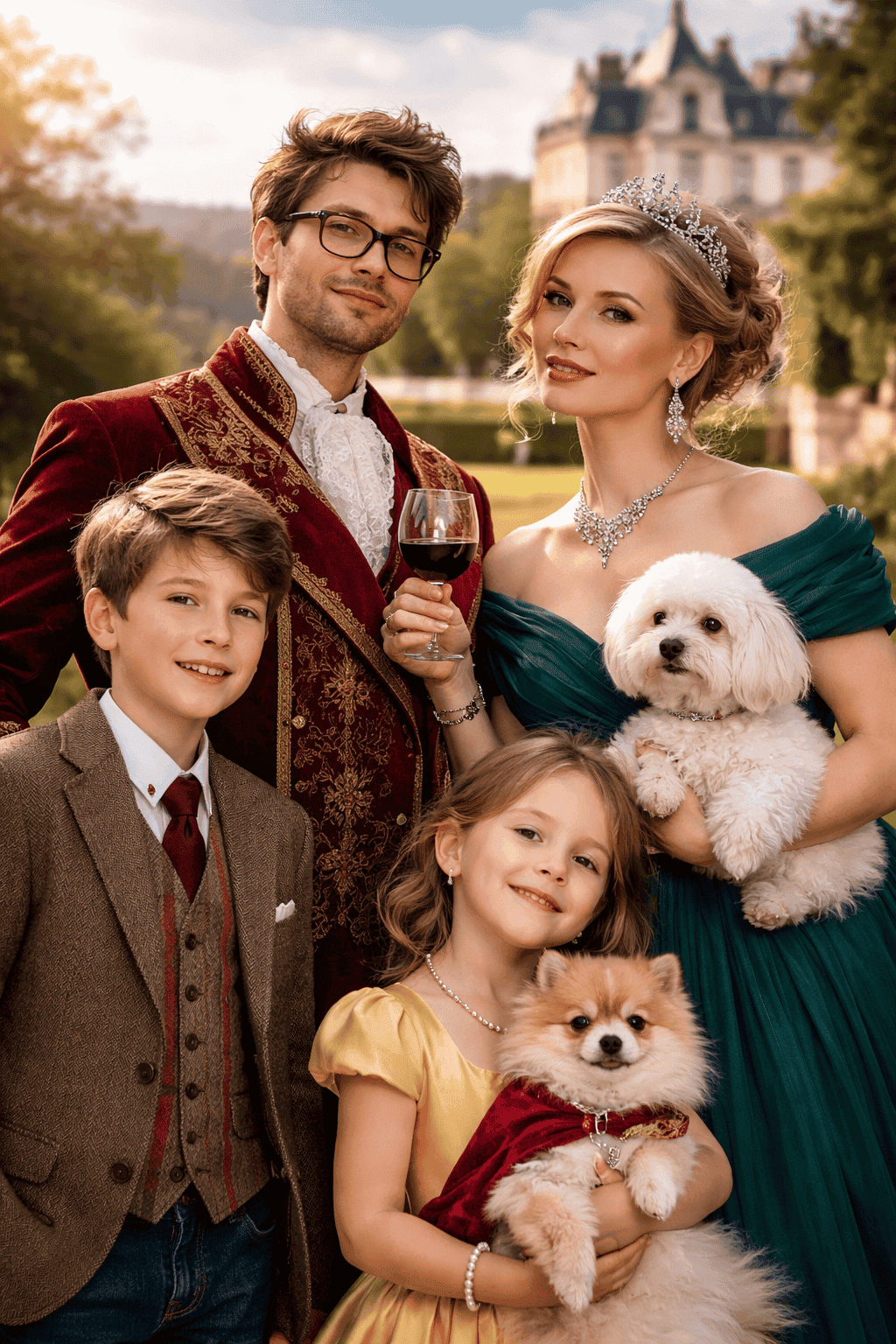
„Prince“ was originally a broader term for leading rulers and members of the high nobility. In the German nobility system, this also developed into a specific rank. Some princes ruled their own territories, while others received the title within an existing monarchical order.
The Title Prince In German, it has a very representative connotation. Fürstin combines the same rank with a soft, elegant form of naming. In everyday language, the terms Fürst and Prinz are sometimes confused. Historically, however, they are not automatically identical: „Prinz“ often referred to a member of a princely or royal house, while „Fürst“ could be the actual rank of the ruling or titled head of the family.
For the personal selection, however, the sound must still be the deciding factor. Historical family conferences about the succession to the throne are not necessary.
Count and Countess – the classic with surprisingly many variations
The Count is one of the most famous of Title of nobility all time. In the early Middle Ages, he was Count and Countess Often royal officials who assumed administrative, judicial, or military duties in a certain area. From such offices later evolved hereditary estates and family ranks.
Under the familiar term, numerous historical special forms are hidden. A margrave was originally associated with a border region, a so-called mark. A landgrave held a particularly high position in certain areas. The Pfalzgraf emerged from an office at the royal court. A burghraf was associated with the administration and protection of a castle or a castle district.
For personal use today, the sound is particularly appealing. Graf is classically elegant, poised, and immediately comprehensible; Gräfin is elegant and at the same time wonderfully versatile. Kommesses, in German usage, traditionally refers to an unmarried daughter from a noble family. Today, the term is often chosen because of its melodic, slightly nostalgic sound.
Baron, Baroness, Countess – and why Baron still sounds more familiar
In general usage, the German baron is often equated with the baron. Historically and linguistically, the relationships are more nuanced depending on the country and era, but in today's understanding, both forms denote a comparable rank below the count.
The female forms are particularly interesting. Freifrau traditionally referred to the wife of a freeholder or a married heiress. Freiin was used for an unmarried daughter. Baronin is nowadays much more directly understandable and has an elegant, international sound.
Baron and Baroness They look stylish, but less formal than a duke or prince. This makes them popular personal titles: striking enough for a charming appearance without the expectation of fanfare when entering a restaurant. Our Baron & Baronin page delves into their history and use.
The forms in overview
- Freiherr: male German rank form
- Freiheit: traditional female form for a married woman
- Freiherrinnen: traditional form for an unmarried daughter
- Baron: an internationally understandable masculine form
- Baroness: familiar female form

Knights, nobles and the nobility without rank titles
Not all members of the historical nobility carried a title such as Count or Baron. A large part belonged to the so-called untitled nobility. Adjective words and family names could indicate affiliation without requiring a special rank.
Initially, a knight was more of a function and a social status than a hereditary one Title of nobility in the later sense. Knightly life forms combined military service, feudal ties, and a separate code of honor and conduct. In later centuries, knightly forms of nobility and knightly orders emerged with very different requirements.
Edler, or „of Edler“, was a comparatively low-titling form that became particularly popular in the Austrian region. Its restraint has its own appeal: it is historical but not overbearing.
These examples show that nobility was never simply composed of a pyramid of more or less prestigious ranks. Origin, service, possessions, office, and regional traditions formed a multifaceted structure—often more complex than any seating arrangement at a large family celebration.
„From“, „to“ and „from and to“ – small words with great impact
Adjective prepositions strongly characterize the sound of a name. Historically, they could indicate origin, a place of residence, present possession, or the development of a family. However, their meaning was not completely uniform throughout all times or in all regions.
„From“ – Origin and connection to a place
The word von originally denoted a source: someone came from a certain place or was connected to it. Later it became a familiar part of German noble names. Not every historical „von“ meant ownership automatically, and not every name with „von“ was noble according to the same rules at all times. As a form of naming, it works fluently and classically: „Count of Falkenstein“ combines rank and place into a small narrative.
„To“—seat or current connection
It was possible to express a connection to a seat where a family resided. Linguistically, it has a particularly immediate effect: „Herzog zu Katharienburg“ sounds as if the door to a presence is already open behind the name. Historically, the exact meaning depended on the specific name and its development.
„From and to – Origin and continuing connection
The combination of and zu is often explained as a sign that a family originated from a particular place and continued to have its seat there. This is helpful as a linguistic guide, but should not be understood as a universal formula for every individual case. Names evolved, changed, and were administered differently over the centuries.
In a personal title, the emphasis today is on the sound. „Von“ sounds classic and elegant, „zu“ is more rare and distinctive, and „von und zu“ is particularly festive. Three little words – and suddenly the very idea requires a slightly larger business card.
International forms – de, di, of and van
Other languages also connect titles and origins in characteristic ways. In French, we encounter de, in Italian di or de, in Dutch van and in English of. The words resemble each other, but belong to different naming and noble tradition.
A French „Baron de …“, an Italian „Conte di …“, and an English „Lord of …“ therefore do not only appear translated, but each also carries a distinct cultural rhythm. The rank systems cannot always be transferred one-to-one either. The French Marquis, the British Marquess, and the German Margrave all have common historical roots, but developed in different orders.

Prince of Salerno
74,90 €
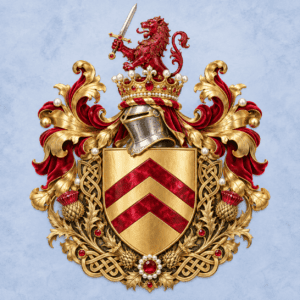
Earl of Strathearn
59,90 €
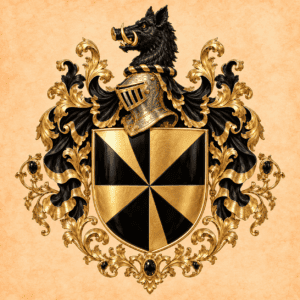
Baron of Loudon
54,90 €
When making a personal choice, it is worth paying attention to the language and overall sound. An Italian title sounds different from a German version, even though both have historically held a similar rank.
Lord, Laird and Lady are not simply the same thing
In the British context, "lord" is a multifaceted term. It can be part of various titles Title of nobility, such as an address or the designation of a lord. "Lady" also has several meanings and is used as a title or a polite address depending on the context.
The Scottish Laird traditionally refers to a landowner and is not automatically equated with a peerage rank such as Baron or Earl. It is precisely this connection to the landscape and the land that gives it its special appeal.
Our personal Irish Lord and Lady titles as well as Scottish Laird and Lady forms are explained in detail on our own pages: Ireland Lord & Lady and Scottish Laird & Lady.
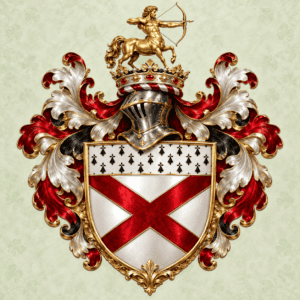
Lord of Kerry
49,90 €
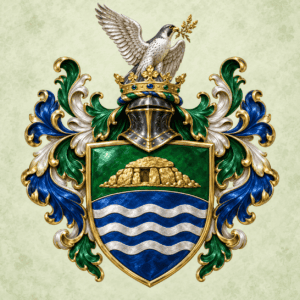
Lord of Strandhill
69,90 €
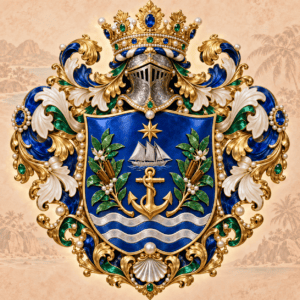
Seychelles Lord of Anse Boileau
44,90 €
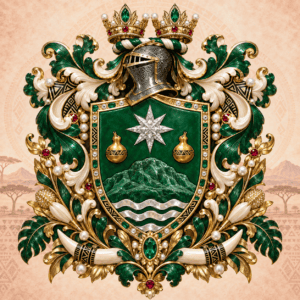
Lord & Lady of Embu
34,90 €
Which title suits you best?
Choosing your title is a personal statement.
An aristocratic title no longer stands for old privileges; today it stands for style and individuality. Whether as a resonant gift, as an exclusive sign of your own name, or as a striking statement: each rank has its own unique character.
Find out which title best reflects your personality:
Herzog & Herzogin – The absolute top of the class
The character: Majestic, rare, and with maximum sonic power.
Ideal for whom? For those who do not settle for anything less. As the highest title of nobility, the Duke is the ultimate symbol of status and an unforgettable gift for special anniversaries.
Prince & Princess – The exclusive claim to leadership
The character: Independent, charismatic, and with natural authority.
Ideal for whom? For creators, visionaries and individuals who like to make their own mark and appreciate the sovereign splendour of a real royal residence.
Count and Countess – The Symbol of European Nobility
The character: Sovereign, traditional and characterized by noble composure.
Ideal for whom? The epitome of nobility. Ideal for anyone looking for a traditional, instantly recognizable sound that conveys both impression and respect.
Baron & Baronin – The charming classic
The character: Down-to-earth, Hanseatic-style understated and never intrusive.
Ideal for whom? Perfect as an elegant entry-level title. A title that immediately stands out on letterheads, business cards, or when booking tables without appearing overbearing.
Lord & Lady – The British cult factor
The character: Eccentric, traditional-minded and internationally renowned.
Ideal for whom? The absolute crowd favorite for friends of the English lifestyle, tea drinkers, Scotland lovers, or simply as a brilliant gift with humor and style.
Arabic, African & Asian titles
The character: Exotic, mysterious and absolutely unmistakable. A touch of the Orient, Asia & world history
Ideal for whom? For cosmopolitans, globetrotters and true individualists who want to stand out from the European standard.