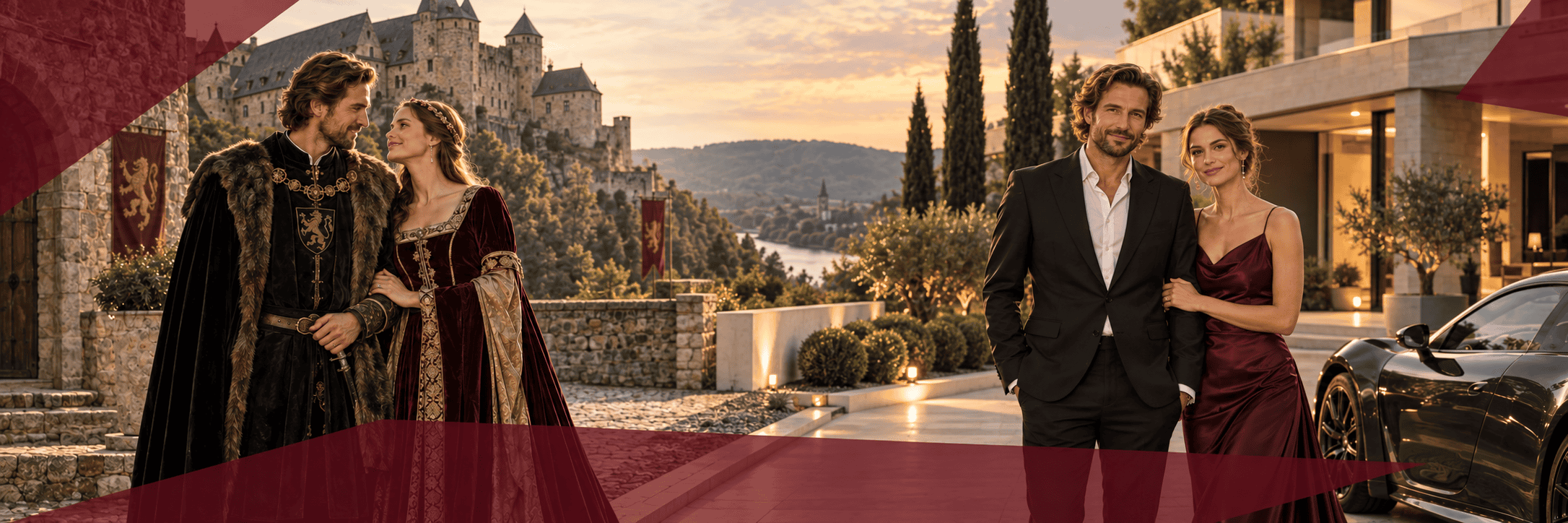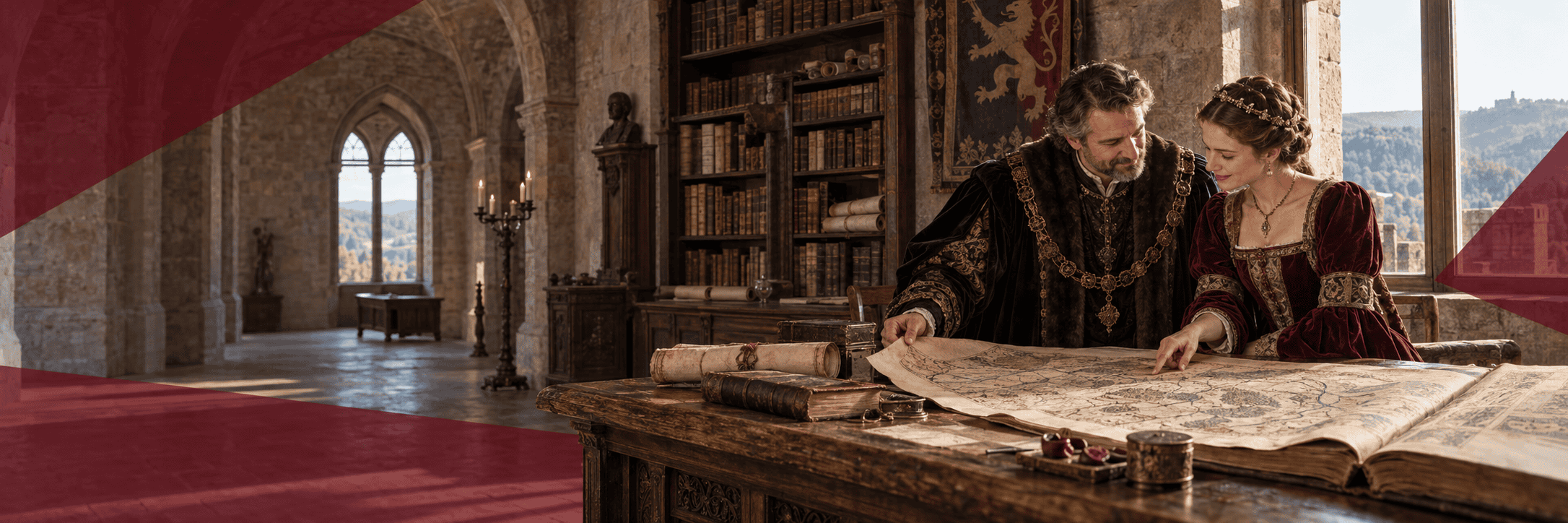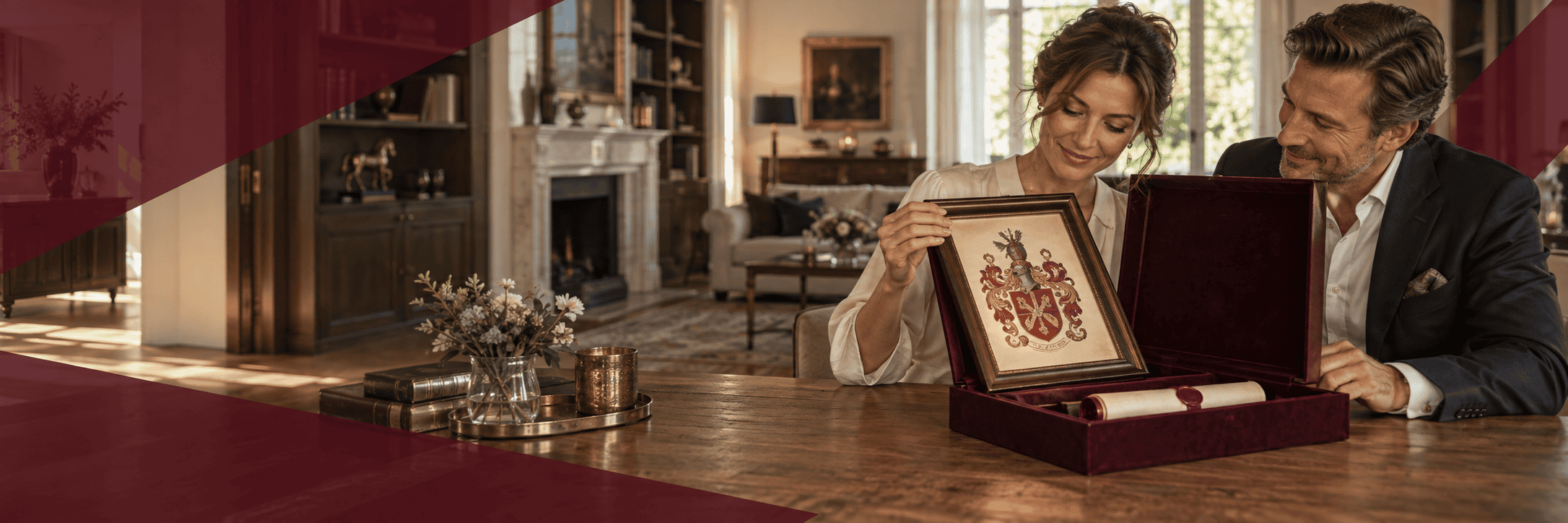
The foundation of true sovereignty: Baron & Baronin
In the fine structure of historical nobility, the title of Baron marks a very special class. While counts ruled entire territories and counts administered provinces, the Baron has always been the unwavering backbone of the noble class. The term has its roots in Old High German Baro, the free man who was solely bound by his oath and his own conscience. A Baron stood on solid ground: he held strategically crucial castles, protected vital trade routes, and enjoyed immediate proximity to the Crown without losing himself in rigid court ceremonies. Those who today Aristonym choose this prestigious title commit themselves to authentic strength, discreet prestige, and a lifestyle that presents true quality in the face of loud display.
The German Baron: A sturdy fortress, oak forests and well-established law
In the heart of the continent, the title found its unique expression as a Freier Herr or Baron of the Holy Roman Empire. Barons under the Empire directly reported to the Emperor and enjoyed imperial immediacy, which ensured them remarkable independence over their own possessions. Between the wooded Central Mountains, the oak slopes of the Rhine and the vast estates of the North, they created family seats that endured over the centuries. It is a world of crackling fireplaces in the wood-panelled manor house, the fascination with craftsmanship, noble hunting weapons and heavy chronometers. A German Baron embodies a home-connected reliability, deep roots and that unwavering character that embodies enduring values over fleeting trends. A rank perfectly suited for straightforward personalities who crown their success with quiet, down-to-earth authority.
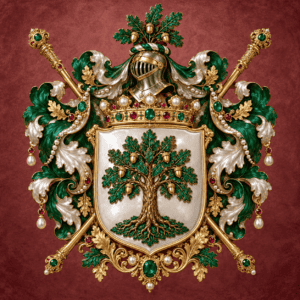
Baron of Poscharski
129,90 €
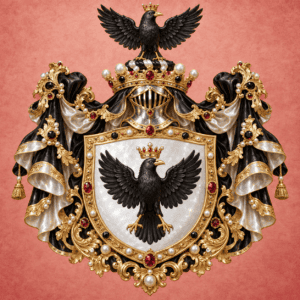
Baron of Halicz
84,90 €
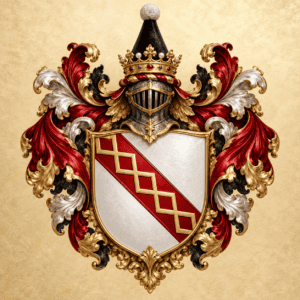
Baron of Rothensteyn
104,90 €
The British Baron: Land nobility, club culture and pure understatement class
Beyond the Channel, the Baron forms the traditional foundation of the British House of Lords. Since the Magna Carta in 1215, the barons of England have asserted royal supremacy and laid the foundation for modern freedom. The British Baron is the pure embodiment of the distinguished country gentleman: His natural habitat is the vast estates of the Cotswolds or the Scottish Borders, lined with ancient plane trees and blooming rose gardens. Here, weatherproof Harris tweed, beloved hunting dogs and tailor-made shoes seamlessly blend with exquisite family libraries filled with bibliophile rarities. In the gentlemen’s clubs of London’s St. James’s district, he moves with disarming dry humor, impeccable manners and the legendary British serenity that even masters the strongest storm with a cup of finest Earl Grey. For those looking for a complete British spirit and cultivated restraint, this is the ideal setting.
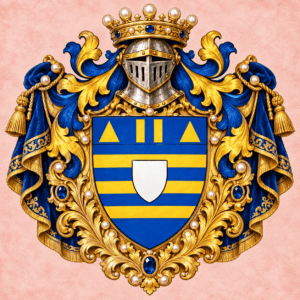
Baron Mortimer
64,90 €
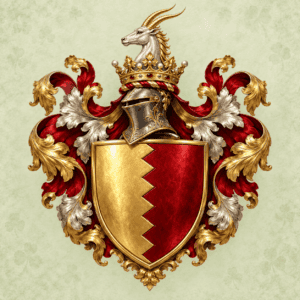
Baron of Athenry
39,90 €
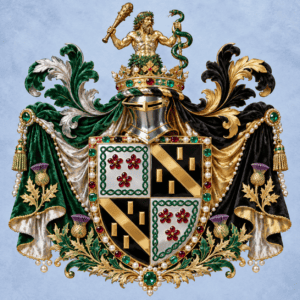
Baron of Callendar
89,90 €
The French Baron: Castles, Savoir-vivre and Intellectual Elegance
In France, the Baron looks back on a moving history that ranges from feudal fortresses to the elegant salons of the Enlightenment. Once a formidable defender of important river crossings and passes, the French Baron transformed himself in the Age of the Kings into the epitome of a worldly lifestyle. His refuge is the sun-drenched Château in the Loire Valley or the idyllic vineyard in the Bordelais, surrounded by ancient vines and shady parklands. In flickering candlelight and mature vintages, that stimulating table society unfolds, in which sharp wit, witty wordplay, and culinary mastery are celebrated. A French Baron masters the art of enjoying life in every detail, without ever acting in an overbearing manner. The perfect profile for cosmopolitan gourmets, aesthetes, and lovers of refined French table culture and lifestyle.
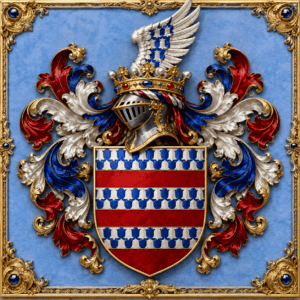
Baron of Coucy
129,90 €
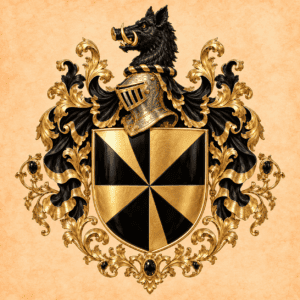
Baron of Loudon
54,90 €
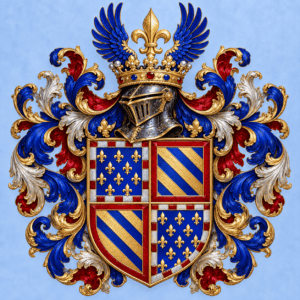
Baron of Burgund
64,90 €
Mediterranean temperament: Baron in Italy and Baron in Spain
Under the southern sun, the baronial dignity takes on a passionate and colorful form. In Italy, especially in the historic south and on Sicily, the barons ruled vast estates, sun-warmed olive groves and vast fields of grain. The Italian baron resides in stately country houses with spacious courtyards, enjoys the cool sea breeze and celebrates life with sunny warmth and innate elegance. In neighboring Spain, however, the Baron is deeply intertwined with the chivalric traditions of Catalonia, Valencia and Aragon. Here, pride in ancient family seats is combined with fiery pride and deep loyalty to one’s roots. Wrapped in the scent of wild herbs, Moorish architecture and Andalusian wildflowers, the Hispanic Baron exudes sovereign composure. A masterful choice for spirited free spirits with heart, artistic flair and a sense of Mediterranean joie de vivre.
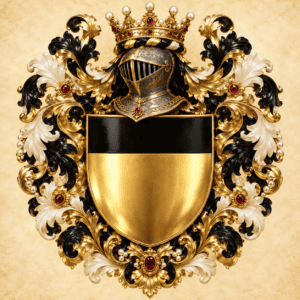
Baron of Entenza
124,90 €
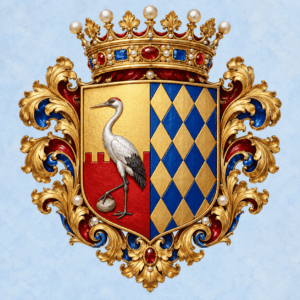
Baron of Carini
114,90 €
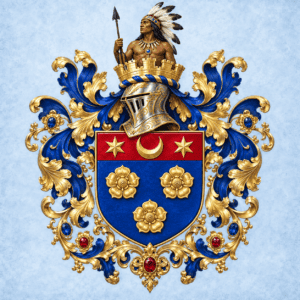
Baron of Longueuil
99,90 €
Exotic Baron Titles: From South America to Russia
When one looks beyond Western Europe, one discovers fascinating facets of this venerable institution. In the Tsarist Empire of Russia, the Baron, often characterized by the Baltic chivalry, formed an elite bridge between Western European education and the immense expanses of the East – a symbol of diplomatic sharpness, icy nights in sled-drawn convoys, and lavish receptions at the Newa. In South America, on the other hand, baronial titles shaped the spirit of the New World: In the Imperial Kingdom of Brazil and the Hispanic-American regions, monarchs bestowed the title of Baron on visionary pioneers, courageous coffee bar owners, and builders of new trade routes, transforming entire provinces into wilderness. These titles unite the spirit of ancient civilizations with the unbridled urge to break through continents. Created for globetrotters, visionaries, and global citizens who wish to expand their own horizons and encounter everyday life with unconventional profiles.
Baron of Poscharski
129,90 €
Baron of Brederode
89,90 €
Baron of Longueuil
99,90 €

Although the barons were considered the strong backbone of feudalism, their daily lives, marked by chronic financial shortages, royal distrust and bizarre laws, brought to light some of the most bizarre chapters of the Middle Ages.
The English King John Ohneland did not invent the fiercest weapon against unruly barons on the battlefield, but at the cash register: the notorious bachelor and widow tax. Barons who had no desire to take the brunt of the king's campaigns had to pay hefty dues anyway. However, John's draconian monopoly was far more perfidious: he forced noble women and widowed ladies to be brought under his control at his own discretion. If a proud baron wished to prevent the monarch from sending his beloved daughter to the clutches of his most vicious rival, he had to transfer enormous sums to the crown. Wealthier baron wives, who spent hundreds of silver marks on royal bribes, simply had to buy the privilege of being left alone. no to be forcibly married off again to some insignificant lowborn. This shameless official extortion finally drove the English feudal lords in 1215 to such a frenzy that they tore the world-famous Magna Carta from the King’s neck with a bare sword. Today, anyone who moans about high taxes easily forgets that in the High Middle Ages one even had to pay dearly for the right to be left alone.
That the transition from the highly born lord to the ordinary criminal was accomplished with frightening ease was demonstrated by the notorious robber barons of the Holy Roman Empire. In the late Middle Ages, countless barons lost their traditional economic basis of existence due to devastating crop failures, rapid depreciation of money, and the emergence of powerful mercenary forces. Instead of modestly adjusting their own feudal lifestyle, nobles like the notorious Baron Thomas von Absberg immediately embraced the way of war. They lurked in the dark forest glens, waiting for wealthy Nuremberg merchants, hacking off their hostages at will to instill the proper intimidation; they simply took off their thumbs or ears and forced the merchants to pay astronomical ransoms. Of course, the noble pride remained completely intact during these bloody attacks, because they finally attacked the merchant caravans with their heads held high on horseback and the venerable ancestral Wappenshield in front of their chests. Who was then visited by a baron was not served a courtly poem but a tangible scar with an aristocratic pedigree.
Duke Rudolf IV of Austria accomplished an unforgettable masterpiece of legal cunning to catapult his barons and his own family above all other princely houses of the era. Since Emperor Charles IV had simply ignored the aspiring House of Habsburg in the Golden Bull of 1356 when determining the electors, Rudolf immediately set up a criminally skilled office: the legendary Privilegium Maius. In the elaborately forged parchments with counterfeit imperial seals, Rudolf claimed, no less than Julius Caesar and Emperor Nero, that spectacular special privileges had already been granted to the Austrian lords in ancient times. According to this, the barons and princes of the country enjoyed complete immunity from all royal courts and were allowed to walk around with a flashy crown decoration. Emperor Charles IV, however, quickly exposed the fraud with the help of the Italian critic Petrarca, but the Habsburgs simply stubbornly ignored the rejection. They continued to use the forged baron privileges for centuries, until Emperor Friedrich III simply made them official imperial law over a hundred years later – arguably the most successful bureaucratic fraud in European legal history.
How unfathomably grotesque the legal obligations of a baron could be was shown by English feudal law through the bizarre service of the bailiff. Serjeanty. Not every feudal lord owed the monarch armored knights, supplies, or bare coins; some feudal lords secured their landholdings through wonderfully absurd services. The best example was Baron Roland le Fartere, also known as Roland the Furzer, who in the 12th century owned the stately estate of Hemingstone in Suffolk. His only written obligation to the English Crown was to appear at the royal court every year on Christmas Eve and perform a very specific choreography before the assembled aristocracy. The protocol required an exact synchronised leap, a loud whistle, and an unmistakable hearty belch to the general delight of the hall. As long as Roland delivered this theatrical extravaganza at the court every year, he and his heirs were legally guaranteed the feudal estate and its landholdings.
In the murderous battlefields of the Late Middle Ages, the title of Baron granted its bearer a truly life-saving advantage: a mobile life insurance on credit. During the Hundred Years' War, barons rode in radiant, hand-crafted coaches and with wide-visible Wappenskirts into the fray, signaling to any enemy soldier from a distance that a gigantic fortune was at stake. Simple foot soldiers and peasants were mercilessly crushed in the chaos of battle, but when an enemy mercenary spotted the ornate shield of a true Baron, he did everything humanly possible to make the precious loot tangible and alive. A captured baron eventually guaranteed the hunter an astronomical ransom with which an ordinary squire could be put at rest at once and buy an entire estate. In the heat of battle, it was not uncommon for enemy mercenaries to attack their own comrades with the sword, only to lose access to a fallen baron who was struggling to breathe. Those who were rich enough did not die a heroic death at that time; they simply used the credit card of feudal times.