
Prince & Princess: The privilege of the front row
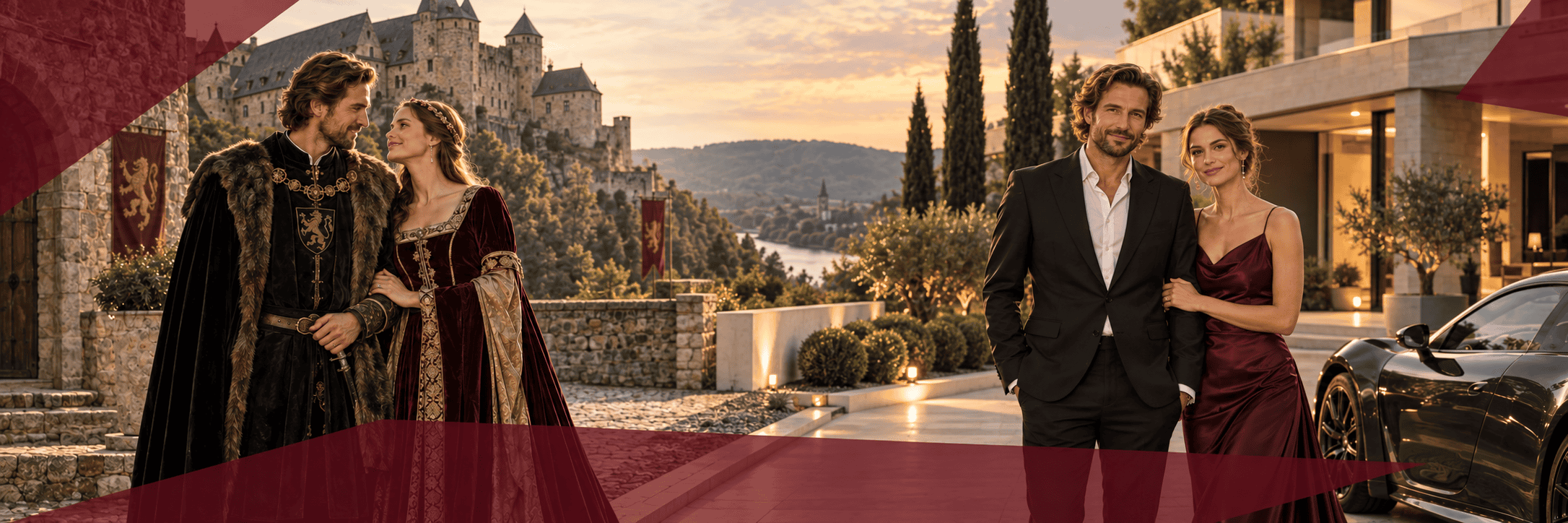
Whoever utters the word „prince“ means the origin of all leadership: the Old High German word for "leader". furisto, The title literally meant "First in the court." A princely title has always marked the threshold between the high-ranking court nobility and autonomous rule. While other titles were often strictly appointed offices in the name of a distant crown, princes from Europe to Asia ruled over principalities, city-states, and provinces with their own dynastic authority.
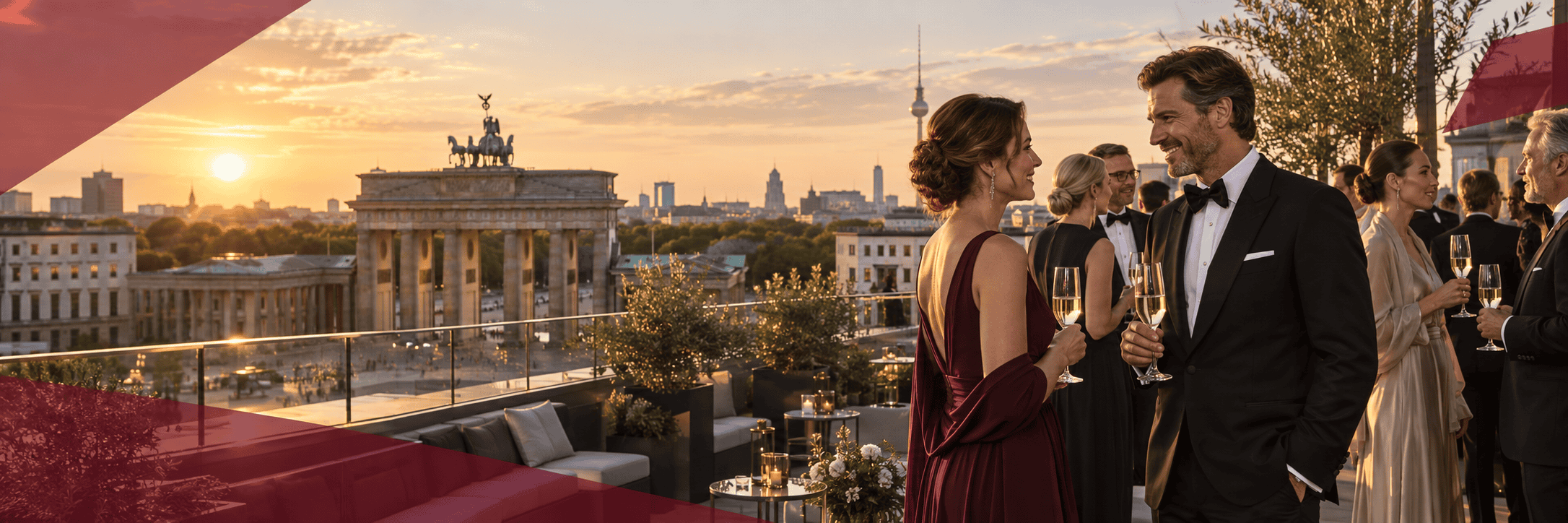
A princely title Aristonym is the choice for characters with natural foresight, stature, and unwavering composure. It requires no explanation – its timeless appeal and historical weight speak for themselves.
Prince of Schedingen: Strong roots in the Ruhr
Westphalia, Holy Roman Empire – High to Late Middle Ages
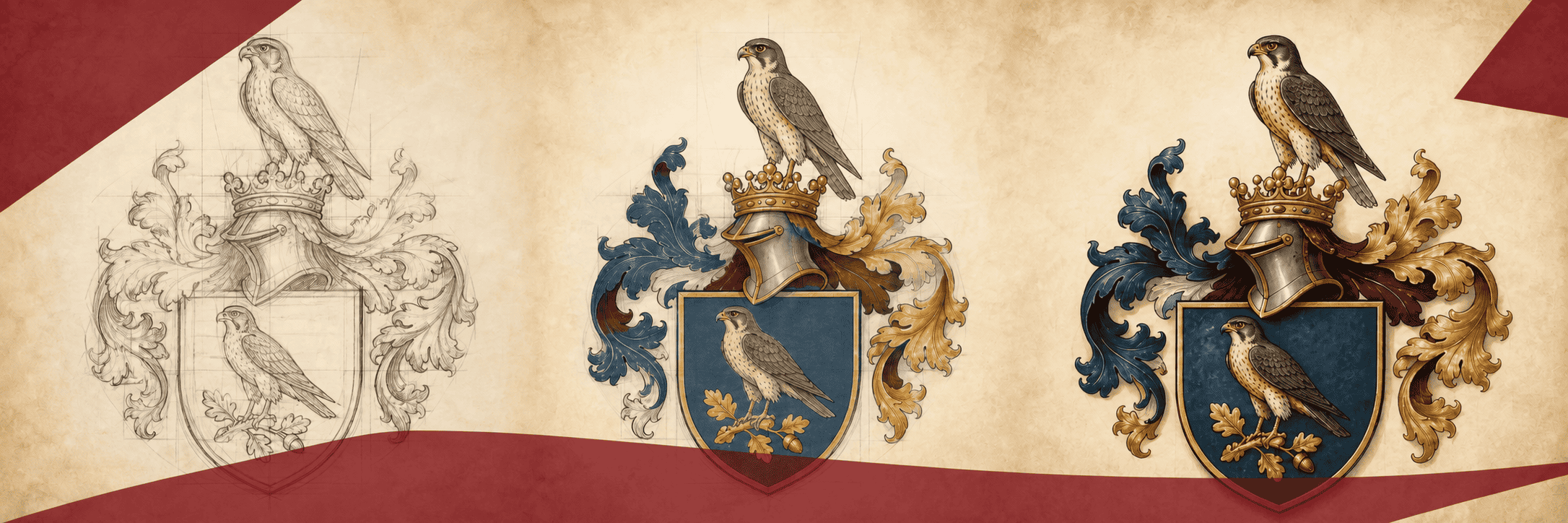
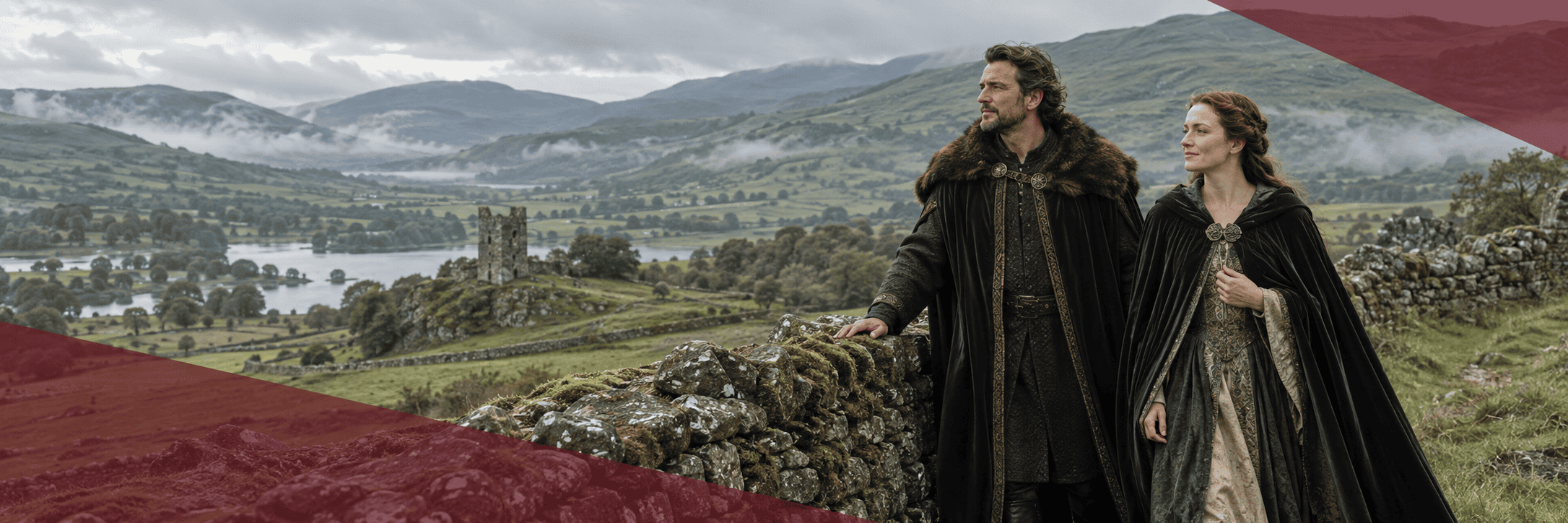
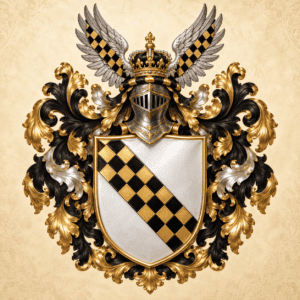
Between the dense forests of the Sauerland and the vast riverbanks of the Ruhr, the lineage of the Schedingen family secured its ancestral seat as a knight. Coat of arms With its distinctive chessboard and wide-spread eagle wings, it stands for cool tactical foresight and defensive independence in the realm. A Westphalian princely title exudes authenticity, reliability, and honorable customs. Perfect for those with clear values who value steadfastness and crown their success with a sense of belonging to their homeland.
Prince of Schedingen
34,90 €
Principle of Visconti: Glory and Myth of Lombardy
Milan, Northern Italy – Late Middle Ages to Early Renaissance
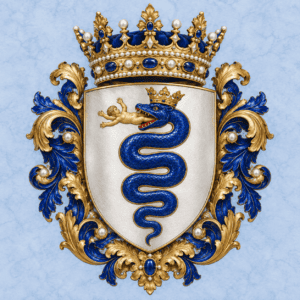
In the heart of the fertile Po Valley, the Visconti dynasty from Milan forged one of Europe’s most influential metropolises. The world-famous Biscione, crowned Coat of arms with the crowned snake, still symbolizes chivalrous determination, diplomatic finesse, and visionary action. Under their rule, world-famous cathedrals, fortified castles, and a magnificent court were built. A resounding Italian title for charismatic strategists who combine historical depth with innate elegance and bold creative will.
Prince of Visconti
94,90 €
Principle of Salerno: The legacy of the Normans
Campania, Southern Italy – High Middle Ages (11th–13th centuries)
High above the azure blue Gulf, the Principe resided in the Castello di Arechi, where Norman conquest met Byzantine splendor and Mediterranean culture. Salerno, as the seat of Europe’s oldest school of healing, was a radiant center of the mind, trade, and seafaring. The title exudes the scent of flourishing lemon groves, sun-drenched stone, and chivalrous determination. Ideal for individuals with a sense of southern lifestyle who wish to combine a sovereign demeanor with warmth and sunshine.

Prince of Salerno
74,90 €
Kōshaku of Echizen: Samurai dignity and imperial refinement
Prefecture of Fukui, Japan – Meiji period (19th century)
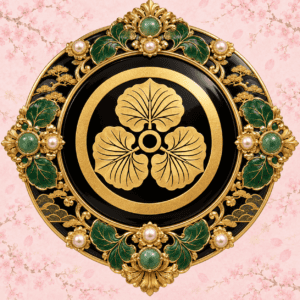
On the snowy coast of the Sea of Japan, the ruling Matsudaira clan from the old fief of Echizen decisively controlled the country’s affairs. In the Meiji era (Kazoku), the Kōshaku was at the helm – carried by the family’s iconic Coat of arms (Kamon). This title united the uncorrupt code of honor of Bushido with imperial high culture, silk robes, and ornate swordmaking. Perfect for reflective characters with an iron-clad focus, inner calm, and a fascination with East Asian philosophy.
Duke of Echizen
109,90 €
Knjas of Chernigov: Ruler of the Kiev Rus
Historical Rus, Eastern Europe – 10th to 13th centuries
In the wooded heart of the Kiev Rus, the Principality of Chernigov was considered a powerful cradle of East Slavic princely dynasties. Under the golden domes of the Savior Cathedral, the Knjas reigned on equal footing with the Grand Dukes of Kiev. The double-headed eagle in the Wappenshield symbolizes iron sovereignty, vast rivers, and ancient heraldic tradition. An archaic, powerful title for ambitious leaders who value historical depth, steadfastness, and unwavering cohesion.
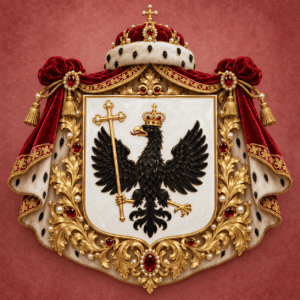
Prince of Tschernigow
54,90 €
Prince von Sandomir: The pride of the Polish crown
Little Poland, Vistula region – 12th to 14th centuries
Built on white limestone cliffs above the Vistula River, the Duchy and Principality of Sandomir secured important trade routes in Central Europe. As an important part-princely state under the Piast rulers, Sandomir united robust castle-forts, rich cloth-making cities, and knightly military skills. The richly decorated Coat of arms with stars and stripes testifies to the proud noble spirit of the szlachta. This rank appeals to people who understand freedom, chivalric virtues, and loyalty as the fundamental pillars of their actions.
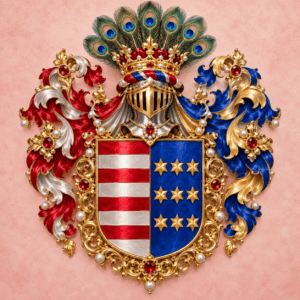
Prince of Sandomir
89,90 €
Emir von Nadschd: Ruler of oases and desert sand
Arabian Peninsula, Nadschd Plateau – 18th to 19th centuries
In the endless interior of the Arabian desert, the bold emirs of Nadschd offered strategic trade caravans, oasis cities, and noble pure-bred camels. Crossed swords and the shadow-bearing palm tree in the Wappenshield tell of unyielding determination, legendary Bedouin hospitality, and the desert wind. The title of the emir reflects supreme leadership authority and familial honor. A masterful choice for unconventional spirits who broaden their horizons and combine foresight with unwavering courage.
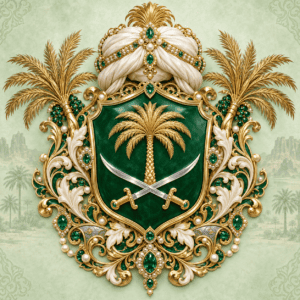
Emir of Nadschd
64,90 €

The title of prince marked the pinnacle of worldly and spiritual power in the empire – and accordingly, when princes fought for influence, money, and eternal salvation for the souls, it was merciless, absurd, and excessive.
The extent to which a prince went to great lengths to become indispensable was demonstrated by Margrave Albrecht Achilles of Brandenburg, one of the most astute princes of the 15th century. He waged endless private feuds against Frankish imperial cities and neighboring princes throughout his life and was so obsessed with war that he sometimes stood in the field against as many as eighteen cities and principalities at once. Albrecht always carried a notebook with him in which he meticulously kept track of every detail regarding the fortresses, troop strengths, and debts of his rivals. At imperial councils, he was regarded as the most feared schemer because he formulated laws and alliances in such a complex manner that only he himself ultimately had the overview and had all the warring parties pay him princely fees to render a judgment. He mastered the art of initiating conflicts in the first place in order to then celebrate as an indispensable savior and be highly rewarded. Anyone who got in his way quickly found themselves in a legal mess from which one could only buy one’s way out with cash. His contemporaries called him, with admiration, the German Achilles because he conducted politics not with morality but with ice-cold bookkeeping.
An even more extreme outbreak of violence led to the infamous Brandenburg-Nuremberg City War in the mid-15th century, in which the noble class and bourgeois wealth collided head-on. Albrecht Achilles despised the wealthy patricians and merchants of Nuremberg as ordinary goons who had no respect for noble pomp. To force the proud imperial city to its knees, he had the entire surrounding countryside burned down, mills destroyed, and wells poisoned. When the Nuremberg knight soldiers finally caught him by surprise in a battle and forced him into a corner, the prince was threatened with the heavy disgrace of a ransom trap. He only managed to escape by tearing his magnificent armor, adorned with gold and jewels, piece by piece off his body and hurling it behind him at full gallop. The bill came to fruition: The greedy mercenaries from Nuremberg stayed to collect the precious loot, while the naked Elector escaped over the mountains in a simple undershirt. The incident spread like wildfire throughout the kingdom and ensured that the citizens continued to mock the involuntary royal fashion show for years to come.
That even ecclesiastical leaders were not the slightest bit more circumspect is evidenced by the bloody conflict over the Archdiocese of Mainz from 1461/62, which entered history as the Mainz Chapter War. Pope Pius II had summarily deposed the legitimately elected Archbishop Diether of Isenburg and appointed Adolf von Nassau as the new Archbishop. Diether simply refused to cede his throne, whereupon the two churchmen did not settle their differences with Bible quotes but with mercenary armies and heavy cannons. Adolf von Nassau stormed Mainz in the midst of a pitch-dark October night, burned down large parts of the city, plundered the cathedral and expelled hundreds of respected citizens. Among the unfortunate were Johannes Gutenberg, whose printing workshop caught fire and ended up completely destitute on the street. To mitigate some of the gigantic PR damage caused by the massacre, the victorious Bishop Gutenberg promptly appointed Gutenberg as a court noble and provided the inventor of the printing press with fine court clothes, some grain, and some barrels of free beer.
One of the most bizarre excesses of princely self-display was carried out by Elector Ernst of Saxony together with his brother Albrecht in 1475. After the famous Prinzenteich robbery – in which an dissatisfied knight had abducted the two as little boys from the princely castle and had failed miserably – the brothers no longer made any attempt to show off their boundless wealth. In their displays, they mounted metre-high mock towers from which living singing birds and costumed dwarfs sprang, while the fountains in the castle courtyard spewed real white and red wine instead of water for days on end. To prove that the Saxon silver mines were virtually inexhaustible, they threw freshly minted silver coins with real shovels into the hands of the common people at festive festivals. The fistfights resulting from these spectacles, staged in the mud, were gladly accepted by the princely hosts as amusing additions to their pompous lifestyle. Those who lived in the 15th century were not accustomed to such spectacles. They wanted to create an impression of a century ago; they did not think in terms of austerity, but taunted until the guests were literally drunk and covered in dirt.
The ultimate paradox of princely power was rooted in the completely dysfunctional system of the imperial prince title itself. In the Holy Roman Empire, one was only a full-fledged imperial prince when one possessed the so-called imperial status – that is, a seat and direct vote in the Reichstag. Some princely houses may have been rich in stone, resided in huge castles, and possessed vast lands, but, curiously enough, formally they had no seat in the Reichstag at all. Other minor princes, on the other hand, ruled tiny dwarf states of a few square kilometers, but out of ancient custom they possessed the precious, official imperial prince vote. This led to a bizarre, highly lucrative real estate market: wealthy counts bought bankrupt minor princes tiny plots of land in nowhere in the world for absurd sums, only to inherit the associated imperial vote. As soon as the purchase contract was signed, the newly appointed Reichsfürst was finally allowed to sit in the front row, while the Emperor had to shake his hand in equal measure with a scrunched face as he negotiated with him.