
Description
Information about the family history and the coat of arms
Family history
▼
Family history of Emir of Nadschd
Die Emire von Nadschd – Der Weg des Hauses Saud
Die Geschichte des Hauses Saud führt in das Wadi Hanifa im Herzen Nadschds. 1446 gründete Mani ibn Rabia al-Muraidi, ein Vorfahr der Familie, die Siedlung Dirʿiyya. Seine Nachkommen regierten dort über Generationen und sicherten Handels- und Pilgerwege. Aus diesem regionalen Emirat formte Muhammad ibn Saud 1727 den ersten saudischen Staat. Dirʿiyya wurde Hauptstadt, der Salwa-Palast Regierungssitz.
Muhammad verband politische Ordnung mit der religiösen Reformbewegung Muhammad ibn Abd al-Wahhabs. Seine Nachfolger Abd al-Aziz, Saud und Abdullah dehnten ihre Herrschaft weit über Nadschd hinaus aus. 1818 eroberte eine osmanisch-ägyptische Armee Dirʿiyya und beendete den ersten Staat. Doch die Familie fand zurück: Turki ibn Abdullah gewann 1824 Riad und begründete den zweiten saudischen Staat. Innere Auseinandersetzungen und der Aufstieg der Raschiden von Ha’il führten 1891 dazu, dass Imam Abd al-Rahman mit seiner Familie ins Exil ging.
Sein Sohn Abd al-Aziz, später im Westen als Ibn Saud bekannt, kehrte 1902 mit einer kleinen Gefolgschaft zurück und nahm Riad ein. Von dort vereinte er schrittweise Nadschd, al-Hasa, Ha’il und den Hedschas. Zunächst trug er den Titel Emir, später Sultan von Nadschd; 1932 rief er das Königreich Saudi-Arabien aus. Die Entdeckung großer Erdölvorkommen eröffnete dem jungen Staat neue Möglichkeiten für Verwaltung, Infrastruktur und internationale Beziehungen.
Nach Abd al-Aziz regierten seine Söhne Saud, Faisal, Khalid, Fahd und Abdullah. Seit 2015 steht König Salman ibn Abd al-Aziz an der Spitze des Landes; Kronprinz Mohammed ibn Salman gehört bereits zur nächsten Generation. Damit reicht die belegte Familiengeschichte von einer Oasensiedlung des 15. Jahrhunderts bis in die Gegenwart. Die Lehmbauten von at-Turaif in Dirʿiyya, heute UNESCO-Welterbe, bewahren den anschaulichen Mittelpunkt dieser langen Erzählung.
Sources: Saudipedia, King Abdulaziz Foundation for Research and Archives, UNESCO, Library of Congress
Coat of arms & Heraldry
▼
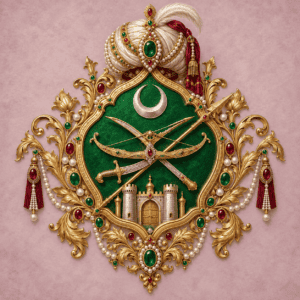
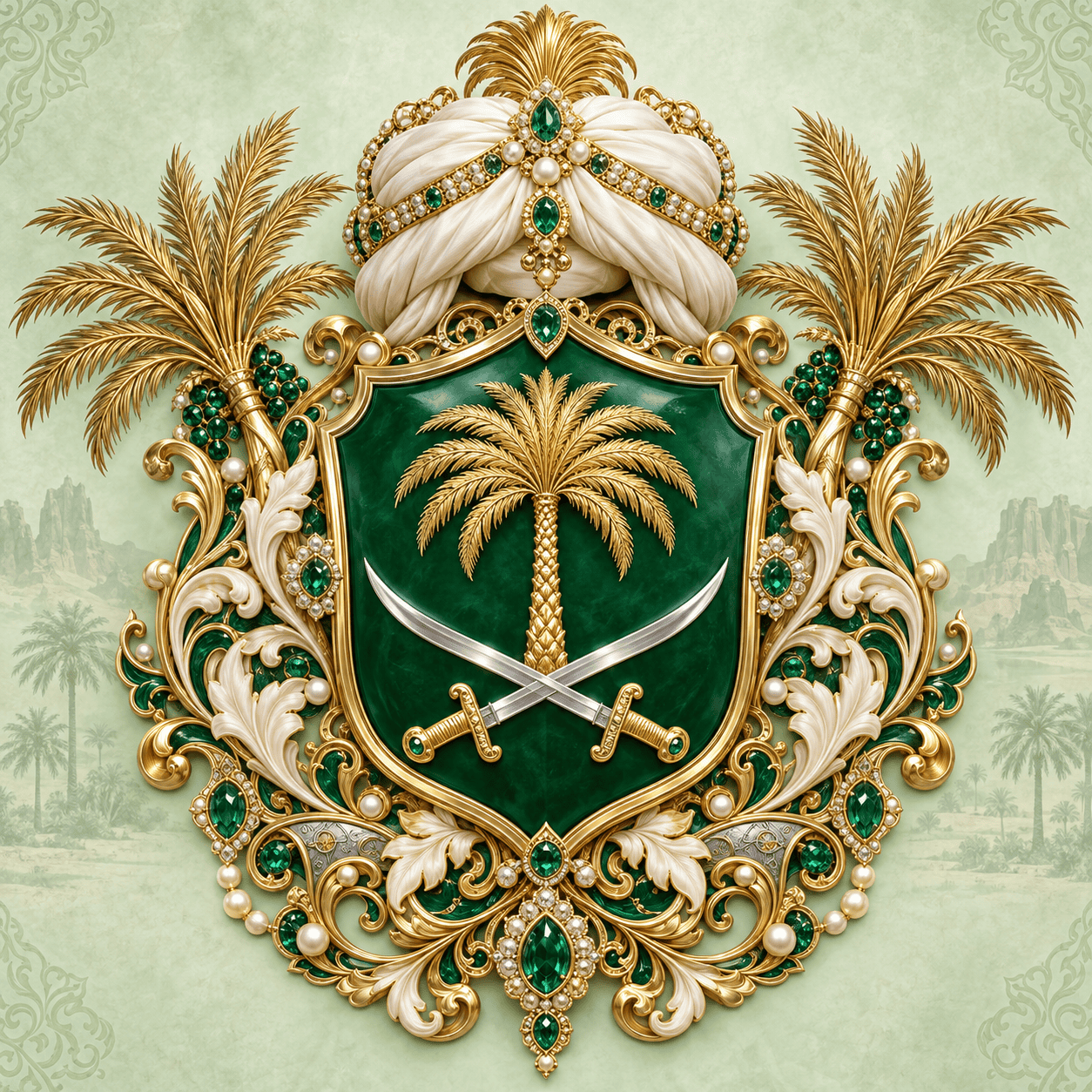
Emir of Nadschd family coat of arms
Die Komposition ist dem Haus Saud und dem Emirat Nadschd zugeordnet. Palme und gekreuzte arabische Schwerter greifen die dynastische und spätere staatliche Symbolik Saudi-Arabiens auf.
In Smaragdgrün über zwei gekreuzten silbernen arabischen Säbeln mit goldenen Griffen eine goldene Dattelpalme. Über dem Schild eine weiß-goldene Emirsrangzier.
Muhammad ibn Saud begründete 1727 in Dirʿiyya den ersten saudischen Staat. Seine Nachkommen herrschten erneut im zweiten saudischen Staat und vereinigten unter Abd al-Aziz ibn Saud Nadschd mit weiteren Gebieten zum 1932 ausgerufenen Königreich Saudi-Arabien.
Sources: Saudipedia, National Symbols of Saudi Arabia, King Abdulaziz Foundation for Research and Archives, UNESCO, At-Turaif District in ad-Dirʿiyah
Overview of your title package
What the title of nobility contains
Discover the fascination of historical noble titles. With each appointment, you receive a first-class package that perfectly combines tradition, personal recognition, and stylish representation:
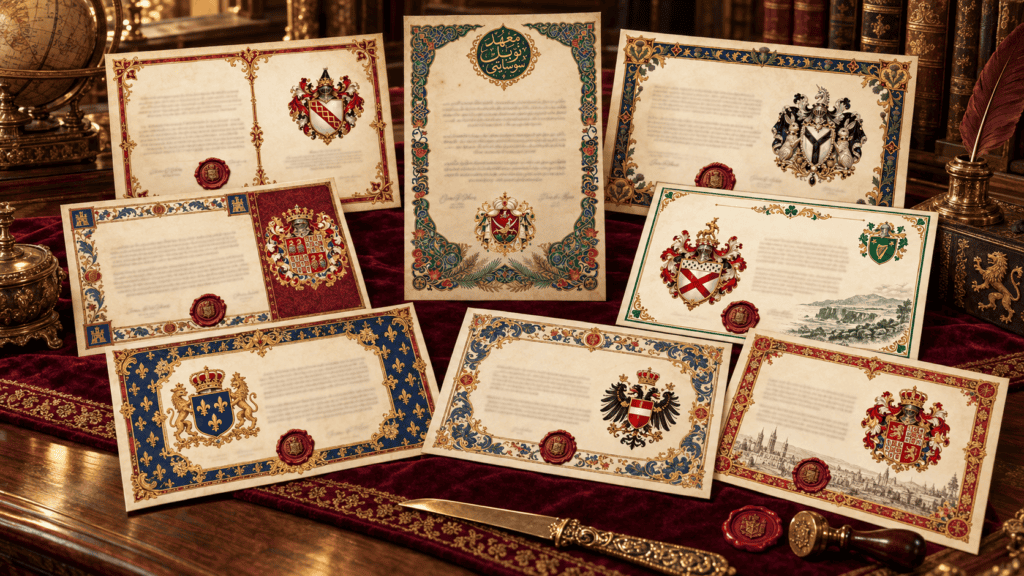
Your certificate
Authentic design with a historic flair: For each region, we create a certificate of appointment in the distinctive, country-specific style – complete with the appropriate coat of arms of your chosen title.
Share this special moment: Upon request, you will receive a free partner certificate and certificates for your children, so that the whole family can participate in the tradition.
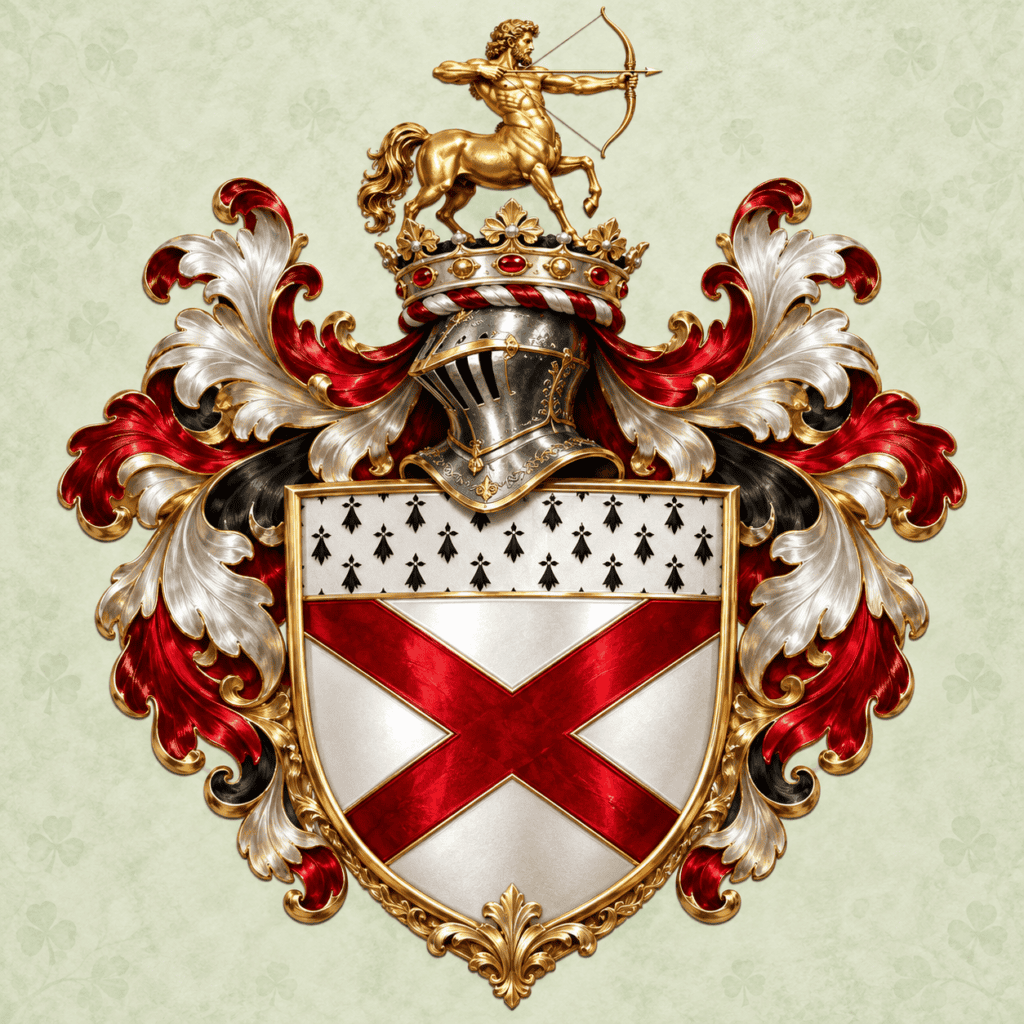
Your own coat of arms
Each title comes with the corresponding historical coat of arms, which you receive as a high-resolution file. You can use it completely freely in private and professional contexts – whether on letterhead, business cards, or seals.
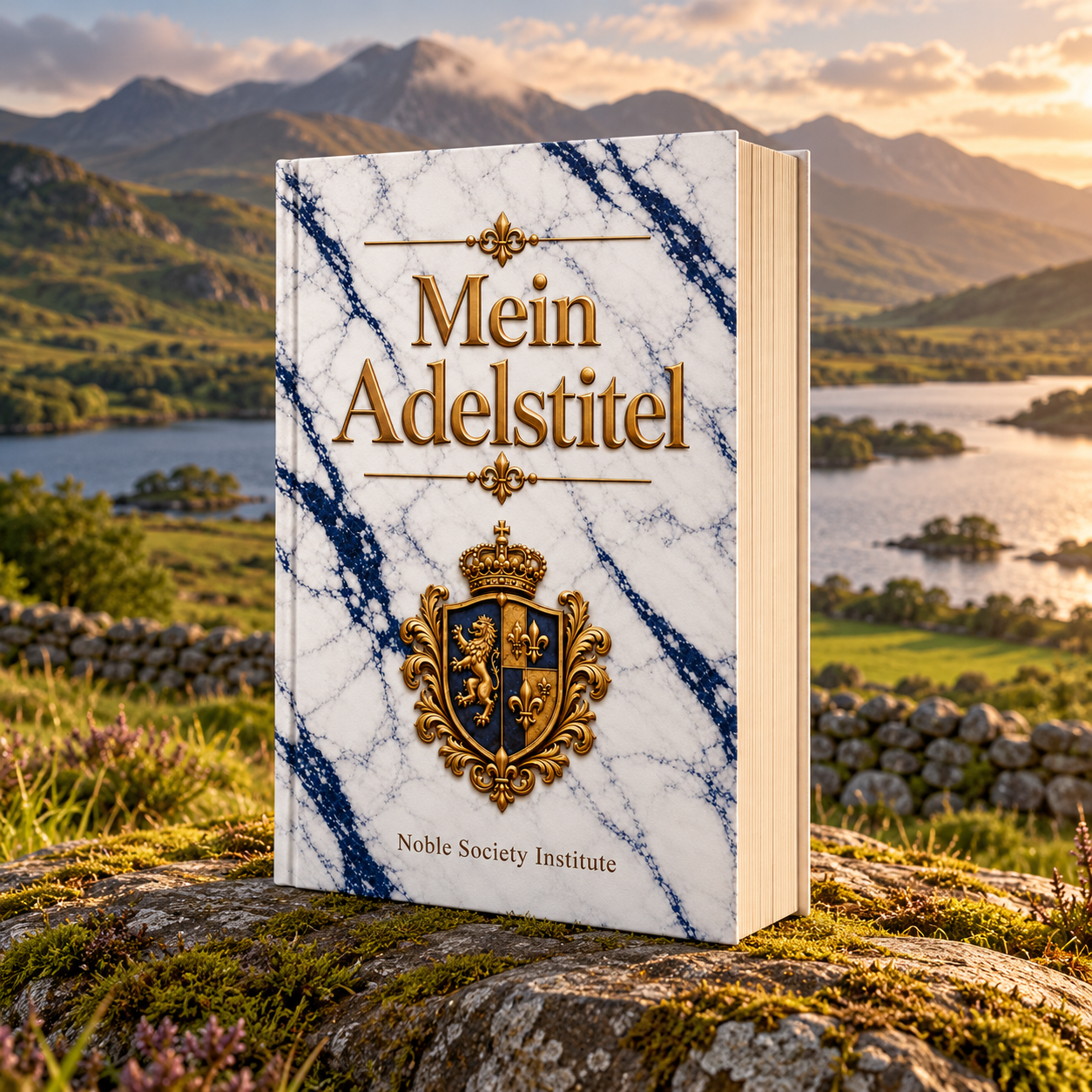
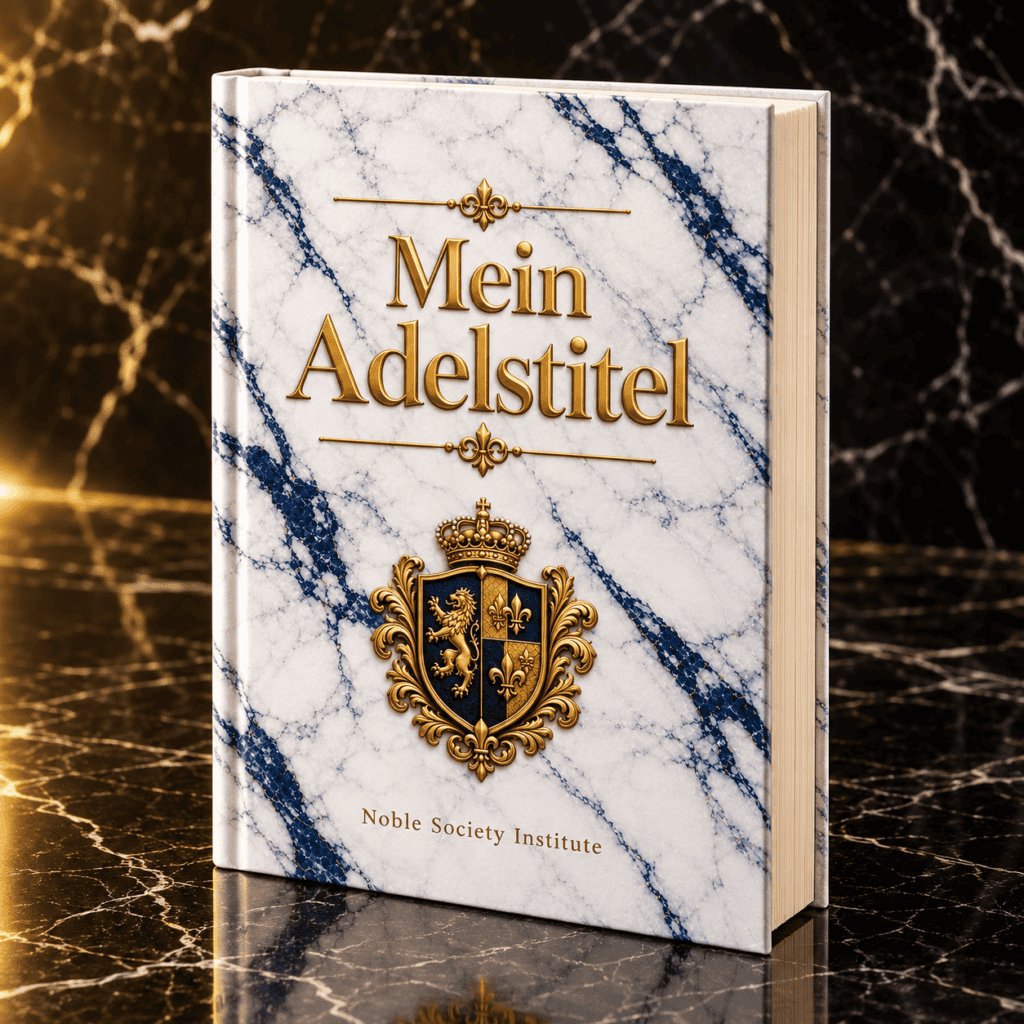
The Companion Book
The book „My Title“ takes you in detail into the multifaceted world of your new aristocratic title and offers valuable practical tips for everyday life, stylish guidance, and background information on history.
Our accessories
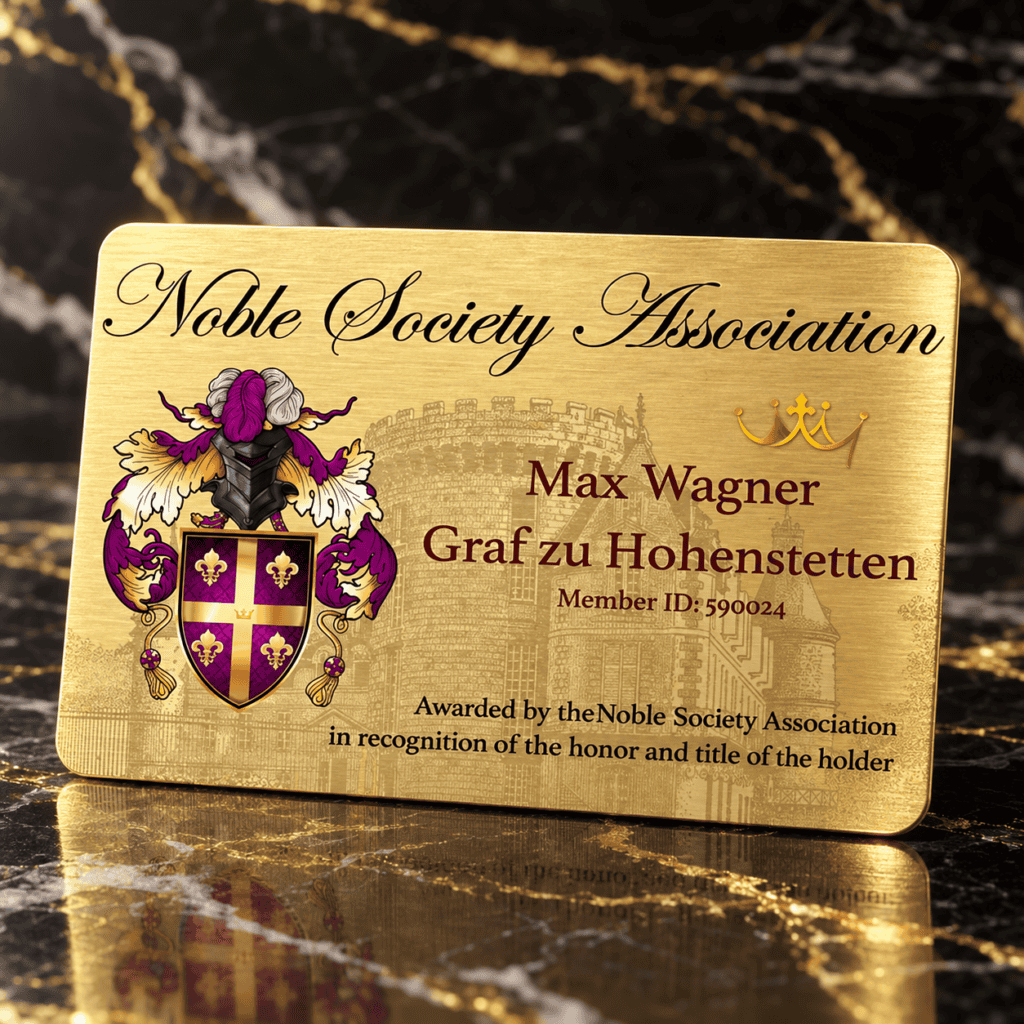
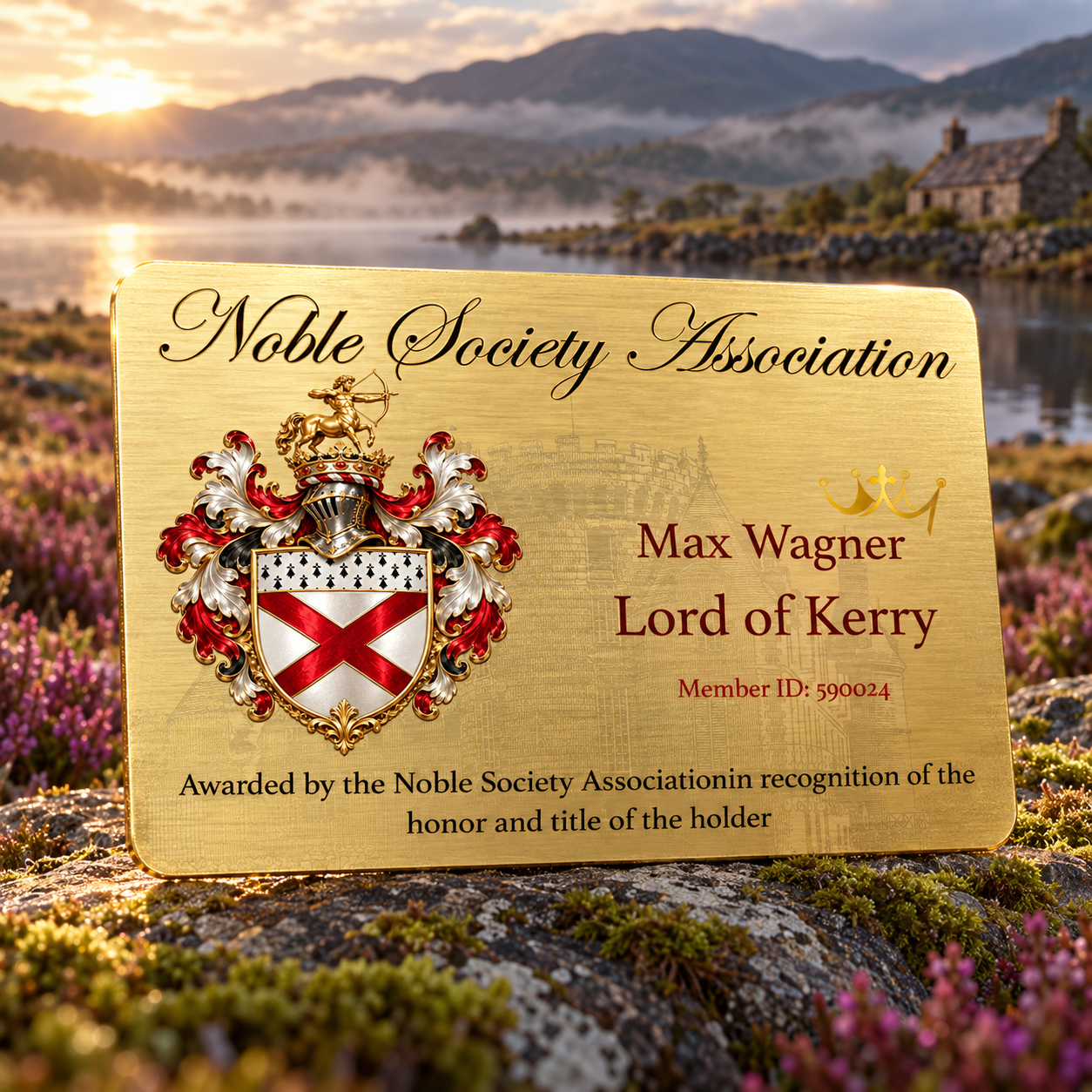
Golden ID Card
Crafted from premium aluminum in business card format, the gold ID Card makes your title look stylish and mobile.
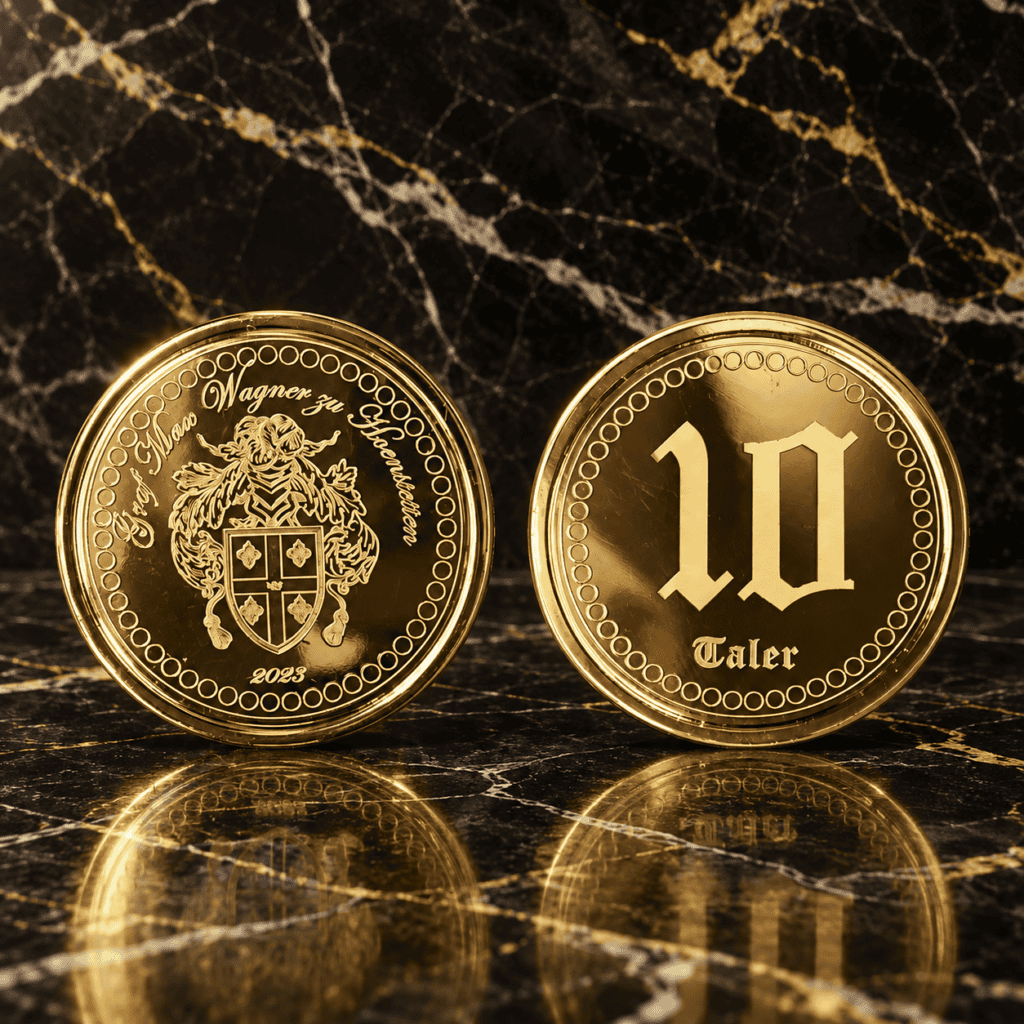
Gold coins
Fine gold and silver-plated medallions combine coats of arms, names and titles in a glossy, unique design.
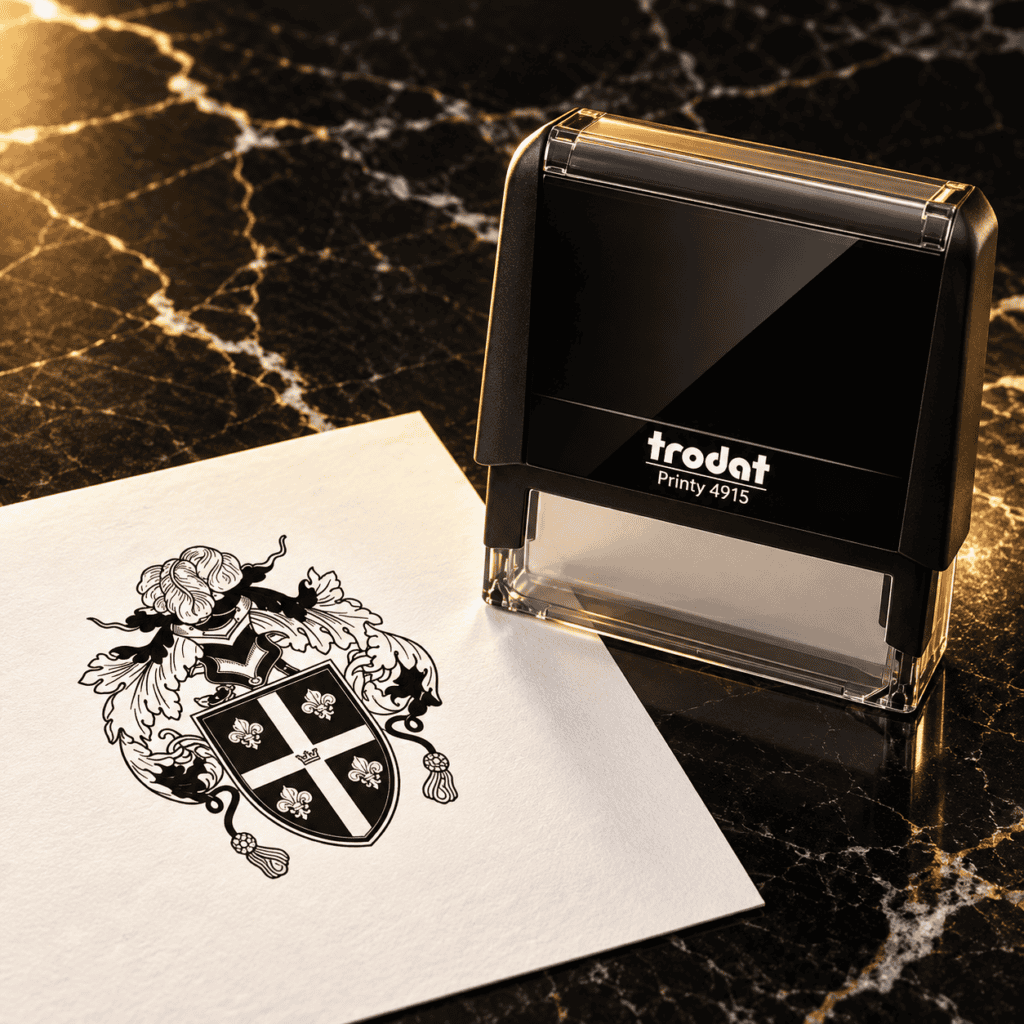
Emblem stamp
The self-inking stamp quickly, cleanly and precisely transfers your personal emblem onto letterhead paper.

My own wine
Choose fine red or white wine with an elegant, personalized label for a stylish look.

Wappen Gläser
The masterfully engraved wine glasses display their coat of arms, name and title in stunning brilliance.
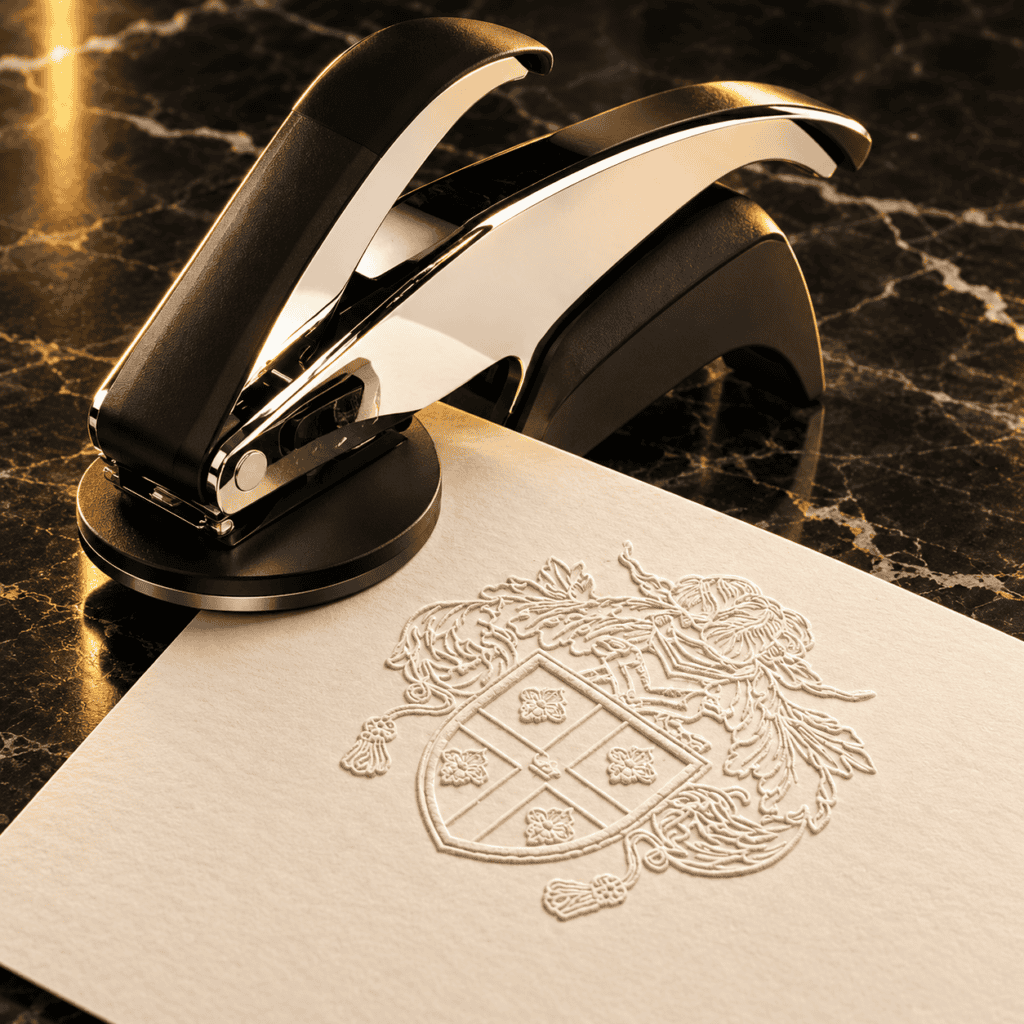
Precision pliers
The elegant embossing pliers embellishes letterheads or documents with a tactile, colourless relief embossing.
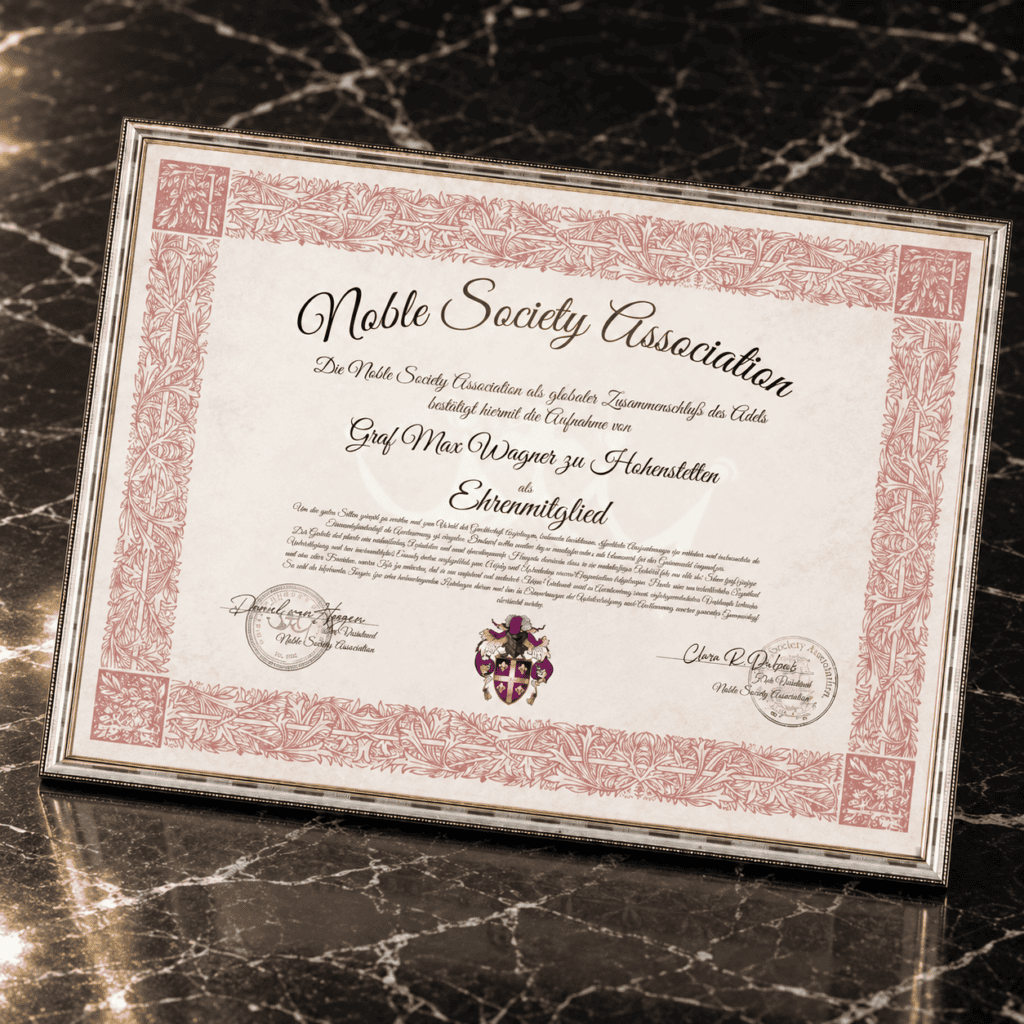
Honorary membership
Membership of the Noble Society Institute enriches your title with another dimension of exclusive representation. Validated by a magnificent certificate in your name, with no ongoing fees or obligations.