Lord & Lady – British Peerage, Scottish Lairds and Irish Tradition
The language of British nobility
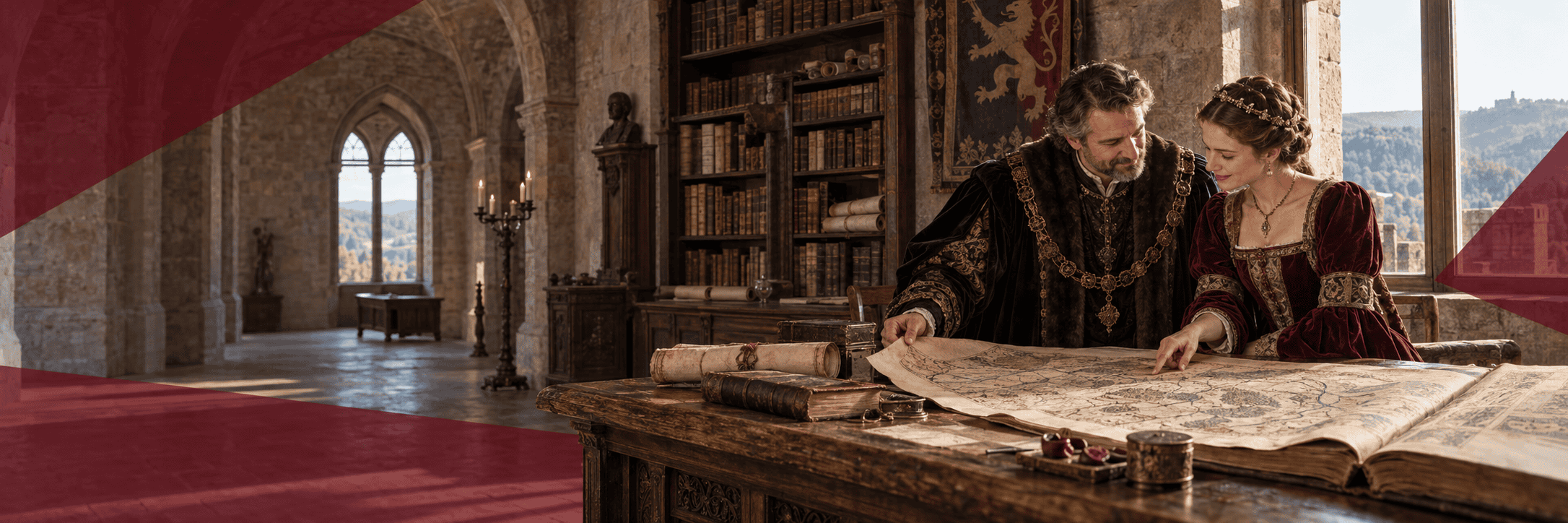
Lord and Lady are among the most famous addresses in the English-speaking world. They instantly evoke images of old mansions, green landscapes, family coats of arms, pubs with crackling fireplaces and large estates. But behind these short words lies a complex history that extends across England, Scotland, Ireland and vast parts of the former British Empire.
The term Lord comes from the Old English word hlāford back. Originally, it referred to the householder or the one who bore responsibility for the house, land, and followers. In the Middle Ages, this evolved into an address for high-ranking men, landowners, and members of the nobility. The feminine form Lady has a similarly ancient origin and initially referred to the mistress of a household or a larger estate.
In British nobility, a Lord was addressed as a collective term for various ranks. Dukes, Marquesses, Earls, Viscounts and Barons could be addressed as Lord. The exact meaning depended on the rank, the family name and the respective region. In England, this developed into a solid system of peerage. In Scotland and Ireland, there were also their own traditions, closely linked to land, clans and regional history.
The British nobility was always more powerful than the German nobility, with the idea of land ownership as its foundation. A title often referred to a specific territory, a manor house, a county or a landscape. Names like Lord of Warwick, Earl of Pembroke or Duke of Norfolk linked a family to a specific historical space. The designation was therefore simultaneously a rank, a local reference and part of a family history.
In Scotland, the term Laird played a special role. A Laird was traditionally a landowner or gentry who was associated with a particular estate. The word has a distinctively Scottish sound and refers to the world of the Highlands, the clans, and the old estates. In social usage, a Laird was often addressed as Lord, while the feminine form Lady was used.
Ireland developed its own connection between Gaelic and English traditions. Before the full implementation of English rule, there were regional clan structures in which local leaders and lords played an important role. The Gaelic word Tiarna referred to a lord or ruler. Over time, this old language became associated with the English title Lord and shaped the idea of Irish territorial titles.
Lord and Lady therefore stand for more than just a title. They combine names with landscapes, houses, and stories. Their special appeal lies in this combination of personal style and territorial memory. Whether the gentle hills of England, the rugged highlands of Scotland, or the green expanses of Ireland: each of these spaces has produced its own aristocratic language.
The Peerage: Rank, Parliament and Tradition
The English peerage developed over many centuries into a clearly structured ranking system. At the top were the Dukes, followed by Marquesses, Earls, Viscounts and Barons. The title Lord could be used for several of these ranks and thus became a permanent part of the English language of society.
The Duke corresponded in his position roughly with the European duke. A duke was particularly close to the royal house or held a prominent territory. The Marquess originally had a connection to border territories, the so-called marches. The Earl is the English equivalent of the Count. Viscount and Baron form the further ranks of the peerage.
Over the centuries, these ranks were associated with political involvement. The peers of the kingdom advised the monarch, took on military duties, and later sat in the House of Lords. This upper house became an important component of the British parliamentary system. Representatives of large families, bishops, and high-ranking dignitaries gathered there to discuss laws and political issues.
The history of the House of Lords shows how closely nobility and public responsibility were intertwined in Great Britain. Many families passed their titles down through generations and associated them with large estates, town houses in London, and an active role in political life. Names like Cavendish, Howard, Spencer, or Cecil are still associated with this tradition to this day.
A special appeal of the British system lies in the connection between title and place. An Earl of Pembroke, a Duke of Devonshire or a Baron of X carries a name that refers to a landscape, a castle or a historical area. This place reference creates a strong sense of origin. The title becomes a short formula in which rank, house and land come together.
The female forms were also firmly integrated into this order. A Duchess, Marchioness, Countess, Viscountess or Baroness visibly carried the rank of her house externally. She managed her own household, participated in social events and shaped the cultural life of a country estate or town house. Many British noblewomen became known as patrons, writers, politicians or supporters of social institutions.
The peerage was thus much more than a list of ranks. It formed a web of families, places, political duties, and cultural responsibilities. This connection explains why Lord and Lady are still perceived worldwide as terms for style, history, and English tradition to this day.
The Lairds of Scotland and the World of the Highlands
Scotland developed its own distinctive language of the land nobility. The term Laird traditionally referred to the owner of a manor or larger estate. Unlike a strictly regulated rank within the English peerage, the Laird was primarily associated with a specific place. The title referred to land, house, family, and the responsibility for a growing environment.
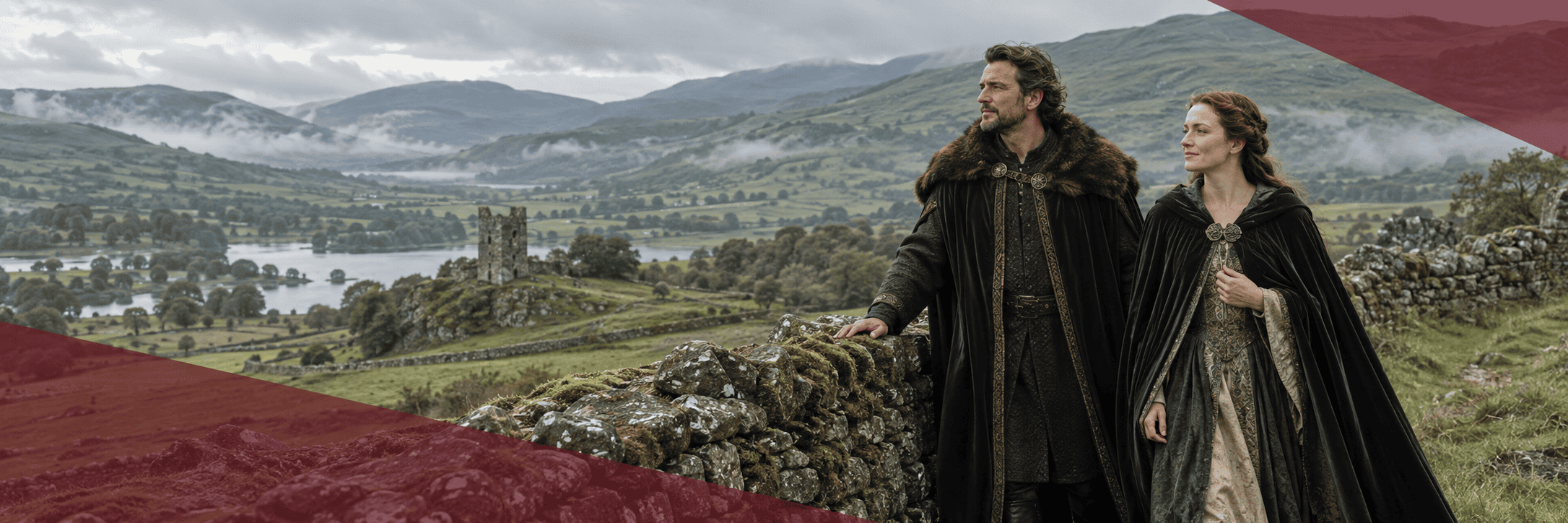
The world of the Lairds is the world of the Scottish Highlands. Wide valleys, rugged mountain slopes, lochs, moorlands and ancient stone structures still shape the image of this region. Over the centuries, the land was divided into possessions managed by clans, families and local lords. A Laird knew the paths, fields and forests of his territory. His house was the center of a small social and economic sphere.
The Laird was closely connected to the people on his land. Tenants, artisans, shepherds, and administrators were part of this structure. On a Scottish estate, sheep were kept, forests were managed, livestock was driven, and land was leased. In remote areas of the Highlands, the manor house was often the only major center for miles around. Decisions were made there, guests were welcomed, and family events were celebrated.
The clan tradition added an extra dimension to this world. Many Scottish families kept their own tartans, slogans and Coat of arms. A clan was more than just a close-knit family; it connected people who felt part of a common history, a name and a territory. Within this framework, the Laird could play an elevated role because his possessions and family were directly linked to a specific landscape.
Glencairn It stands as an example of this Scottish connection of name, land and history. The name evokes the image of a remote valley surrounded by green slopes, ancient stone walls and the special expansiveness of the Highlands. A title like Laird of Glencairn or Lady of Glencairn is linked to this traditional connection: the name refers to a specific Scottish landscape and carries the atmosphere of an old manor house.
The term Lord is often used in the English-speaking world as a translation or social equivalent of a Laird. This way, the down-to-earth Scottish tradition is combined with the internationally familiar sound of Lord and Lady. While the English peerage is more characterized by ranks, parliament, and court protocol, the Laird stands primarily for the landowner and the personal bond to his estate.
Scottish lairds did not only shape their regions through their ownership. They supported churches and schools, maintained roads, employed administrators, and preserved local traditions. Many old estates still possess family archives, Wappenstone monuments, or small cemeteries where generations of the same lineage are buried. Such places make the history of the country tangible.
The Highlands lend a special visual appeal to the title. They stand for nature, independence and a distinctive regional culture. Castles, manor houses, whisky distilleries, clan gatherings and the music of the bagpipes belong to a world that fascinates far beyond Scotland. A Laird or Lady title carries this world in its name: a reminder of a land, its people and a tradition that has remained alive to this day.
Ireland and the history of Lord of Kerry
Ireland has its own aristocratic language that developed from Celtic clan traditions, medieval rulers, and later connections with the English world. The terms Lord and Lady are used there in a landscape whose history is characterized by ancient kingdoms, family ties, and strong regional identities.
Before the complete imposition of English rule, Ireland consisted of many smaller territories. Clans and regional family associations shaped political life. At the forefront were leaders responsible for protection, justice, and the connection of their territory with the outside world. The Gaelic word Tiarna refers to a lord, leader, or ruler. It referred to a person's position within a territory and a community.
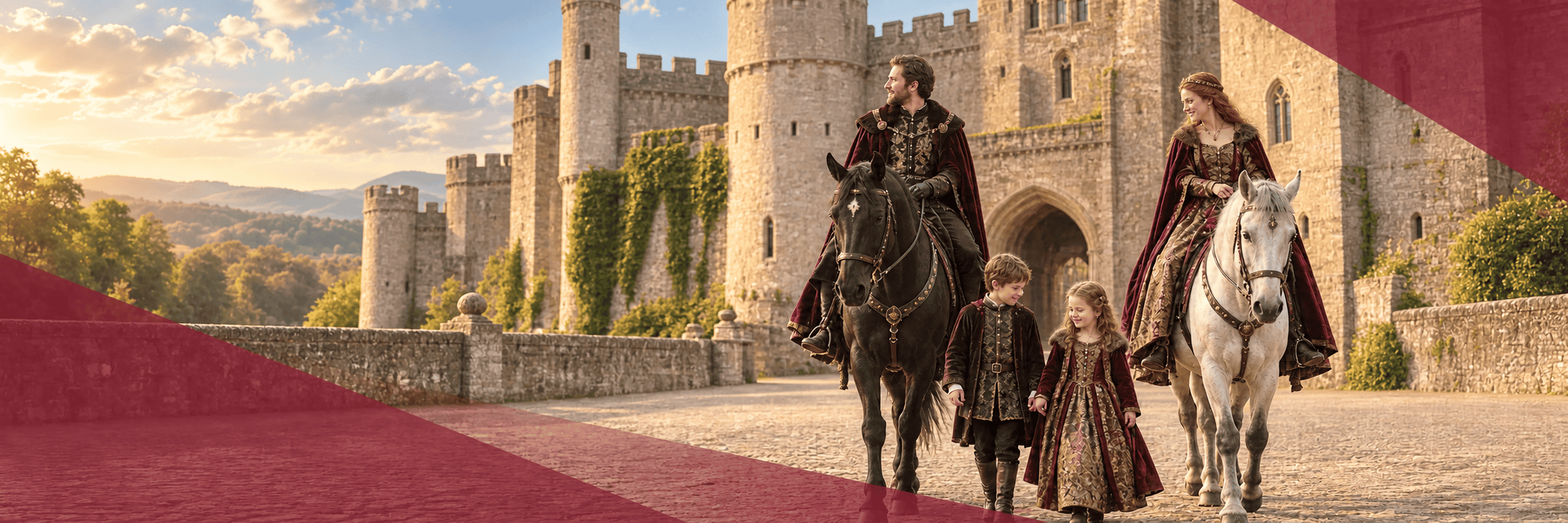
With the Anglo-Norman expansion, new forms of rule came to Ireland. English and Welsh families acquired land, built castles, and associated their names with counties, towns, and rivers. Over the centuries, Gaelic and Norman traditions mingled. From this union emerged a distinctive Irish aristocratic culture, in which ancient clan names, English titles, and regional landscapes are closely intertwined.
County Kerry holds a special place in this story. The county is located in the southwest of Ireland and is characterized by mountains, lakes, the Atlantic coast, and vast peninsulas. The landscape appears both open and ancient: green valleys, stone walls, small ports, moors, and the rugged heights of the MacGillycuddy’s Reeks form a space deeply connected to Irish history and mythology.
A title like Lord of Kerry Or Lady of Kerry builds on this strong territorial connection. Kerry is not an abstract sound, but one of Ireland’s most famous landscapes. The name connects the title with the green expanses of the island, with Celtic traditions, ancient paths, and the view of the Atlantic. It carries a piece of Irish identity within itself.
The Irish tradition differs significantly from the formal English peerage. It is more based on landscape, clan memory, and regional affiliation. A Lord of Kerry therefore stands for a combination of European noble language and an Irish sense of life. The title has an international sound, but remains anchored in a specific region.
Kerry has been a place of different rulers and family histories for centuries. Castles, churches, old manor houses and place names remind of this past. At the same time, the county is today known for its nature, its music, its hospitality and its special place in Irish culture. The combination of history and landscape makes the name Kerry so expressive.
Lord of Kerry and Lady of Kerry carry this tradition into a personal present. The title connects the name of its bearer with a place that stands for vastness, character, and cultural depth. It tells the story of Ireland without standing still in the past: of a landscape whose history is still palpable in its names, its stories, and its atmosphere.
The land, the landscape and the power of the place name
Territorial titles are so powerful because they associate a name with a place. With Lord of Kerry and Lady of Kerry, it’s not just the rank that comes first; the landscape itself is also important. The title leads directly to the southwest of Ireland: the mountains, lakes, and coastlines of this special county.
This connection between name and place has a long history in the British-Irish tradition. Manors, estates, and families were named after their seat, valley, castle, or county over the centuries. A place name made visible where a house was rooted and what history was associated with it.
Kerry is particularly suited to this form of title. The region combines several images that remain synonymous with Ireland to this day: the Ring of Kerry coastal road, the lakes of Killarney, the Dingle Peninsula, ancient stone forts, and the rugged Atlantic coast. The name carries nature, history, and culture at the same time.
A territorial title thus becomes more tangible. It does not remain an abstract ranking designation; it immediately conveys a sense of landscape. When one reads Lord of Kerry or Lady of Kerry, one thinks of Ireland, of green valleys, of Atlantic winds and of a region with its own voice. The title becomes a connection between a personal name and a distinctive place.
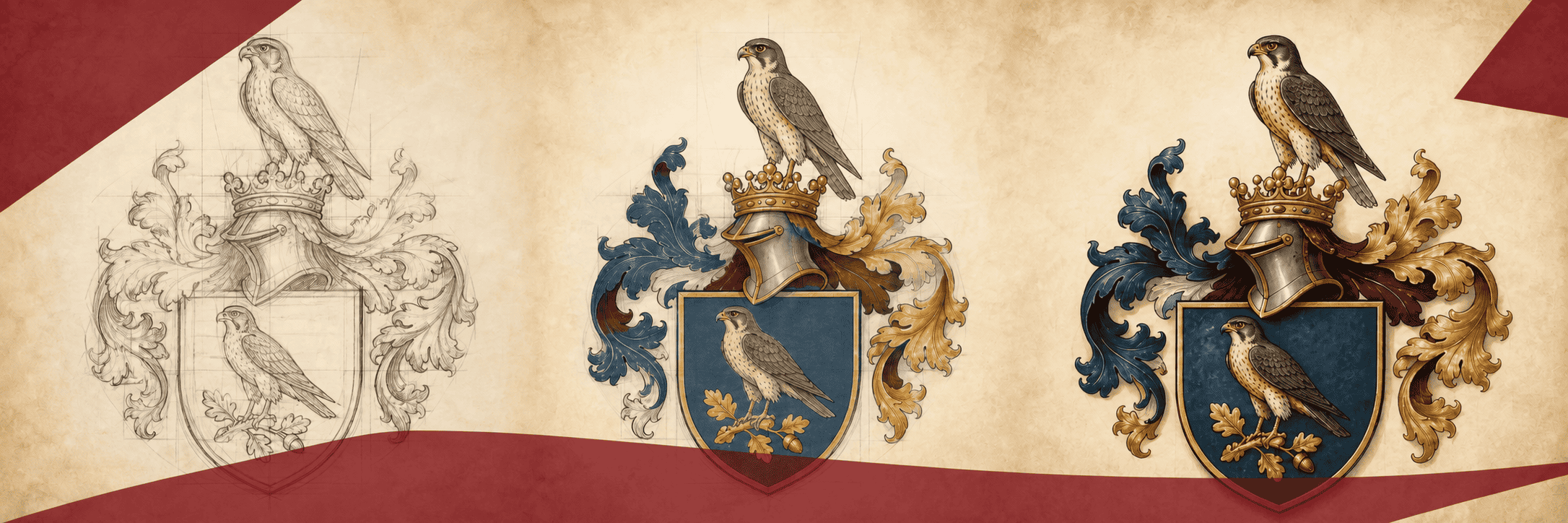
This also Coat of arms adds expressive power to the design. Regional colors, Celtic-inspired shapes, mountains, waves, or other symbols can make the connection to Kerry visible. Thus, a complete image of name, landscape, and heraldic design is created on a Certificate letterhead or a seal.
The strength of Lord of Kerry lies precisely in this combination. The title sounds international, has a clear historical connection, and at the same time leads into a landscape that immediately evokes images. It combines the dignity of a traditional address with the character of one of the most impressive regions of Ireland.
Lord and Lady in person
Lord and Lady possess immediate, international appeal. Unlike some continental European rank designations, they are instantly recognized in many countries. Their sound is clear, elegant, and associated with a strong cultural worldview. Precisely for this reason, they are particularly well suited for a personal appearance that combines history, style, and a distinctive note.
The title Lord or Lady initially changes the effect of a name. It gives it a distinct rhythm and creates a connection to the British-Irish tradition from which these terms originate. On a personal card, an invitation, or a book cover, the name stands out differently. It becomes more pronounced and remains easier to remember.
The territorial form reinforces this impression. Lord of Kerry and Lady of Kerry associate the person with a specific landscape. This creates a more complete name than with a purely rank designation. The title also tells of Ireland, the county of Kerry and a region whose nature and culture possess a strong distinct character.
In social interactions, this connection is particularly charming. A title can add an inviting touch to an invitation, a table reservation, or correspondence with a special atmosphere. It creates conversation material without the need for lengthy explanations. Often, the name itself is enough to Coat of arms spark questions about Ireland, the Highlands, historic houses, or other topics.
For creative and public projects, Lord or Lady also has a strong effect. As the author’s name on a book, as the signature under an article, as the name of a podcast or on a personal website, it creates a distinctive presence. The title creates recognition and gives a project a clear signature. Especially well suited for topics such as travel, culture, literature, photography or history.
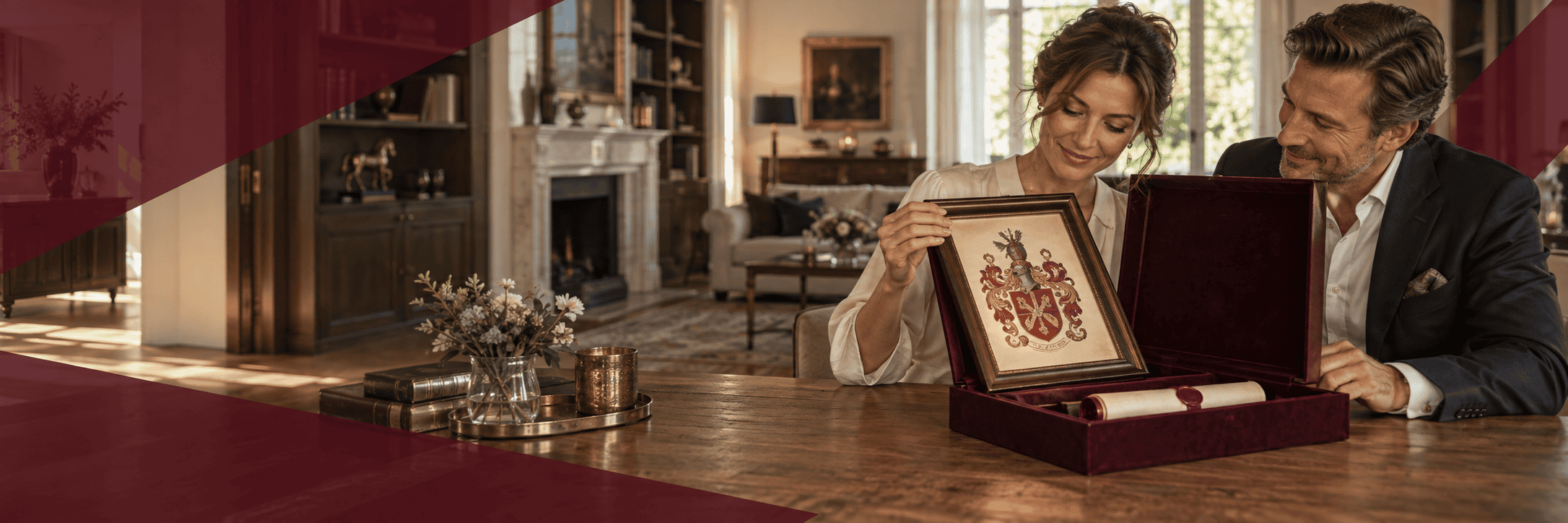
This Coat of arms can also complement this personal appearance. A Coat of armsscroll on letterhead, an ex-libris in a home library, or a seal on a card are all elements that are linked to the ancient culture of the Lords and Lairds. Such details do not need to appear overbearing. When used correctly, they give a name weight and create a connection between modern times and historical forms.
Lord of Kerry and Lady of Kerry combine several levels. The title has the international sound of the English language, the scenic depth of Ireland and the personal impact of a name that can naturally be used in everyday life. It can be used sparingly as a signature or consciously displayed prominently on a Certificate cover or invitation.
The strength of these titles lies in their versatility. They are suitable for elegant correspondence as well as for a personal project, for a travel memory as well as for a special gift. Their sound remains friendly, worldly and unmistakable.
Lord and Lady as an international title tradition
The influence of Lord and Lady extends far beyond the British Isles. English language, literature, film and music have made these addresses known worldwide. When one hears Lord or Lady, one immediately associates that with a certain atmosphere: old houses, well-kept gardens, family coats of arms, landscapes and a form of relaxed elegance.
This visual world did not emerge solely in the grand London townhouses. It grew up in the countryside: on farms, in small villages, on Scottish lakes and along the Irish coast. In this vision, a lord or lady was always also associated with a place. That is why territorial names are so powerful. They give the address a geographical and cultural background.
Scotland and Ireland lend special colors to this tradition. The Highlands are synonymous with clans, mountains, and old manor houses. Kerry stands for the green expanses of southwestern Ireland, for the coast, music, and Celtic traditions. Laird of Glencairn and Lord of Kerry lead in different landscapes, but share the same idea: a name connects a person with a place full of history.
The feminine form Lady has its own distinct appeal. It is clear, elegant and international, without being bound to any one language. Lady of Kerry combines the sound of English with one of the most distinctive regions of Ireland. The title carries both lightness and dignity.
Lord and Lady show how powerful a title can be through its history, its language and its local context. They turn a name into a small narrative: of a country, a landscape and a tradition that are continued in the present.