
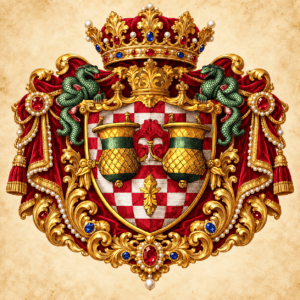
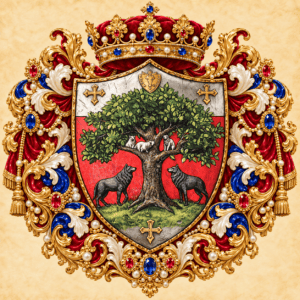

A title from medieval Spain.
Discover Spanish titles inspired by the counties, lords and noble houses of medieval Iberia. Choose a title with a story rooted in Castile, León, Aragon, Catalonia or the Pyrenees.
Discover the character of a Spanish noble title
A title shaped by the stories, regions, and traditions of medieval Iberia – designed as a personal presentation around your preferred name.
Design your name
Since 1999, Noble Society has presented exceptional titles for people seeking a special connection to European history. Choose a Spanish county or lordship with a personal presentation and heraldic character, inspired by medieval Iberia.
Choose your favorite from our Spanish collection and receive the corresponding personalized appointment documents. Each presentation is designed around the name you specify and connects the chosen title with its historical context and the atmosphere of the ancient kingdoms of Spain.
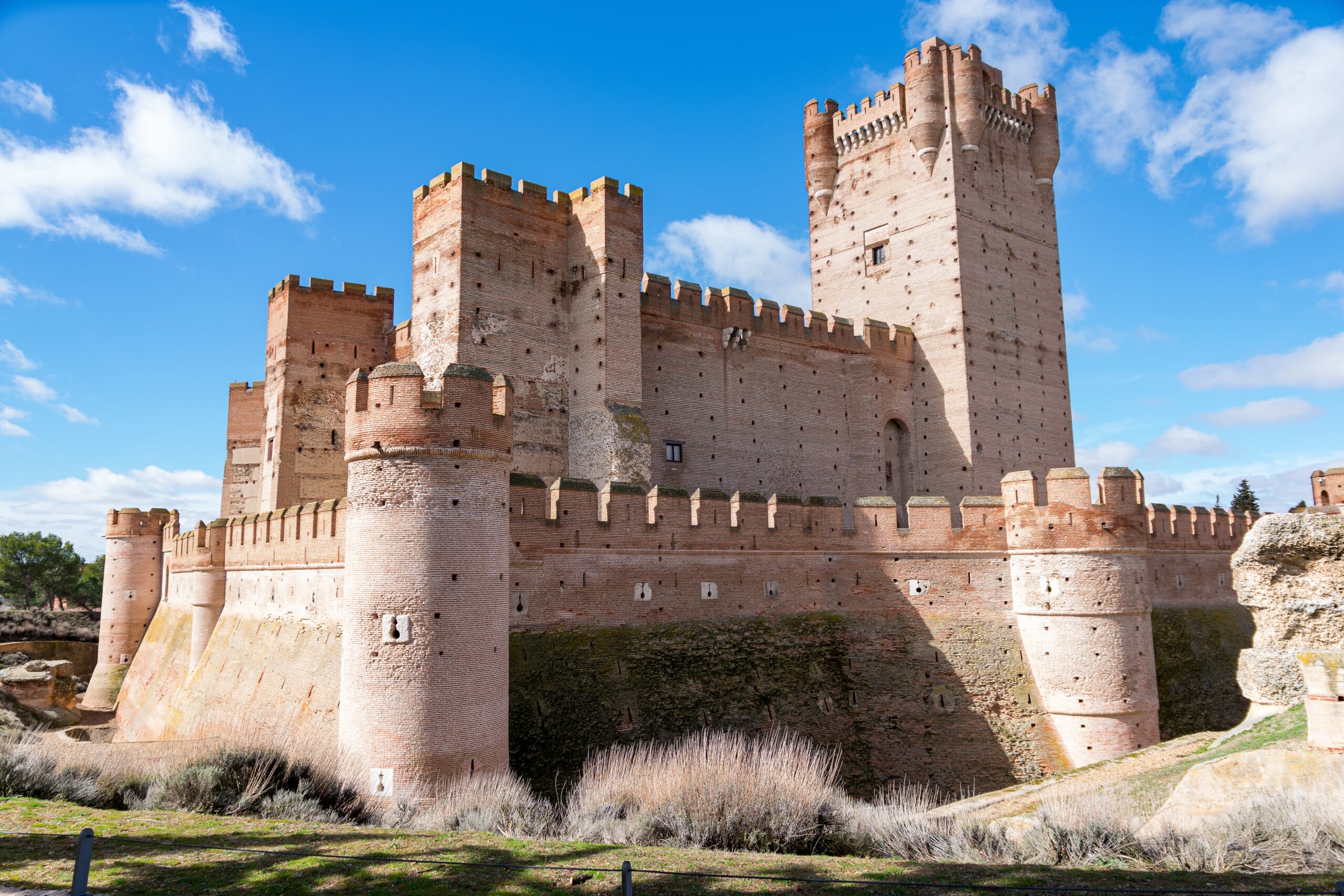
A story to be told again and again
Enjoy the name as part of your personal style: on a business card, at a private presentation, or as an extraordinary occasion for conversation. Present the appointment certificate in the office or at home, or give the presentation to someone who appreciates history, heraldry, and a little staging.
Spanish titles are an unusual gift and at the same time a very personal choice. Our presentation folders are designed for the respective recipient and make the occasion special from the first page to the last seal.

A title with a place and character
The collection follows the diverse map of medieval Iberia. Choose from historical counties and principalities connected to Castile, León, Aragon, Catalonia, Navarre, the Basque Country and the Pyrenees – from the Count of Pallars and Count of Ribagorza until Lord of Vizcaya, Lord of Cameros and Lord of Lara.
Each title has its own historical background: mountain fiefdoms, border kingdoms, ancient noble houses and royal lands. This diversity not only allows you to choose a rank, but also a history with its own region and character. Whether for yourself or as a special gift: the result is a tailor-made Spanish title presentation with a sense of occasion, history and identity.
Historical names.
Reborn to life.
Over the centuries, noble houses, principalities, and imperial courts in Europe and Asia created a fascinating culture of resonant names Coat of arms and solemn traditions. Today, many of these venerable designations slumber almost forgotten in dusty archives, historical registers, and artfully illustrated books of heraldry.
We at noble society institute finden: That's too bad for the history books.
That’s why we take these traditional models and translate them into an elegant, contemporary form. Based on historical sources and classic Coat of armsart, we create personal documents, artistic Coat of arms sets of documents that are simply delightful – as an extraordinary gift, a wink-wink accessory for the next hotel reservation, or a stylish statement in the office.
The result is not a dry museum piece, but your personal one. Aristonym: a resounding epithet with character, history, and a visual identity that is precisely tailored to your desired name.
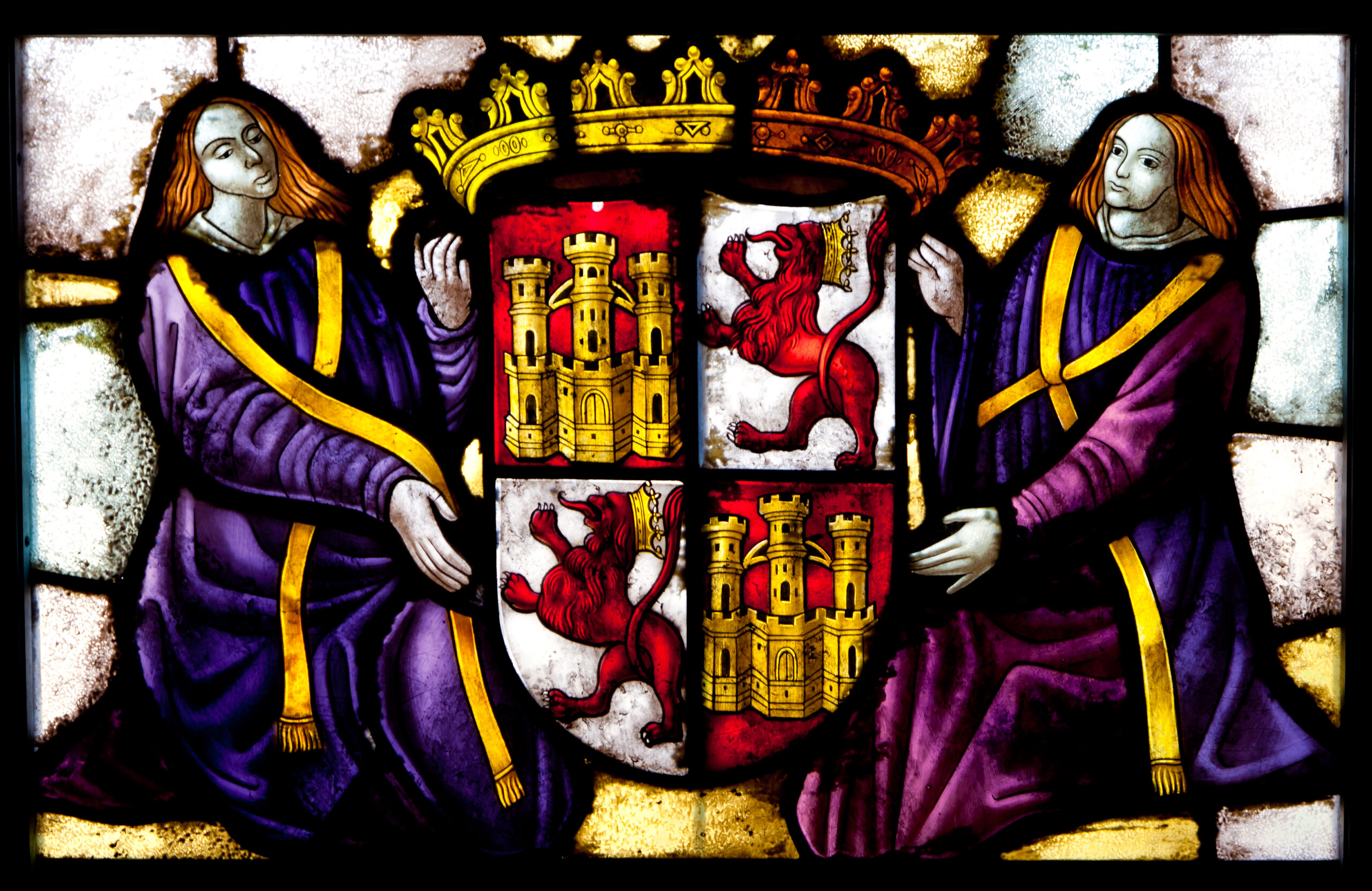
Three pillars for your performance
Historical inspiration
Whether a German baron, a French chevalier, a Tuscan count or the sublime Wappenculture of Japanese noble houses – our exclusive titles are based on real historical models, elegantly bridging the gap to the present and reflecting the spirit of their era.
Heraldic craftsmanship
A resounding name deserves distinctive insignia. Our insignia Coat of arms are designed according to classic rules of European heraldry, prepared extremely precisely digitally and created in such a way that they look excellent on documents, seal cards and high-quality prints.
Your personal staging
You will receive a customized presentation folder: from the artistically designed certificate of appointment on high-quality paper to printable vector files of your Wappens – complemented by practical ideas on how to use your new nickname in everyday life in a stylish and humorous way.
Choose a story from the ancient kingdoms of Spain
Before modern Spain, the peninsula was a patchwork of kingdoms, principalities and border states. The titles of this collection derive their character from this world: Castile and León, Aragon and Catalonia, Navarre and the Pyrenees.
Each title is presented as a special personal gift – with a historical setting that lends the name atmosphere and a sense of place.
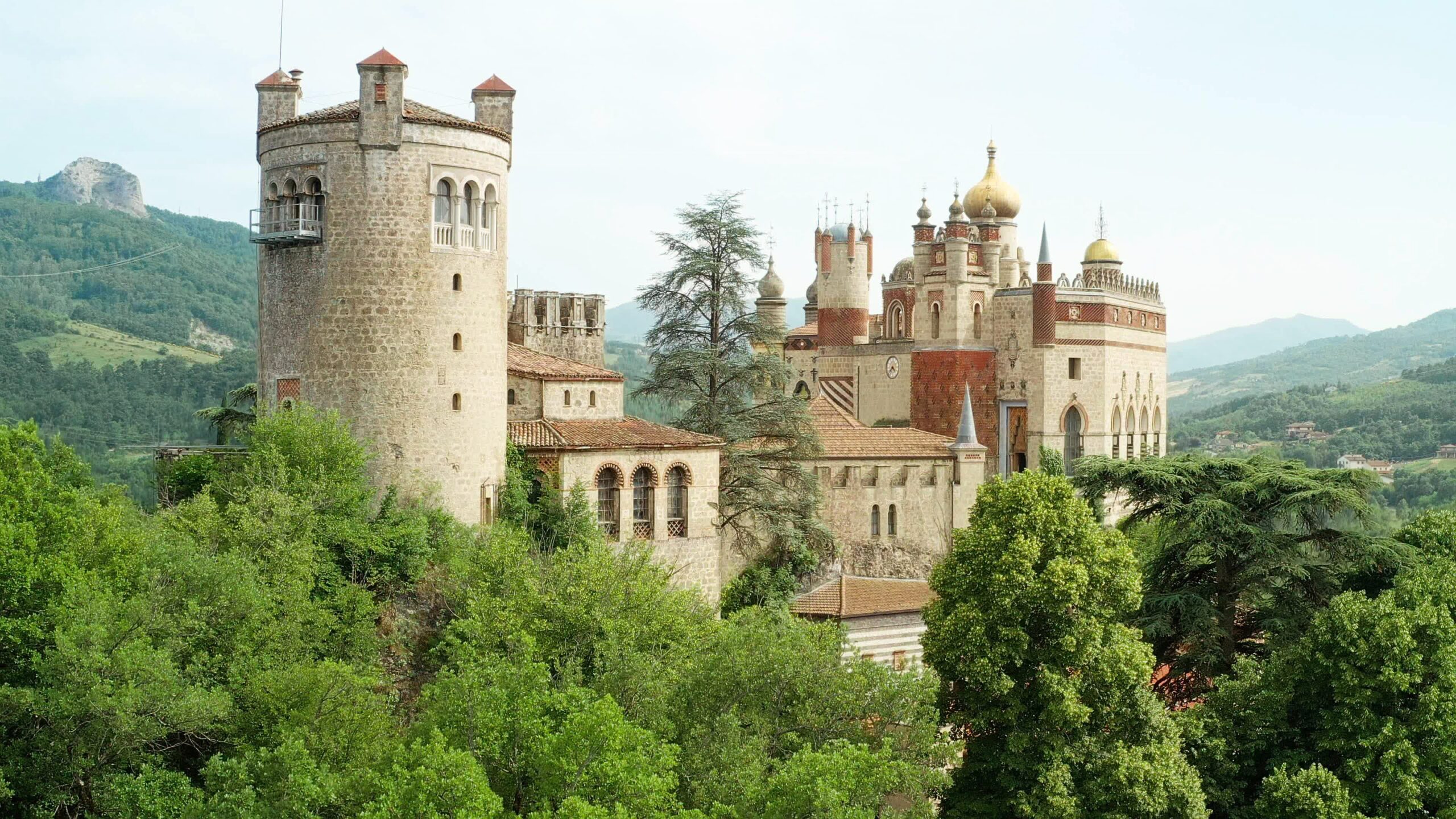
Your personal noble certificate – history, elegance & tradition
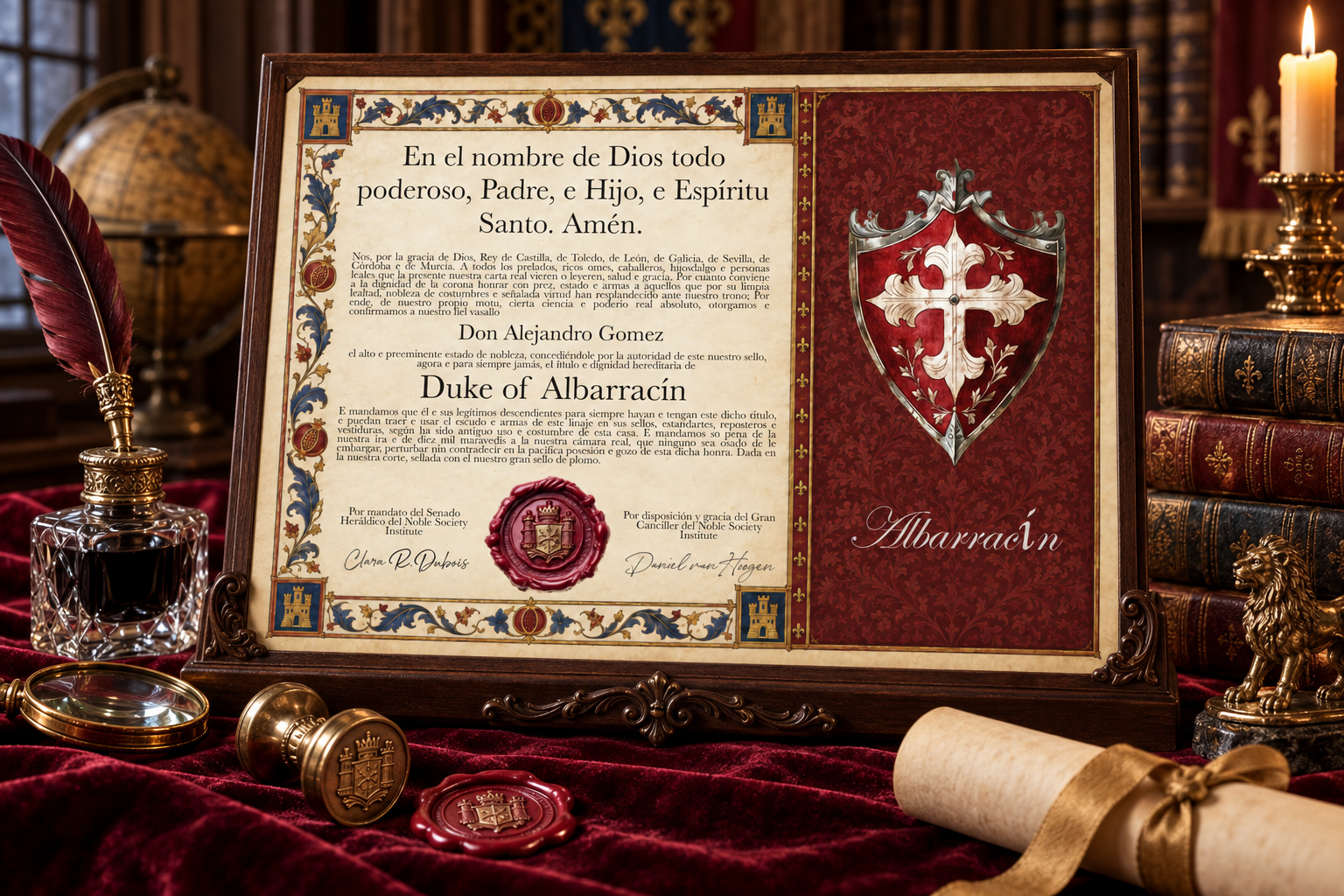
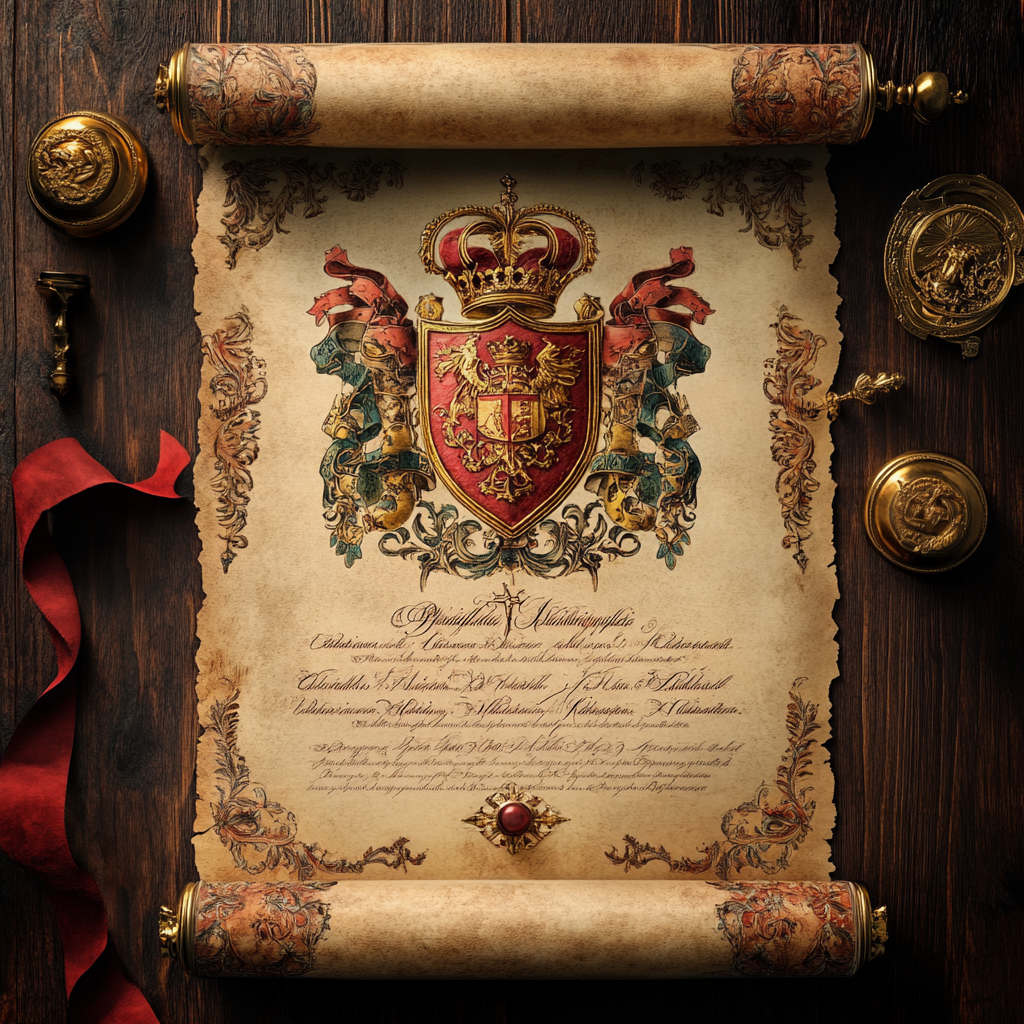
Bring the splendor of bygone eras right into your home: This magnificent document is a detailed and artistic recreation of historical patent letters – a real eye-catcher with palpable antique charm.
The right half shows the sublime, personal Coat of arms, which is traditionally and inextricably Title of nobility linked to your chosen one. Crafted in noble shades and adorned with elegant lettering, it radiates timeless dignity. At the center of the document, to the left, is the solemn dedication text in classic calligraphy. Each Certificate is individually designed for you: Your full name and your new name Title of nobility are harmoniously integrated into historical Certificateformulas and completed with traditional seals and attestations.
Printed on high-quality paper with authentic parchment-like texture and richly decorated edges, this is Certificate a masterpiece. Whether in the representative office, in the home library, or in the living room – ready-framed, it adds a stylish accent. As an extravagant gift for a special person or as a personal highlight for yourself: secure your own piece of history now.
Eight stories from medieval Spain
El Cid's sand-filled treasure chests
More
The chests were handed over to the merchants Raquel and Vidas in Burgos, who were never supposed to open them. There was no treasure inside, only sand. The episode became one of the most striking scenes in the Cid story: a warrior with great reputation and an acute financial problem. When he later returned wealthy, he used the chests with real money. The merchants received their payment, El Cid his treasury – and the sand played an unforgettable secondary role in medieval Spain.Buying a horse means being part of the elite
More
These horse-riding city dwellers were called Caballeros Villanos, Literally „Dorfritter“. The name sounds less flattering today, but the position was serious to take: military readiness could bring tax privileges, legal advantages and a place in the local elite. At a dangerous frontier, a reliable knight counted for more than an impeccable pedigree. Medieval Castile thus offered an astonishingly practical path to the top: acquire the right horse, prove your combat readiness – and suddenly the social life became significantly more aristocratic.The warrior who rode away after his death
More
After El Cid had died in Valencia, his wife Jimena is said to have dressed his body, placed him on his famous horse Babieca, and sent him before the troops. The sight of the seemingly living commander was enough to scare the besiegers into flight. This kind of story was beloved by the medieval audience: a hero too formidable to be deterred by ordinary biological inconveniences. Whether one imagines panic, theater, or both – the image of the fully-equipped commander on his final ride became inextricably part of the Cid legend.The King with a passion for chess
More
That Book of Games, The Book of Games is a remarkable guide to play, strategy, and court entertainment in the 13th century. Its pages show players of diverse backgrounds at the board, while chess tasks receive the solemn attention that was otherwise reserved for military affairs. At Alfonso’s court, a chessboard could become a small battlefield for judgment, patience, and tactical courage. It was the medieval-Spanish answer to the idea that one can learn important things through pleasure—provided the king had commissioned a beautiful manuscript for the purpose.The court that made dinner a fashion statement
More
Ziryab brought more than just songs. A stylish new way of dining was associated with him: first lighter dishes, then the main course, followed by dessert – an amazingly familiar sequence. The court tradition also attributes to him seasonal clothing, refined table manners, new hairstyles, and a penchant for asparagus. He was in a sense a medieval cultural advisor with excellent musical credentials. The elite of Córdoba not only listened to him; they adopted his way of life. Long before lifestyle magazines, a famous artist could influence what an entire court ate and wore.The Bell of Huesca
More
According to the famous story, the king had twelve troublemakers beheaded and arranged their heads in a circle. The head of the worst rebel lay in the center as the bell’s hammer. The message needed no further words: the king had found a way to make his authority audible from one end of Aragon to the other. Not a cheerful kind of palace decoration, but unforgettable political theater. In medieval Huesca, a warning could apparently be conveyed with symmetry, symbolism, and a deeply disturbing outline.Ham as a public confession
More
Because Jewish and Muslim dietary laws forbade pork, Christian households could deliberately display cooked ham in taverns, kitchens, and doorways. A bite in public could become a demonstration of belonging, especially where religious identity was under scrutiny. Thus, an everyday food became social theater: salt, smoke, pork, and a message to the entire street. Spain’s love for jamón has many roots, but this medieval connection gives the familiar ham a surprisingly dramatic story. Sometimes, lunch was the quickest way to make a confession.If a siege lasts longer than the contract
More
In the border regions of Aragon and Castile, service according to local custom could be measured, negotiated, and limited. The practical result was wonderfully human: a long siege could eventually fail on the question of whether a soldier’s legal obligation had already expired. Knights were not permanent employees with swords; obligations, privileges, and deadlines counted. Thus, an medieval version of a problem that every military leader fears emerged: the campaign is not yet over, but parts of the army have already tested the terms of the contract. War was brutal – and it also involved paperwork.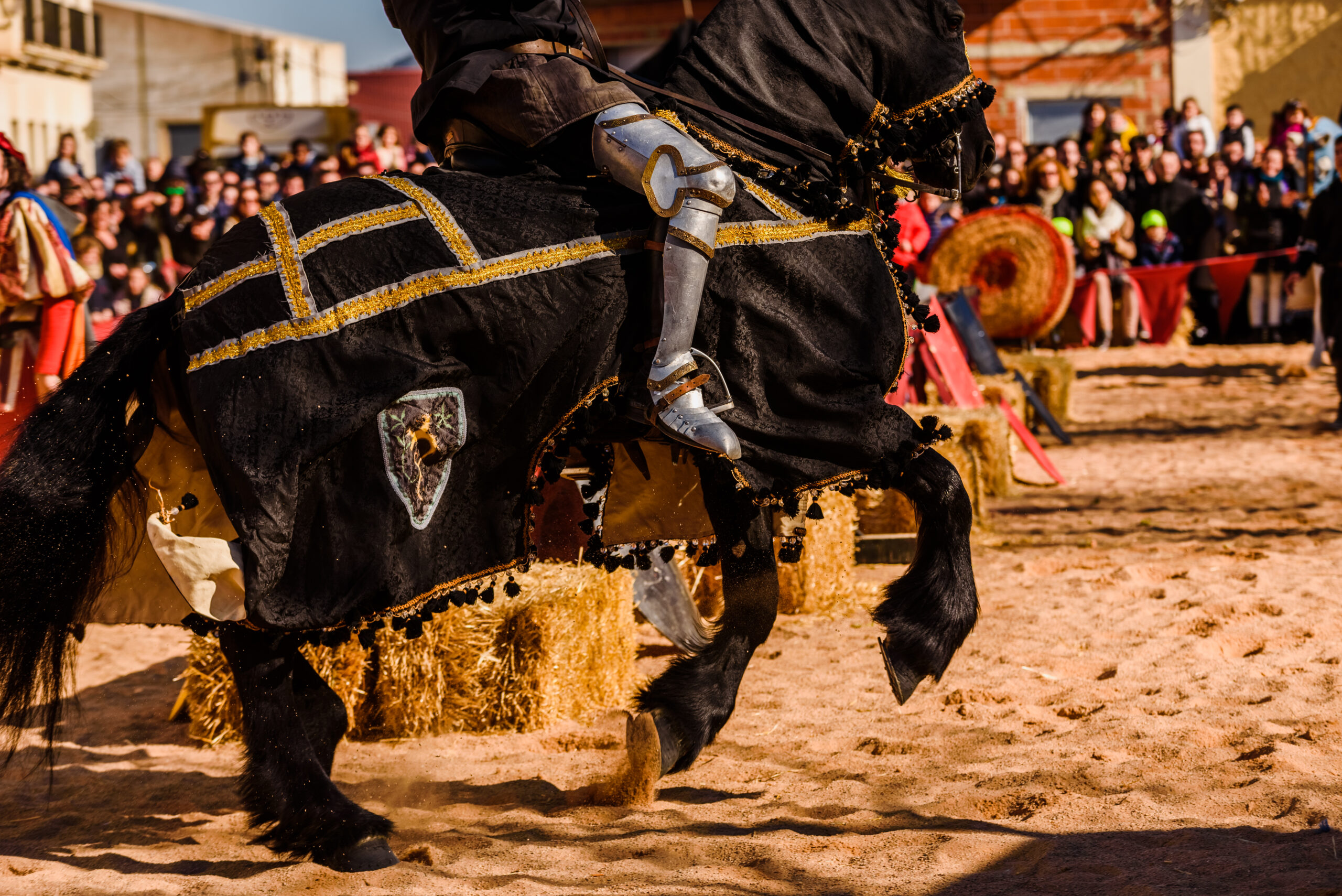
Castles, mountain passes and ancient kingdoms
Medieval Spain was not a single kingdom, but many. In the north, the Pyrenees protected ancient counties such as Pallars and Ribagorza. In the center, powerful principalities and noble houses emerged in Castile and León. In the east, the crown of Aragon united Aragon, Catalonia, and the lands beyond the Mediterranean Sea. This multifaceted history gives each title of the collection a clear framework: not an abstract rank, but a name that is associated with a specific medieval place and its history.How medieval-Spanish are you?
Ten questions. Treasure chests, royal chess, alarming bells – and absolutely no obligation to own a battle horse.
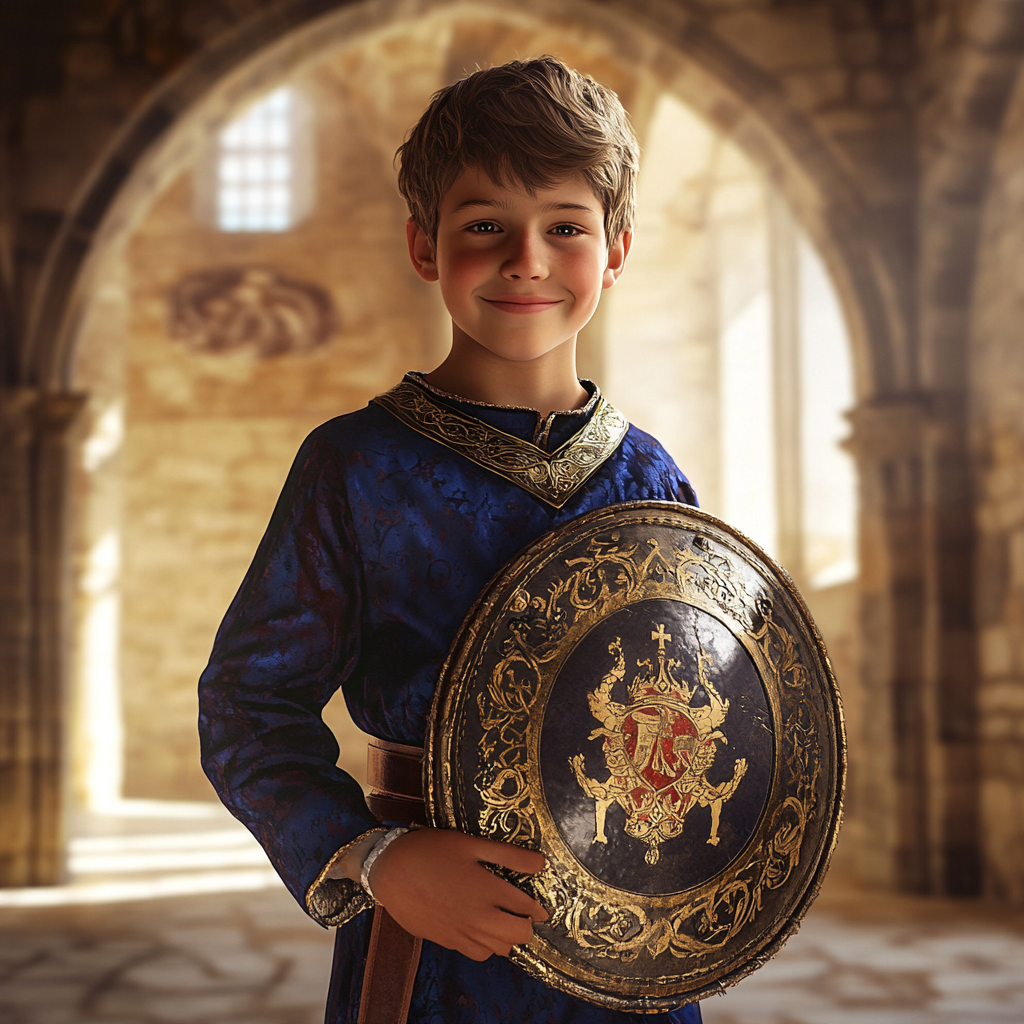
A title for a young nobleman
Giving a child a Spanish Title of nobility book is an extraordinary gift that evokes astonishment, strengthens self-confidence, and creates an unforgettable memory for life.
More
When you choose a family title, your children will naturally become part of this rich heritage – as a Vizconde or Vizcondesa, or as charming Señorito or Señorita. For a boy or a girl, it is a whole new world of Title of nobility pure magic. It conveys a sense of being special, strengthens manners and kindness, and connects directly with the chivalric stories of the past.
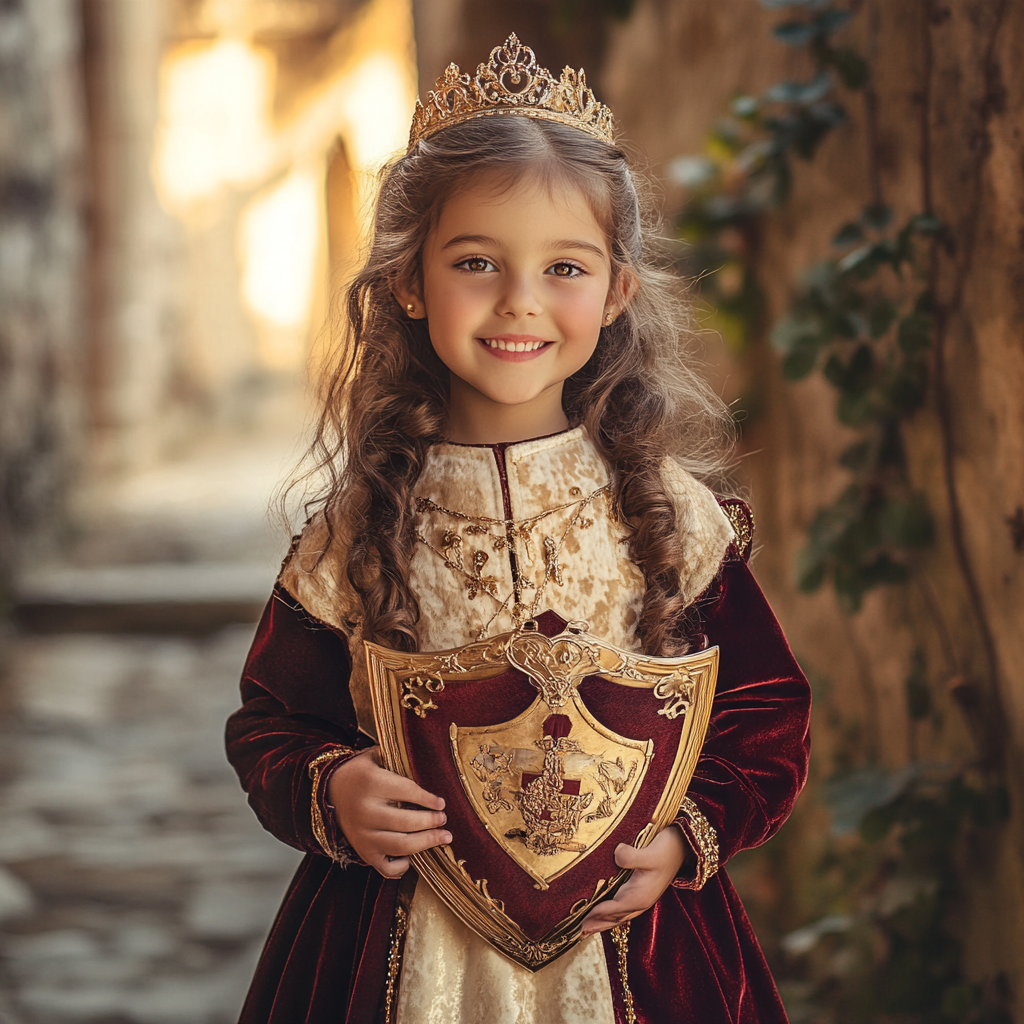
A royal quinceañera
This award holds a particularly special significance for young ladies celebrating their 15th birthday. The Quinceañera marks the journey of a beloved girl from childhood into a graceful young adult life.
More
A formal title with a personalized crest Certificate and family coat of arms on this special day looks like a symbolic royal coronation. It is a heartfelt tribute from parents and grandparents – a timeless expression of love that honors their family roots, celebrates their unique charisma, and accompanies them on their journey with warmth and pride.
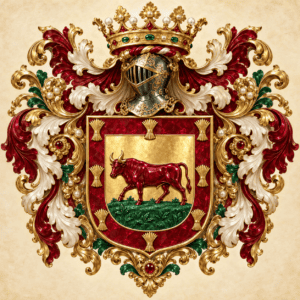
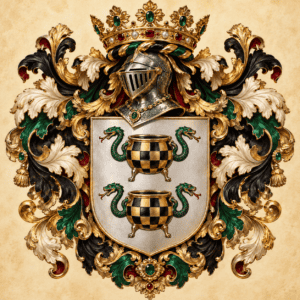
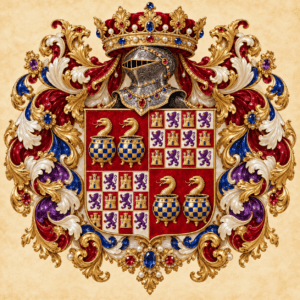
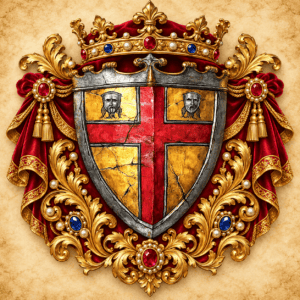
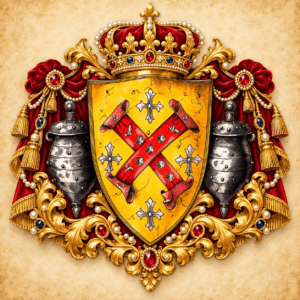
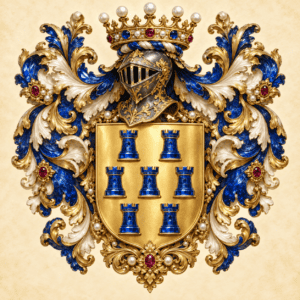
Your personal Coat of arms
One has always Coat of arms been much more than an artistic emblem – it is a timeless expression of personal dignity, origin, and values across generations. With your Spanish one, you Title of nobility receive your own authentic Coat of arms, carefully crafted replica, inspired by centuries of Iberian tradition. This historical piece Coat of arms is entirely yours and becomes the inspiring visual centerpiece of your home as well as a distinctive sign of your personality.You can celebrate and show off your style to the Coat of arms fullest. Whether on personalized stationery, formal correspondence, or elegant business cards: it adds an unforgettable touch to any message. At home, it also looks impressive as a representative door plaque, engraved entrance sign, or framed piece of jewelry above the fireplace. In everyday life and on trips, you Coat of arms can easily integrate it into a modern personal style: as a tasteful emblem on the vehicle, as an exclusive patch on polo shirts, blazers, jackets or travel bags – or even engraved on a key ring. No matter how you display it: it Coat of arms is a warm symbol of family ties, cohesion and style – and a wonderful conversation starter that connects your presence with the romantic world of history.