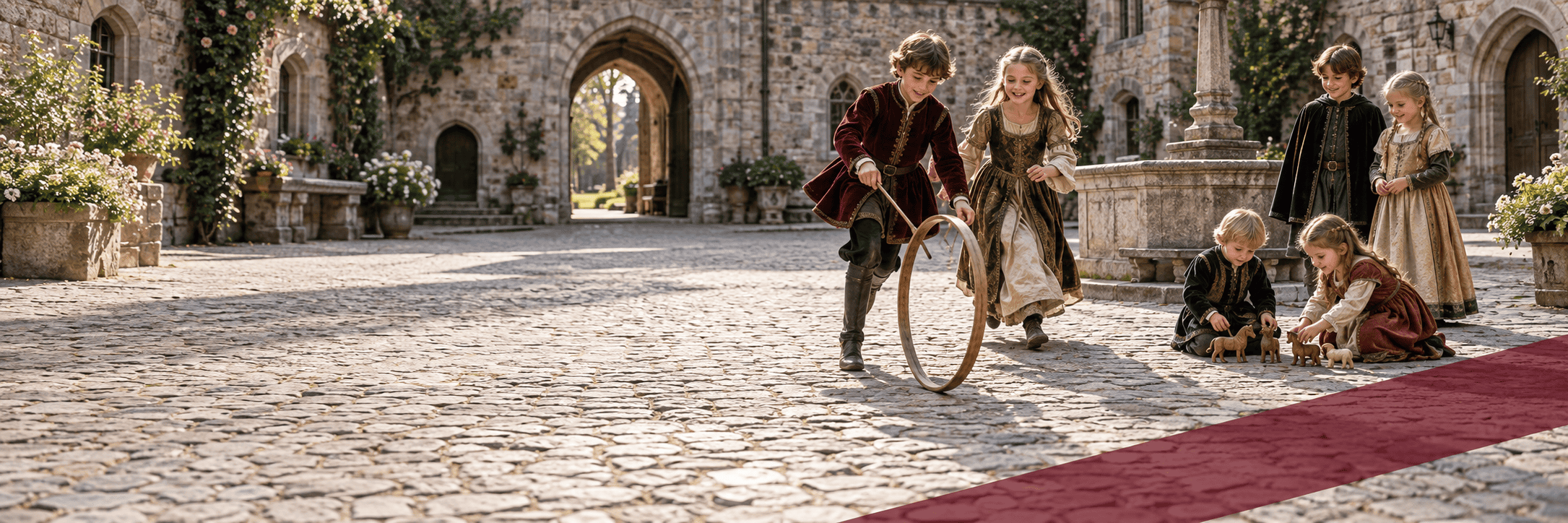
Noble children
Adelige Kinder shows how Title of nobility children can become part of a special identity at an early age. A Title of nobility connection to a prince or princess combines fantasy, self-confidence and a sense of uniqueness in everyday life. Many choose Title of nobility to buy one to give children an extraordinary gift that will accompany them with memories, pride and a special aura for a long time.
Little princes, great personalities – Title of nobility for children
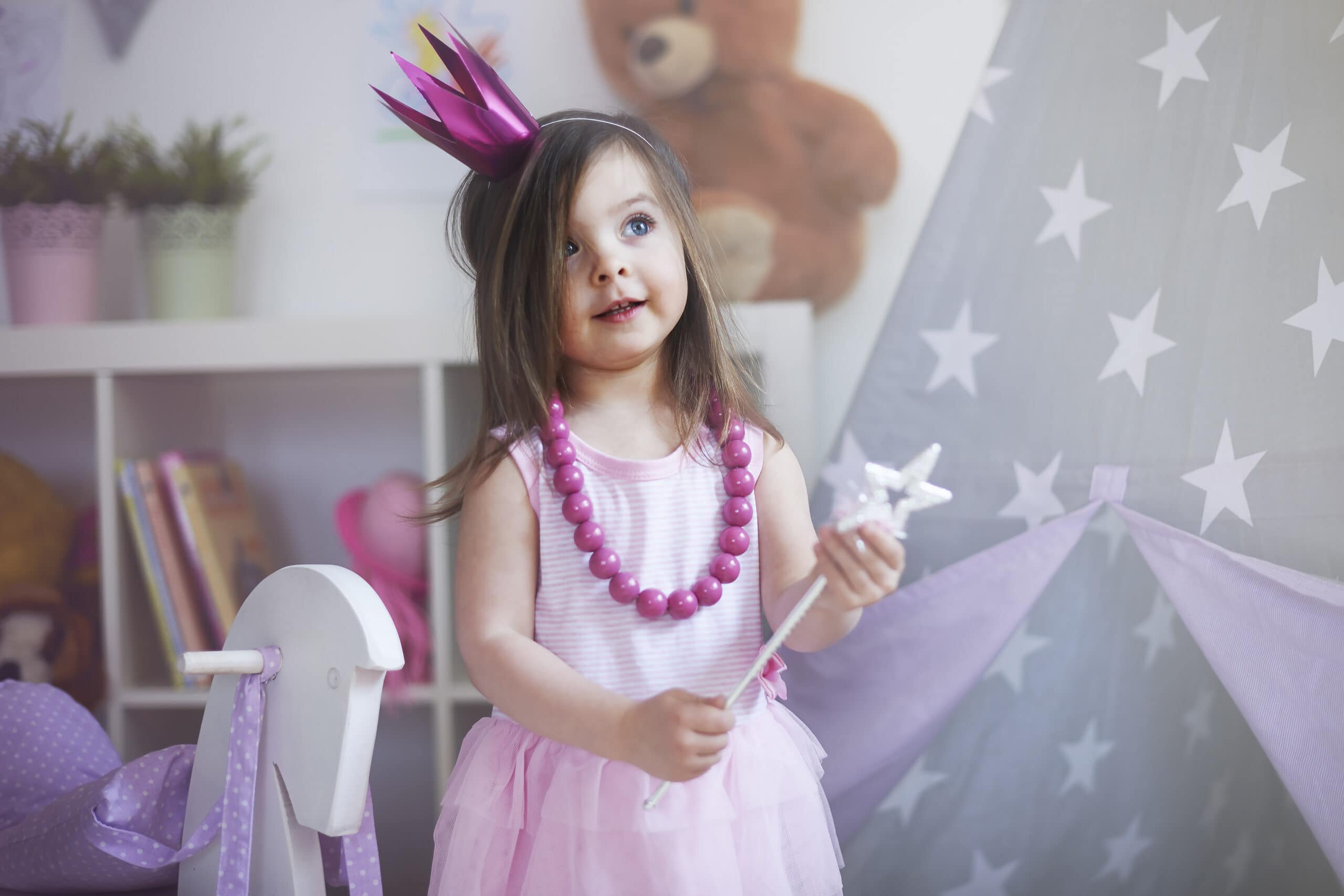
Children don’t need a long explanation to understand why Title of nobility something special is special. A prince, princess, countess, young lady or little Laird immediately open up a world of stories, fantasy and personal meaning. And when their own name Certificate is also included in an elaborately designed design, the game suddenly becomes something that only this one child can see.
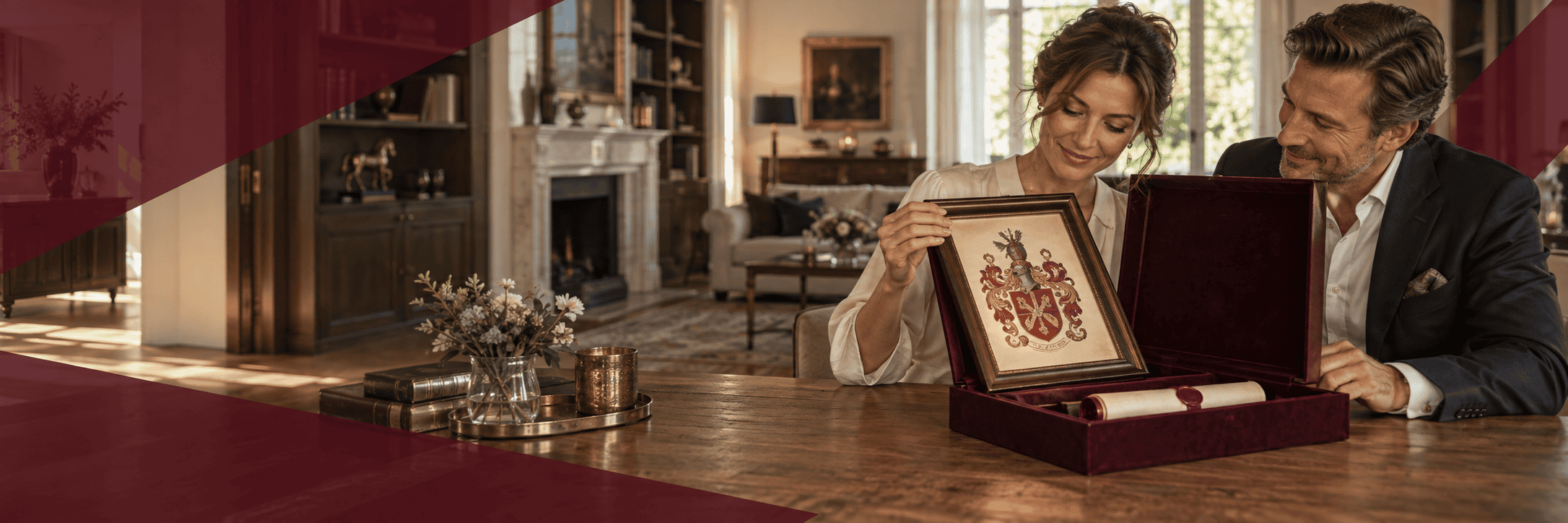
A children's title is therefore much more than just any fairy tale gift. It connects a name with a Coat of arms story and a moment that the whole family remembers. It Certificate can be hung in the children's room, presented at a celebration, or kept as a reminder of a special birthday later on.
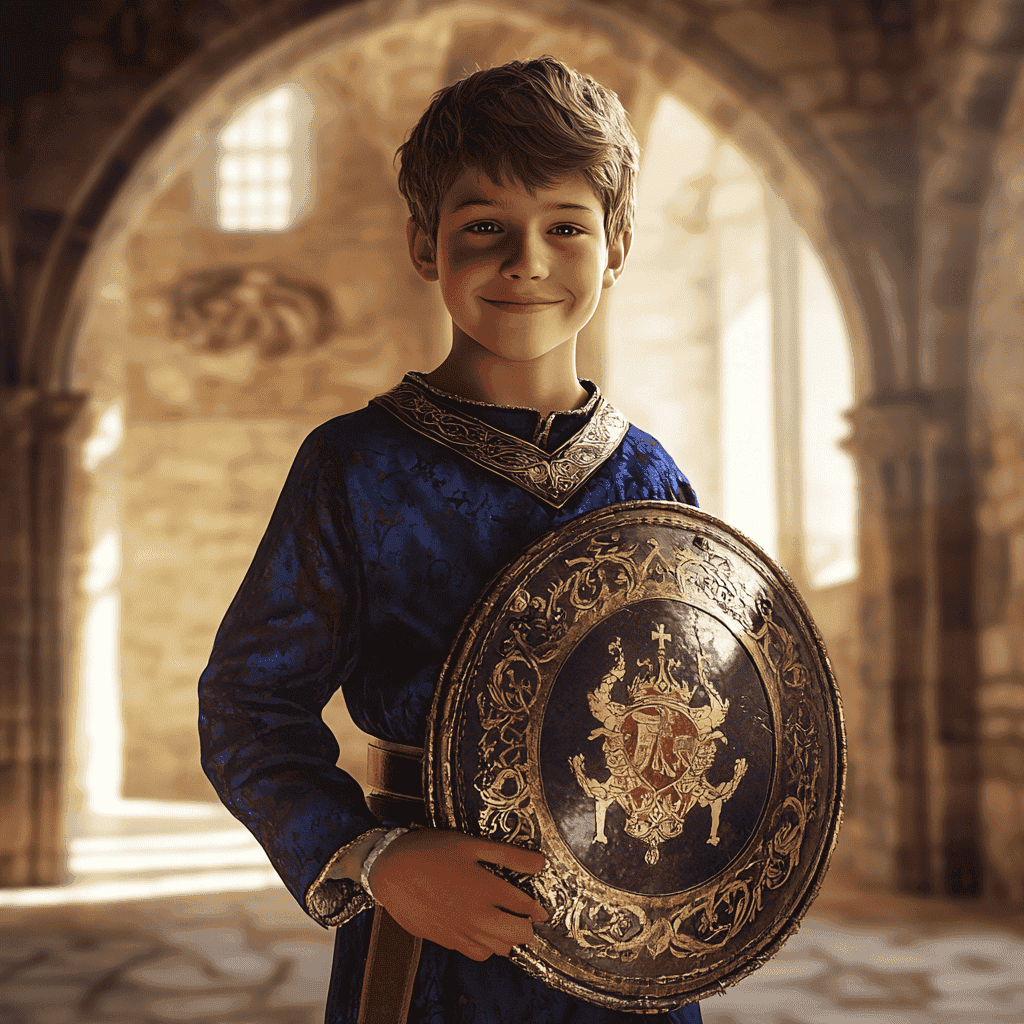
At Noble Society, we create Kinderurkunden as a loving and stylish addition to the chosen main title. This creates a harmonious overall look for the whole family, which is wonderfully suitable as a gift, a personal keepsake, or a shared family set.
First, you choose the desired title for the adult or for your family. Then simply enter the full name and gender of the child. Based on this, we create the title that Children's certificate suits the respective family and take into account the corresponding child designation. Depending on the chosen title, it can be issued for a prince, princess, young count or countess, for Certificate example.
By default, we use the official title form that matches the main title so that all the Urkunden elements are visually and content-wise harmoniously matched with each other. If you, instead, explicitly request the term „Prince“ or „Princess“ for your child, that is of course possible: simply let us know via email or the live chat after your order.
Our team takes your wishes into account when creating the invitations Certificate and usually prepares the appropriate version within a few hours. This turns the chosen main title into a particularly beautiful family experience – personalized, high-quality and tailored to your specific needs.
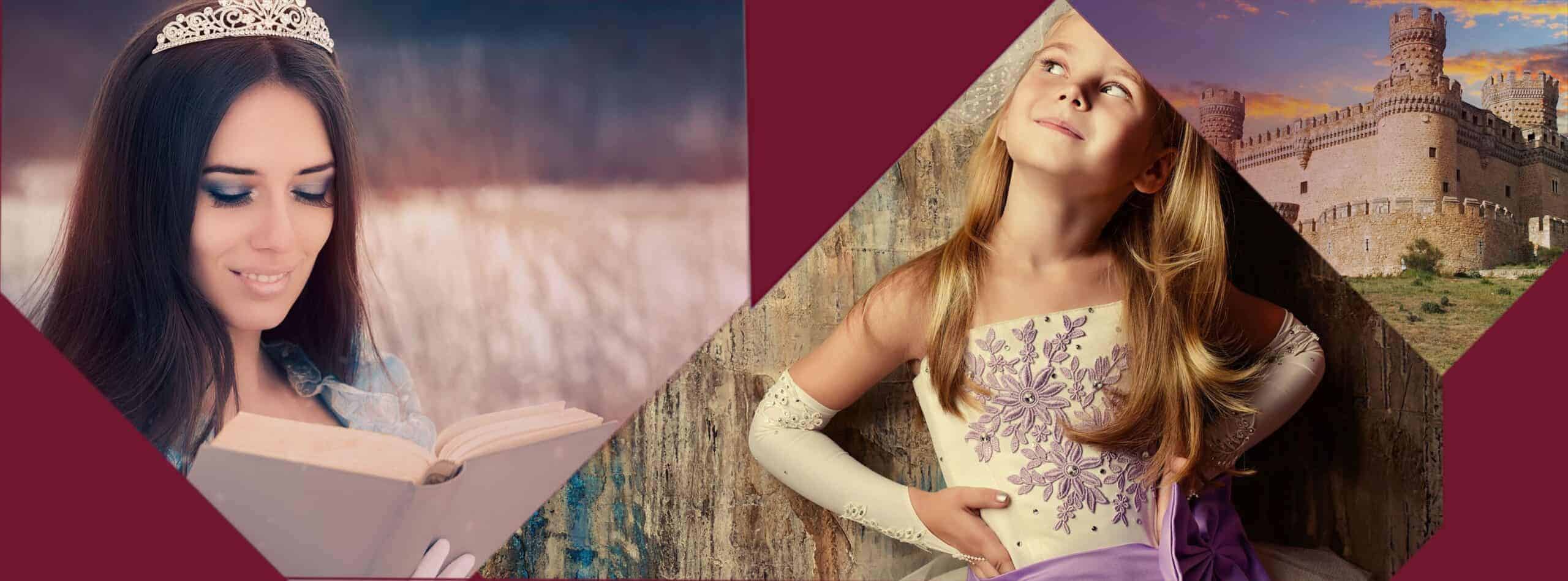
Why a title of their own inspires children so directly
Adults often first ask what the historical significance of a title is or how it can be used. Children take a more direct approach: they imagine who they could be with that name. A princess possesses courage, attitude, and a story. A prince experiences adventures. A comtesse belongs to a mysterious family. A young Laird has a place somewhere in Scotland that he can find on the map.
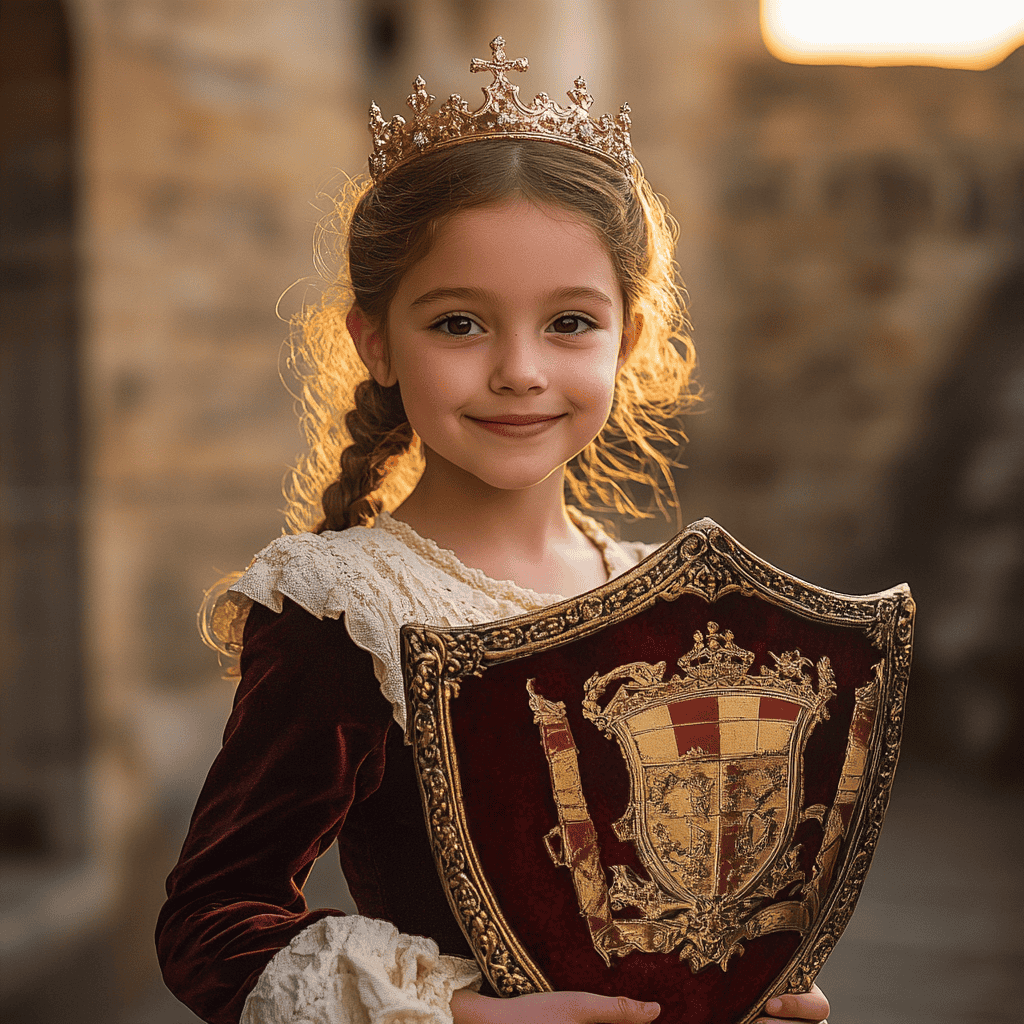
This fantasy is not an superficial side effect, but the core of the gift. Children process the world in roles and stories. A personal title gives them a positive role that is not based on a ready-made film character, but carries their own name.
It Certificate makes this idea visible. It doesn’t simply say „You are something special“; it shows it with a name, a title, and a Coat of arms. This can boost self-confidence, encourage storytelling, and give the child the feeling of being at the center of a very special story.
The title does not have to be taken seriously. Some children hang their title Certificate solemnly over their bed, others use it when playing, on invitations, or on a door sign. What matters is not how „officially“ the whole thing looks, but how much joy and personal significance it brings.
This is how the personal Children's certificate
Select main title
First, choose the Title of nobility one that suits the family or the person being given the gift – for example, Count of Falkenstein, Countess of Neuschwanstein, Lord of Kerry, or Laird of Glencairn.
Children complete the picture
In the personalization, Kinderurkunden can be added. You specify gender and the name that will Certificate appear exactly on the card later.
Obtained the appropriate shape
This Certificate is created using the child form that comes with the product. This keeps the linguistic relationship between the main title and the child title correct.
Download immediately
After ordering, the personalized digital documents are ready for immediate delivery. After printing and shipping, the printed versions will then be sent by post.
A joint gift where no one has to just watch
Family gifts sometimes have a small catch: One person packs the gifts, everyone else watches. With Partner- and Kinderurkunden, you can create a shared moment. First, the main person receives their title, then the partner follows – and eventually, the children also get their own Urkunden.
That immediately changes the atmosphere. From a simple gift, it becomes a small ceremony where everyone plays a role. Especially at weddings, family anniversaries, Christmas, or a joint vacation, this can be much more beautiful than a single item.

In medieval and early modern nobility, the life of a newborn began with a procedure that resembled an Egyptian embalming process: the so-called wrapping or pinning. Noble babies were tightly wrapped around their necks in metre-long linen bandages shortly after birth, so that their arms and legs would become rigid and immovable on the body. The doctors and midwives of the time firmly believed that the soft limbs of a child would grow crooked or deformed without this rigid corset. The completely immobile baby package was then propped against the wall for hours, placed in a cradle, or hung on hooks while midwives and maids went about their duties. Only after many months did the bandages be gradually loosened so that the noble child could finally learn to move at all – a potentially uncomfortable start to a privileged existence.
Noble prince children and princes enjoyed a sacred inviolability that regularly caused serious headaches for their tutors. According to the divine understanding of rulers, an ordinary citizen or magister could in no way physically discipline the offspring of a king, since any hand on the prince was considered treason. To nevertheless bring idle or rebellious successors to reason, the European royal courts invented the institution of the Whipping Boy, Of the rough-and-tumble boys. The prince was accompanied by an equal-aged noble companion with whom he learned and played day after day. If the prince did not do his Latin homework or behaved inappropriately at the table, the future king was not beaten, but his closest friend received the blows with the willow rod before his very eyes. The psychological guilt and the shame that another had to suffer for one’s own mistakes proved to be far more effective pedagogy than any direct blow to the princely trousers.
The concept of an uneventful, playful childhood simply did not exist in the nobility; noble children were strictly considered miniature versions of future dignitaries. As early as the age of four or five, boys and girls had to wear their parents’ clothes in the exact miniature format. Little girls were wrapped in hard-wearing fishbone corsets, wore floor-length velvet dresses with frills, and painstakingly learned to move with graceful steps without stumbling over their wraps. Princes were given handmade, functional prungharnishes made of genuine steel weighing many kilograms at the age of six, and had to practice for hours with real, blunt swords. Anyone who roamed the court or rolled in the mud like a peasant child not only ruined a fortune in silk and gold brocade but also violated the courtly dignity, which one had to demonstrate with an iron face from the first step onwards.
In aristocratic power politics, children were by far the most valuable currency on the marriage market, which is why engagements could not be started early enough. As soon as an aristocratic girl gave birth, the royal courts were already calculating which neighboring dynasty would best merge lands, alliances, or claims to the throne. Princess Margaret of Scotland and the French Dauphin Louis’s wedding took place when the bride was just eleven years old, and some contracts were already sealed while the betrotheds were still clinging to their mothers’ breasts. At the symbolic wedding at an early age, an adult envoy often entered the bed of the little girl with a bare leg, representing the groom, to legally bind the alliance before notaries. The children often didn’t know for years what the whole thing meant – until at the age of twelve or thirteen they were hurriedly sent off to a foreign country to rule alongside a completely unknown husband.
The idea of a harmonious family life with one’s biological parents was completely alien to most noble children. Until the age of seven, they grew up almost exclusively with paid servants, governesses, and court ladies; contact with their mother and father often consisted of formal greetings at the Sunday church service. However, once a noble boy reached the age of seven, the period of adjustment ended abruptly: he was separated from his family and sent to the court of a friendlier duke or count, where he served as a page. There, the young squire learned not only to ride and fencing, but also had to cut the meat for the lord at banquets, serve the wine, feed the hunting falcons, and clean the boots. This harsh school away from home was intended to toughen the children, break down personal vanity, and build a tightly knit diplomatic network among the noble houses that would last a lifetime.