

Description
Information about the family history and the coat of arms
Family history
▼
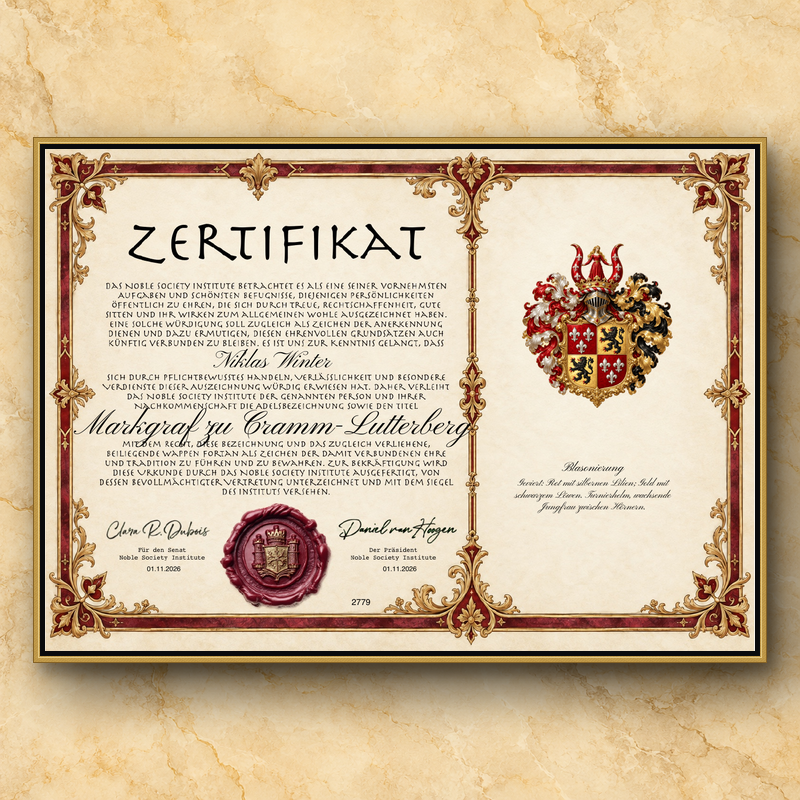
Family history Markgraf zu Cramm-Lutterberg
Family history Markgraf zu Cramm-Lutterberg
The Adel family of Cramm-Lutterberg was a subsidiary line of the widely branched Niedersächsische noble lineage by Cramm, which is already documented in the 12th century. The main family originates from the region of Hildesheim and Braunschweig and belonged to the old welf fishing service class, who performed important court and military functions in the vicinity of the Dukes of Brunswick-Lüneburg.
The Branch by Cramm-Lutterberg It was formed in the 15th century, when a younger son of the family took over the estate. Lutterberg at Göttingen, where he acquired and henceforth called himself after that noble title. Like many lines of the Lower Saxon nobility, this one was also descended from the Lease agreements with the High Cathedral of Hildesheim and later with Kurhannover closely connected. Their members held office as Droste, Landvögtes and leading officials and were regarded as part of the regional knightly order.
In the 16th century, the family took an active part in the Hildesheim Cathedral Feud part that shaped the balance of power between the nobility and the church in the region. The name is recorded Ludolf von Cramm-Lutterberg, He was stationed in Hildesheim around 1540 as a captain and defended the castle of Calenberg for a time. Another branch joined the service of the Elector of Saxony and became a Lutheran, which split the family in religious matters.
Coat of arms & Heraldry
▼
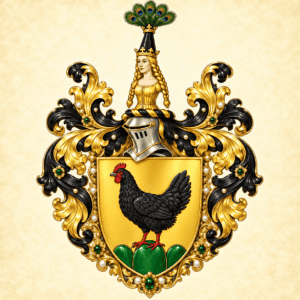
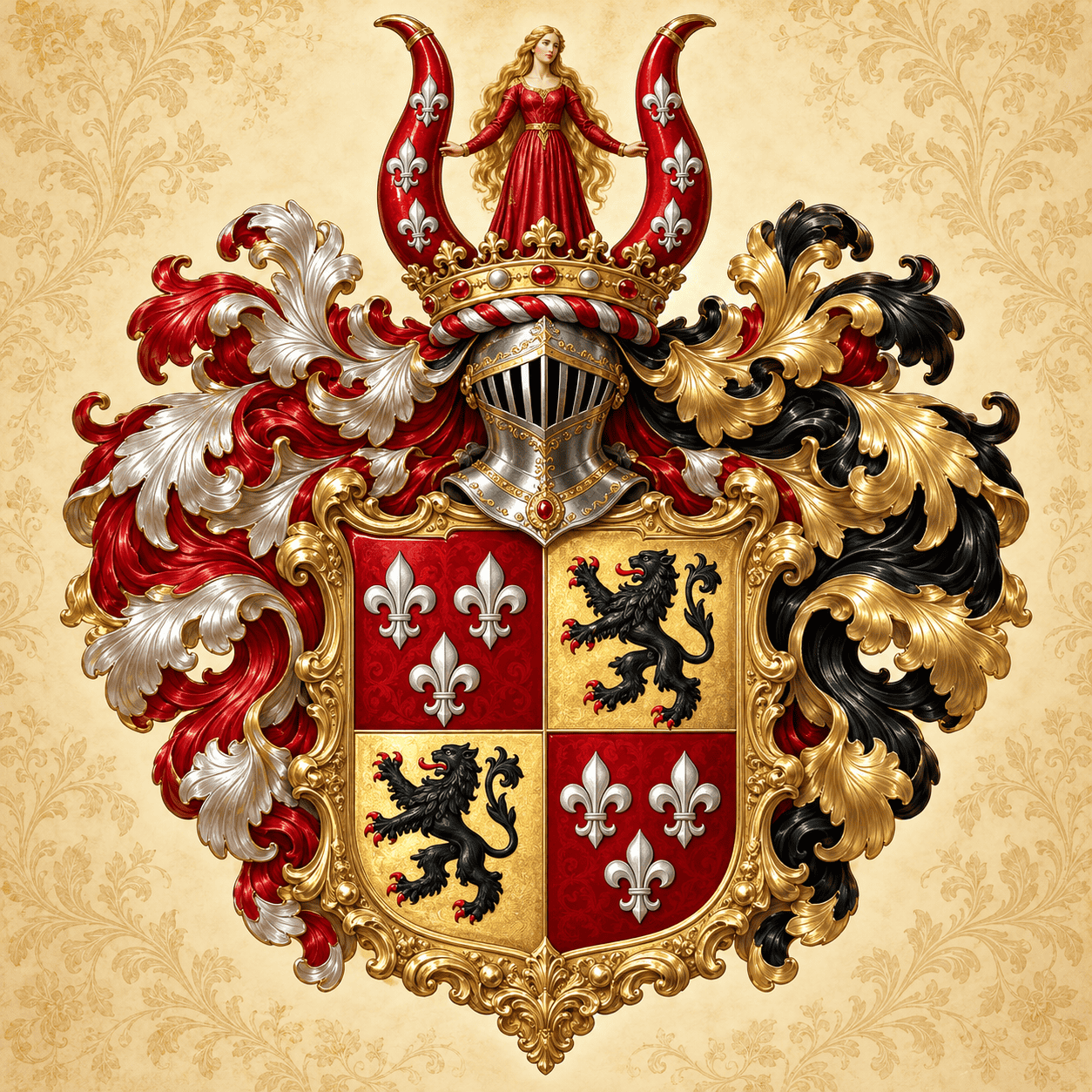
Family coat of arms Markgraf zu Cramm-Lutterberg
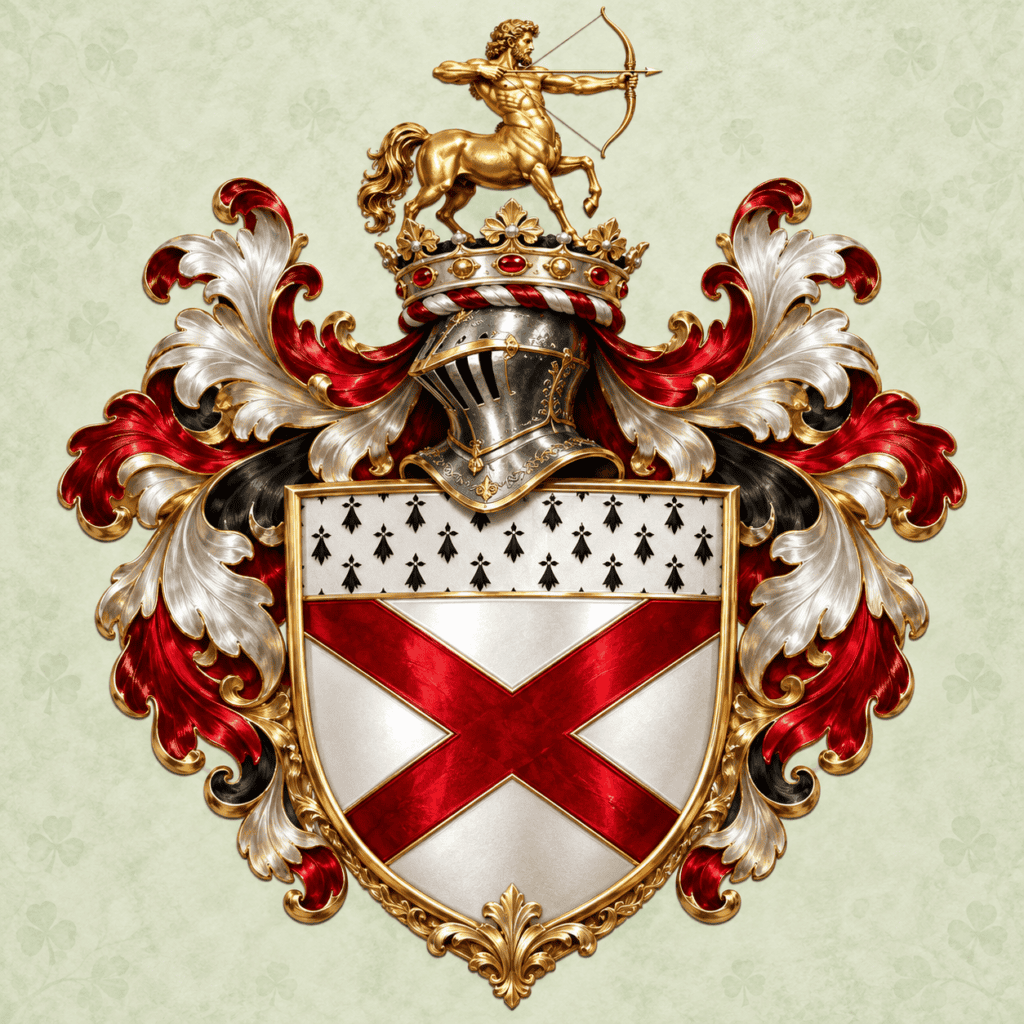
Heraldic description: Fourth row. Fields 1 and 4: Three silver lilies in red, placed two above one. Fields 2 and 3: One upright black, red-armored lion in gold.
The quartered shield connects the red Cramm fields with three silver heraldic lilies each and the golden Lutterberg fields with one upright black lion each. The lions’ red claws clearly separate the figures from the gold background. A gilded border surrounds the shield.
Above the shield is a tournament helmet made of etched steel with a red-silver visor. Expansive acanthus leaves in red-silver and black-gold frame the composition. As a helmet ornament, a Virgin in a red dress with open blonde hair grows up between two red buffalo horns; both horns are adorned with silver lilies.