
Description
Information about the family history and the coat of arms
Family history
▼
Family history Sayyid of Zanzibar
Die Sayyids von Sansibar – Das Haus Al Bu Saʿid im Indischen Ozean
Die Dynastie Al Bu Saʿid begann 1744 mit Ahmad ibn Said, der Oman einte und als Imam eine neue Herrscherlinie begründete. Sein Enkel Said ibn Sultan baute im frühen 19. Jahrhundert eine maritime Macht zwischen Arabien und Ostafrika auf. Sansibar wurde zu seinem bevorzugten Regierungssitz. 1835 ließ er dort den Palast Beit al-Sahil errichten; die Insel entwickelte sich zum bedeutenden Handelsplatz für Nelken und Waren des Indischen Ozeans.
Nach Saids Tod 1856 teilten seine Söhne das Reich. Thuwaini regierte Oman, während Majid ibn Said erster eigenständiger Sultan von Sansibar wurde. Majid förderte die Stadt und befestigte die Herrschaft an der ostafrikanischen Küste. Ihm folgte 1870 sein Bruder Barghash, einer der prägendsten Sultane. Nach Reisen in Indien und Europa modernisierte er die Hauptstadt, ließ Straßen, Wasserleitungen und das zeremonielle Beit al-Ajaib, das „Haus der Wunder“, bauen. 1873 schloss er auf britischen Druck den öffentlichen Sklavenmarkt und untersagte den Seehandel mit versklavten Menschen.
Unter Khalifa, Ali und Hamad wurden Verwaltung und internationale Beziehungen weiterentwickelt, während der britische Einfluss wuchs. Als Khalid ibn Barghash 1896 ohne britische Zustimmung den Palast besetzte, führte ein nur wenige Minuten dauerndes Bombardement zum berühmten Anglo-Sansibar-Krieg. Hamoud ibn Muhammad übernahm danach die Regierung und unterstützte 1897 die vollständige rechtliche Aufhebung der Sklaverei.
Im 20. Jahrhundert folgten Ali, Khalifa ibn Harub und Abdullah. Khalifa regierte von 1911 bis 1960 und begleitete Sansibar durch tiefgreifende gesellschaftliche Veränderungen. Jamshid ibn Abdullah wurde 1963 Herrscher des unabhängigen Sultanats; die Revolution von 1964 beendete seine Regierung. Die Familie lebte danach außerhalb Sansibars weiter. Ihre Paläste, Bäder und geschnitzten Türen prägen bis heute Stone Town, dessen einzigartige Verbindung afrikanischer, arabischer, indischer und europäischer Kultur UNESCO-Welterbe ist.
Sources: Oman Ministry of Information, UNESCO World Heritage Centre, Encyclopaedia Britannica
Coat of arms & Heraldry
▼
Family coat of arms Sayyid of Zanzibar
Der Entwurf verbindet das dynastische Zeichen der omanischen Al Bu Saʿid – Khanjar und gekreuzte Schwerter – mit Sansibars Seefahrt und Nelkenhandel.
In Rot ein silberner Khanjar in goldverzierter Scheide über zwei gekreuzten silbernen arabischen Säbeln mit goldenen Griffen; im Schildfuß zwei gekreuzte grüne Nelkenzweige, im Schildhaupt eine kleine silberne Dhau. Über dem Schild eine weiß-goldene Sayyid-Rangzier.
Die Dynastie Al Bu Saʿid entstand 1744 in Oman. Said ibn Sultan verlagerte seinen Schwerpunkt nach Sansibar; nach 1856 wurde die Insel unter Majid ibn Said ein eigenständiges Sultanat und blieb bis 1964 unter der Dynastie.
Sources: Oman Ministry of Information, UNESCO World Heritage Centre, Stone Town of Zanzibar, historical emblem of Al Bu Saʿid, project history „Sayyid of Zanzibar“
Overview of your title package
What the title of nobility contains
Discover the fascination of historical noble titles. With each appointment, you receive a first-class package that perfectly combines tradition, personal recognition, and stylish representation:
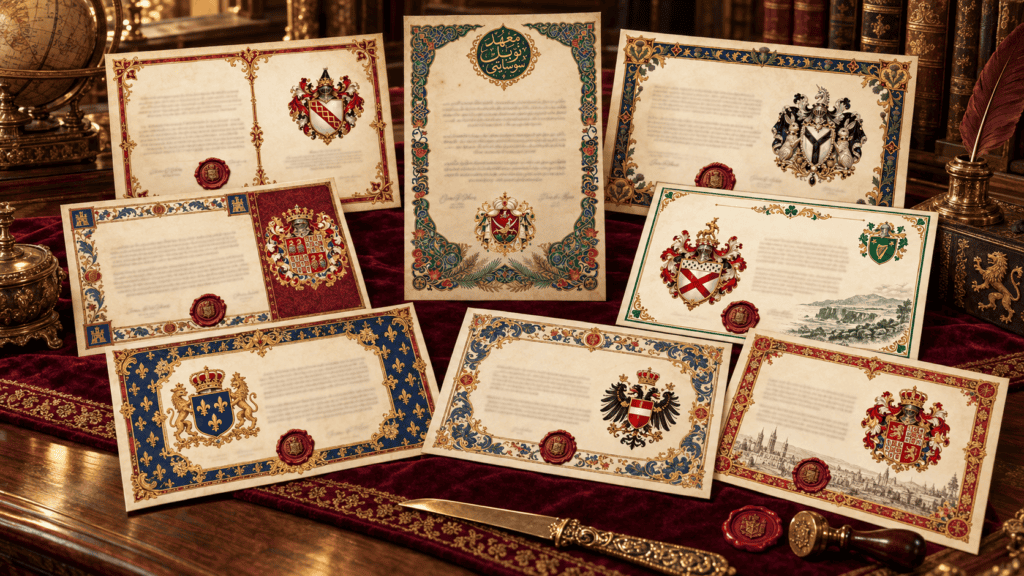
Your certificate
Authentic design with a historic flair: For each region, we create a certificate of appointment in the distinctive, country-specific style – complete with the appropriate coat of arms of your chosen title.
Share this special moment: Upon request, you will receive a free partner certificate and certificates for your children, so that the whole family can participate in the tradition.
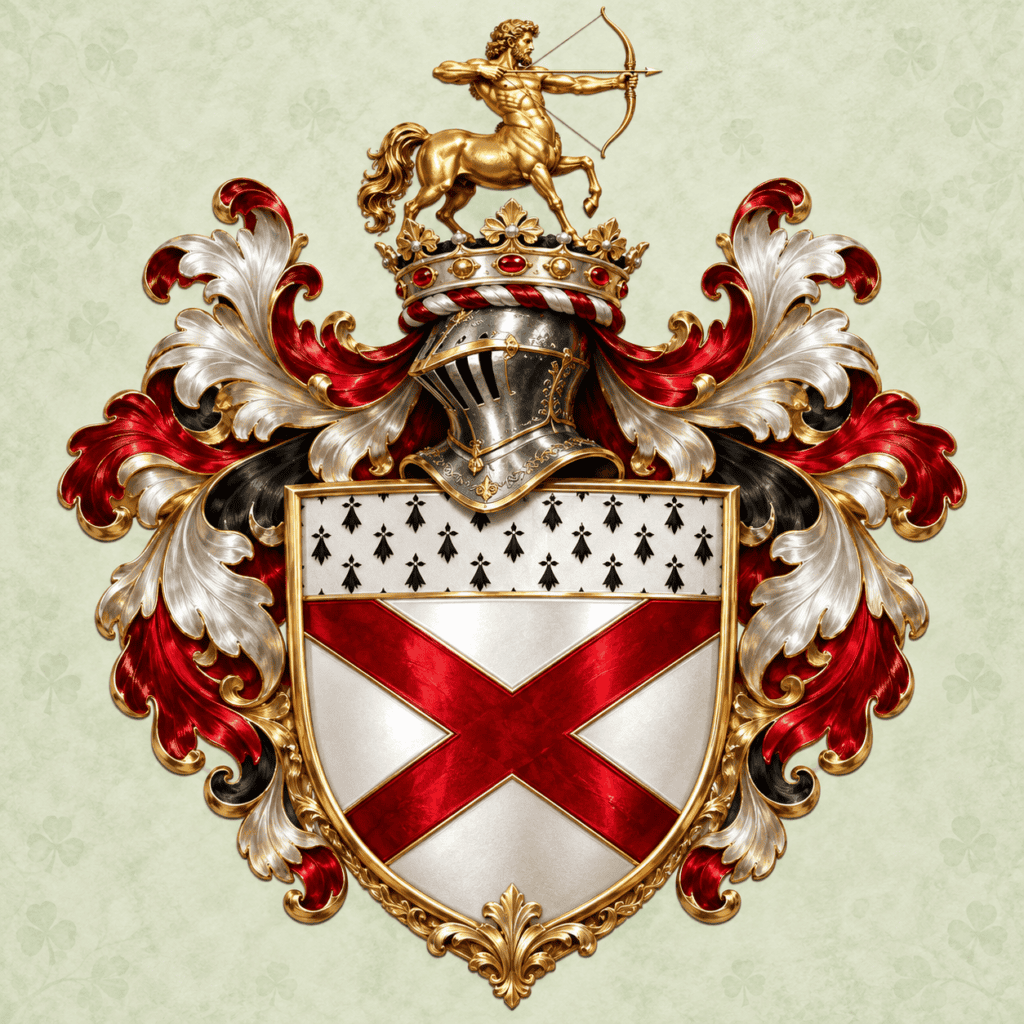
Your own coat of arms
Each title comes with the corresponding historical coat of arms, which you receive as a high-resolution file. You can use it completely freely in private and professional contexts – whether on letterhead, business cards, or seals.
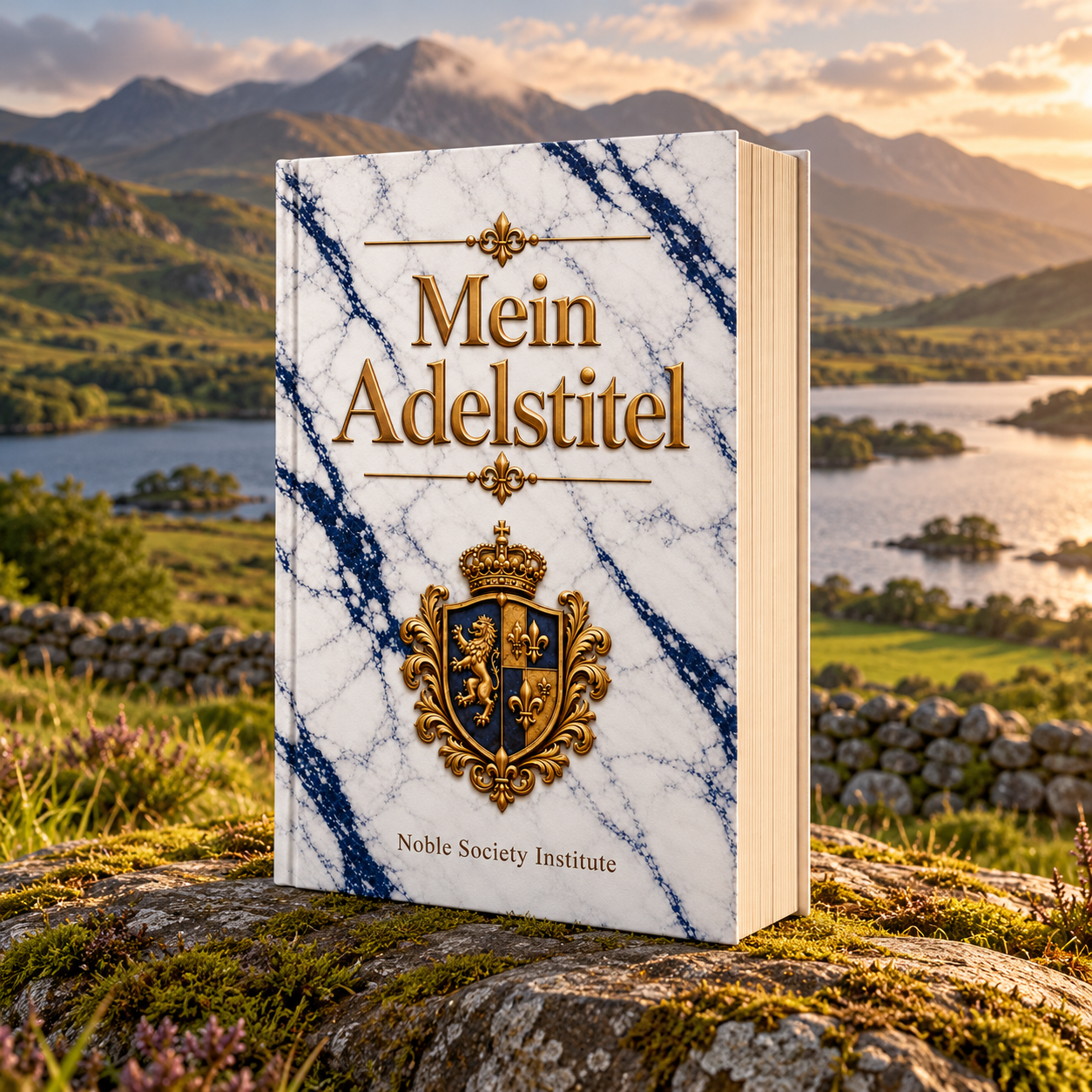
The Companion Book
The book „My Title“ takes you in detail into the multifaceted world of your new aristocratic title and offers valuable practical tips for everyday life, stylish guidance, and background information on history.
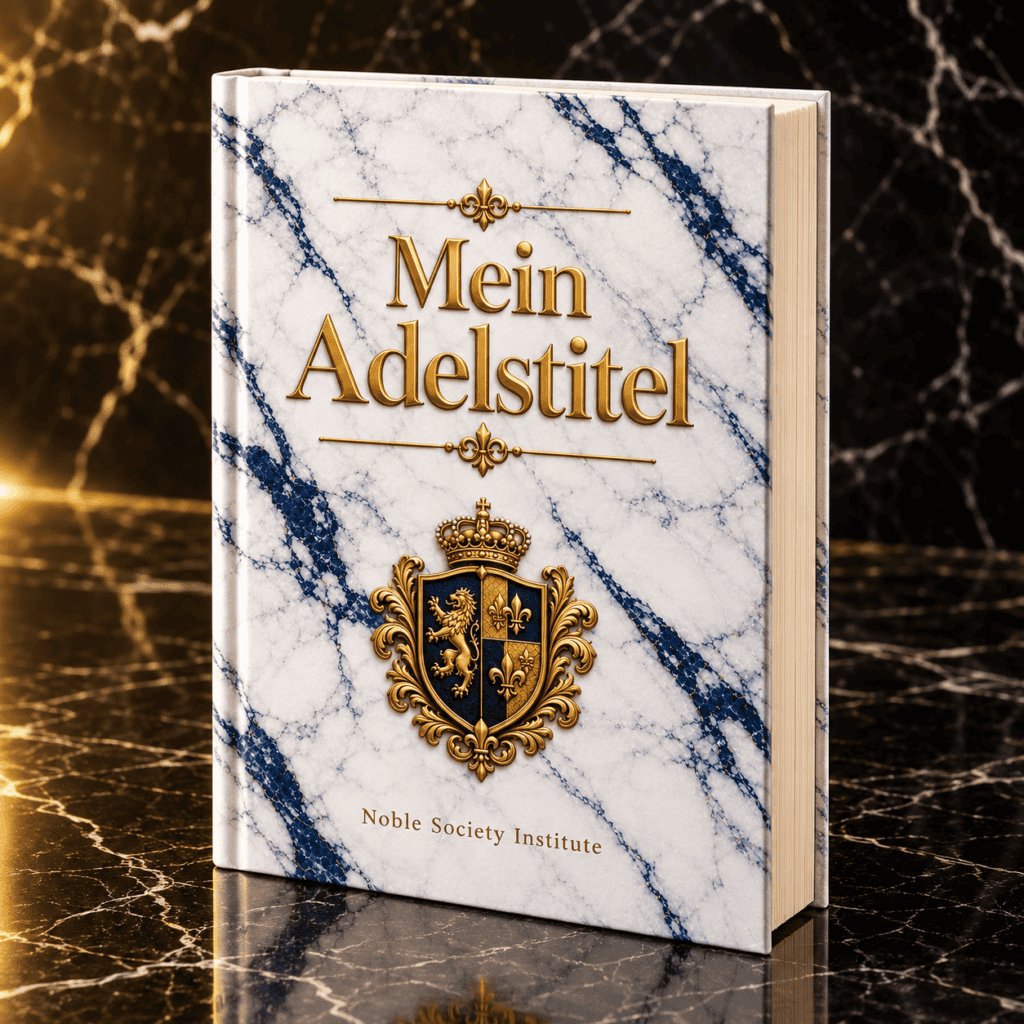
Our accessories
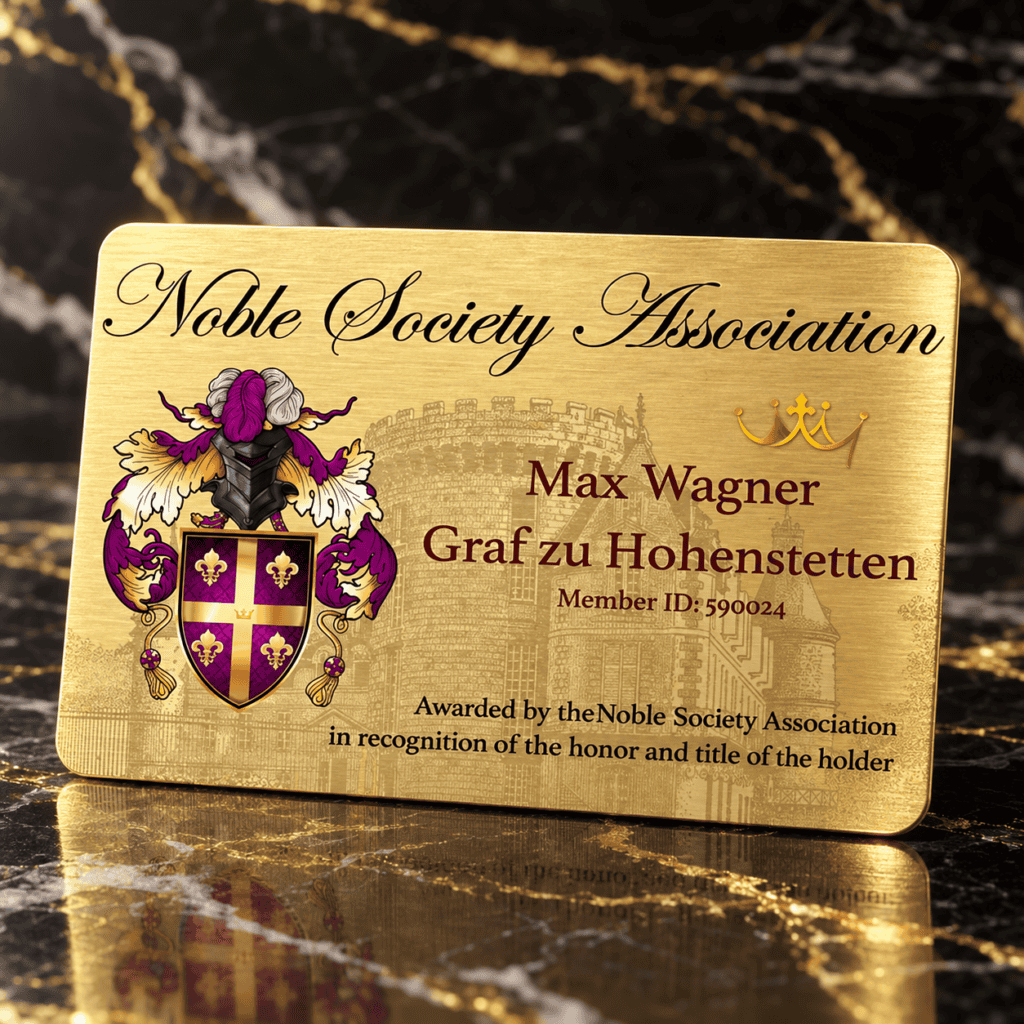
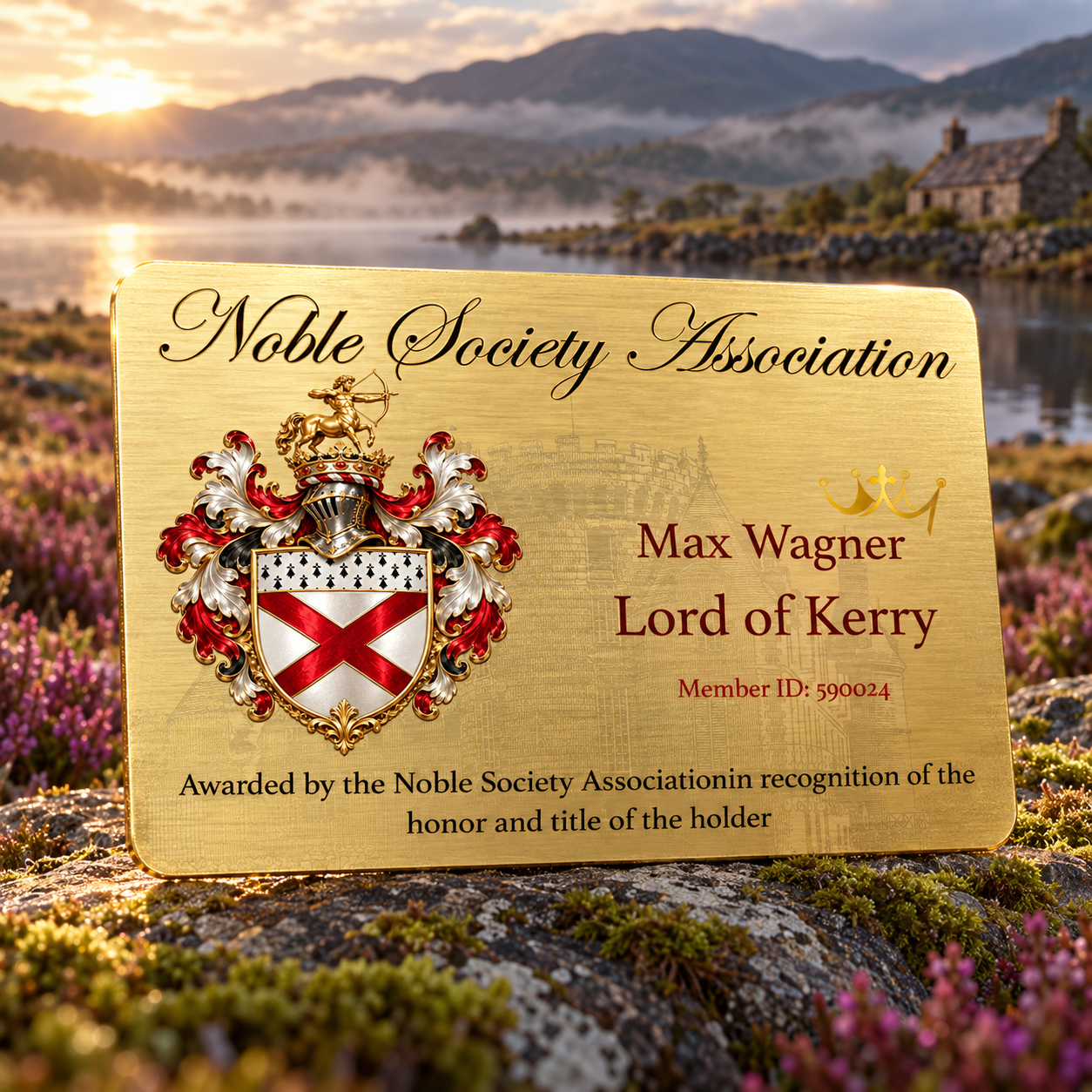
Golden ID Card
Crafted from premium aluminum in business card format, the gold ID Card makes your title look stylish and mobile.
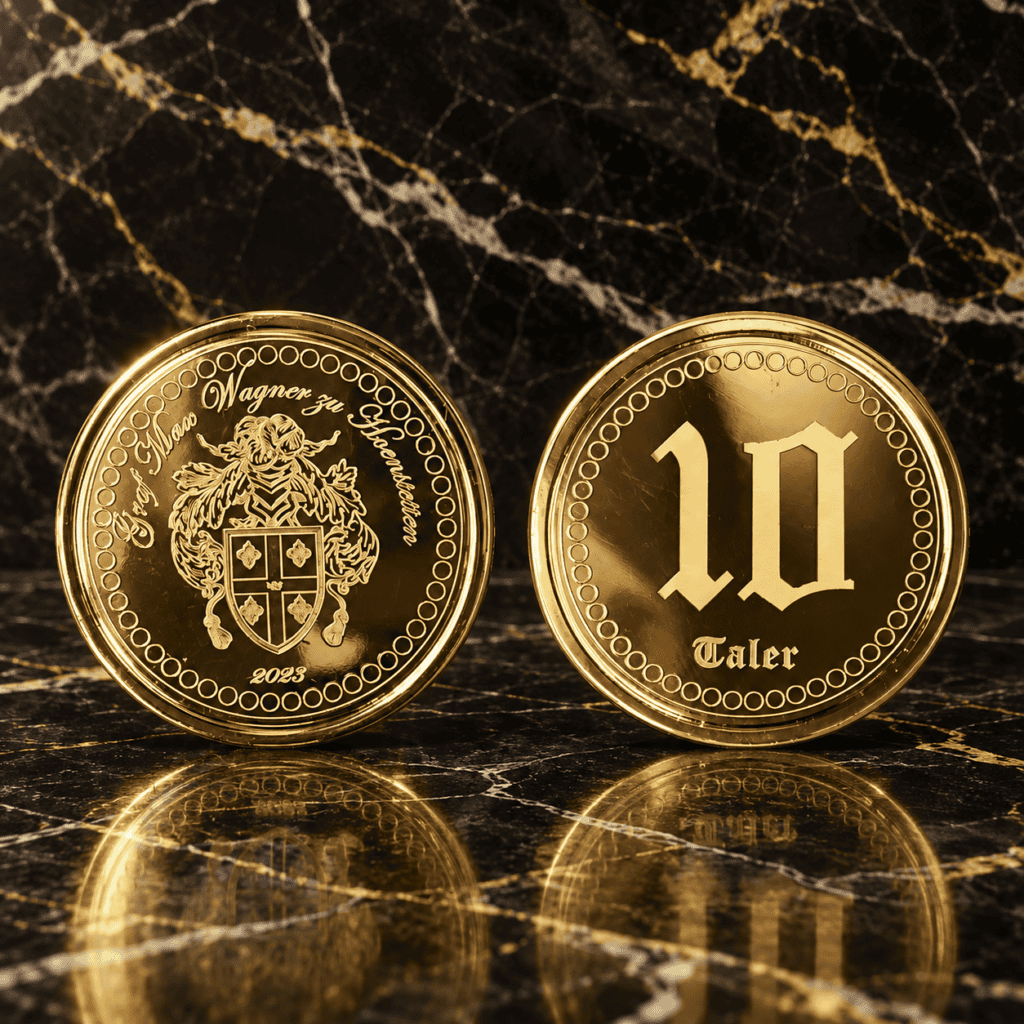
Gold coins
Fine gold and silver-plated medallions combine coats of arms, names and titles in a glossy, unique design.
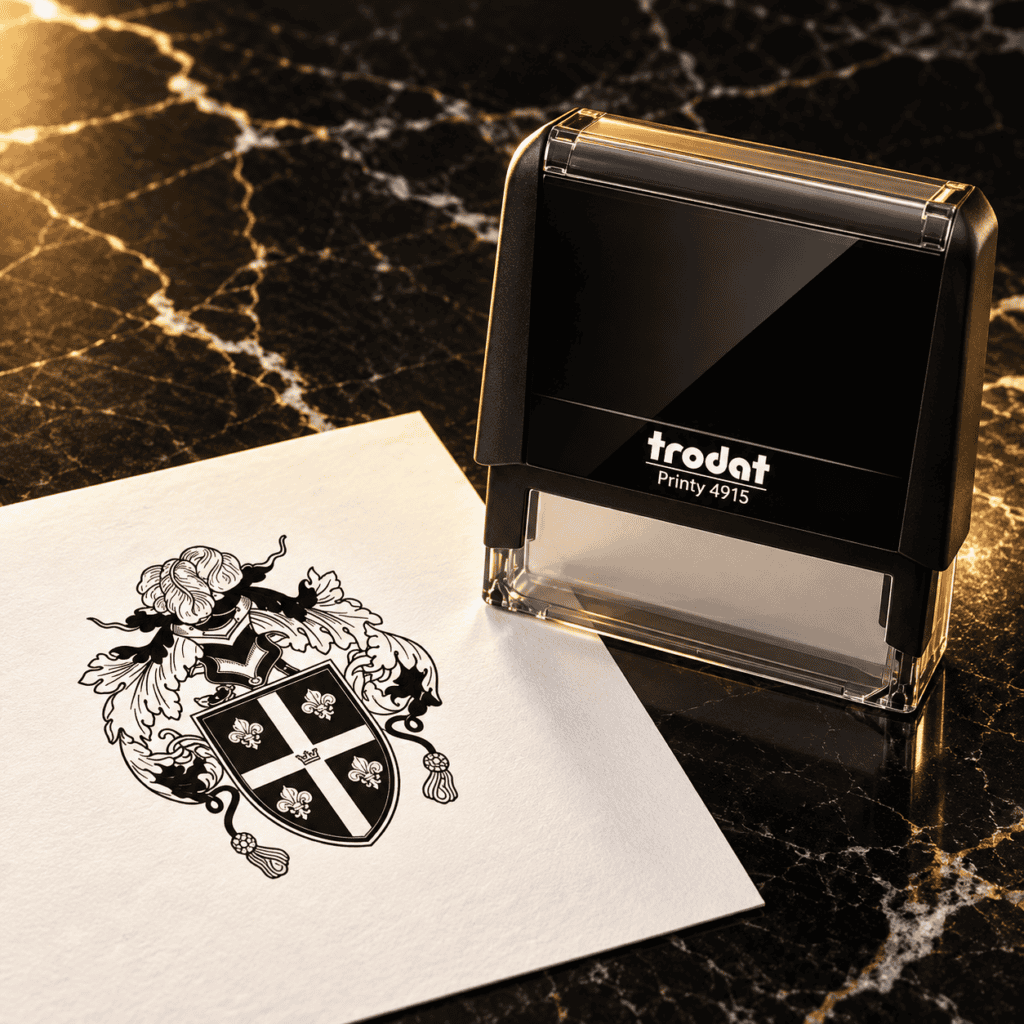
Emblem stamp
The self-inking stamp quickly, cleanly and precisely transfers your personal emblem onto letterhead paper.

My own wine
Choose fine red or white wine with an elegant, personalized label for a stylish look.
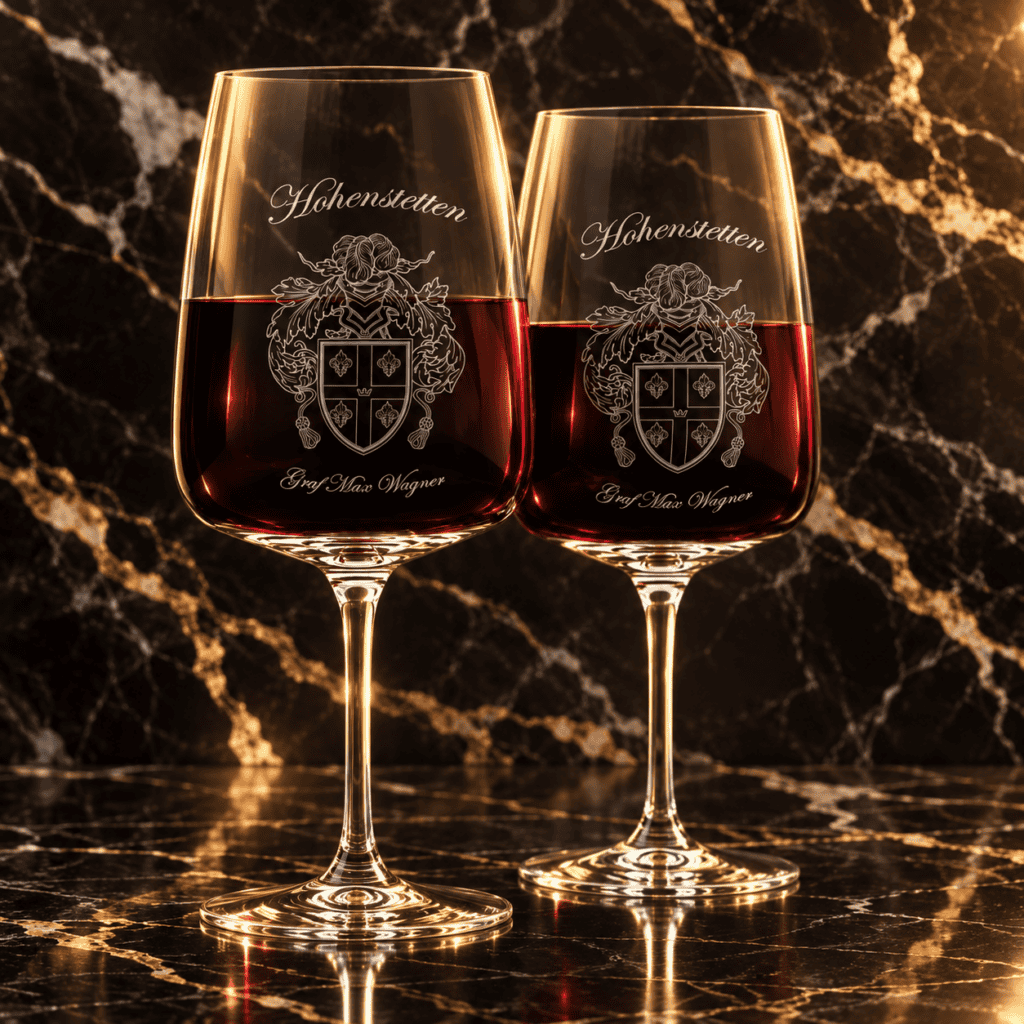
Wappen Gläser
The masterfully engraved wine glasses display their coat of arms, name and title in stunning brilliance.
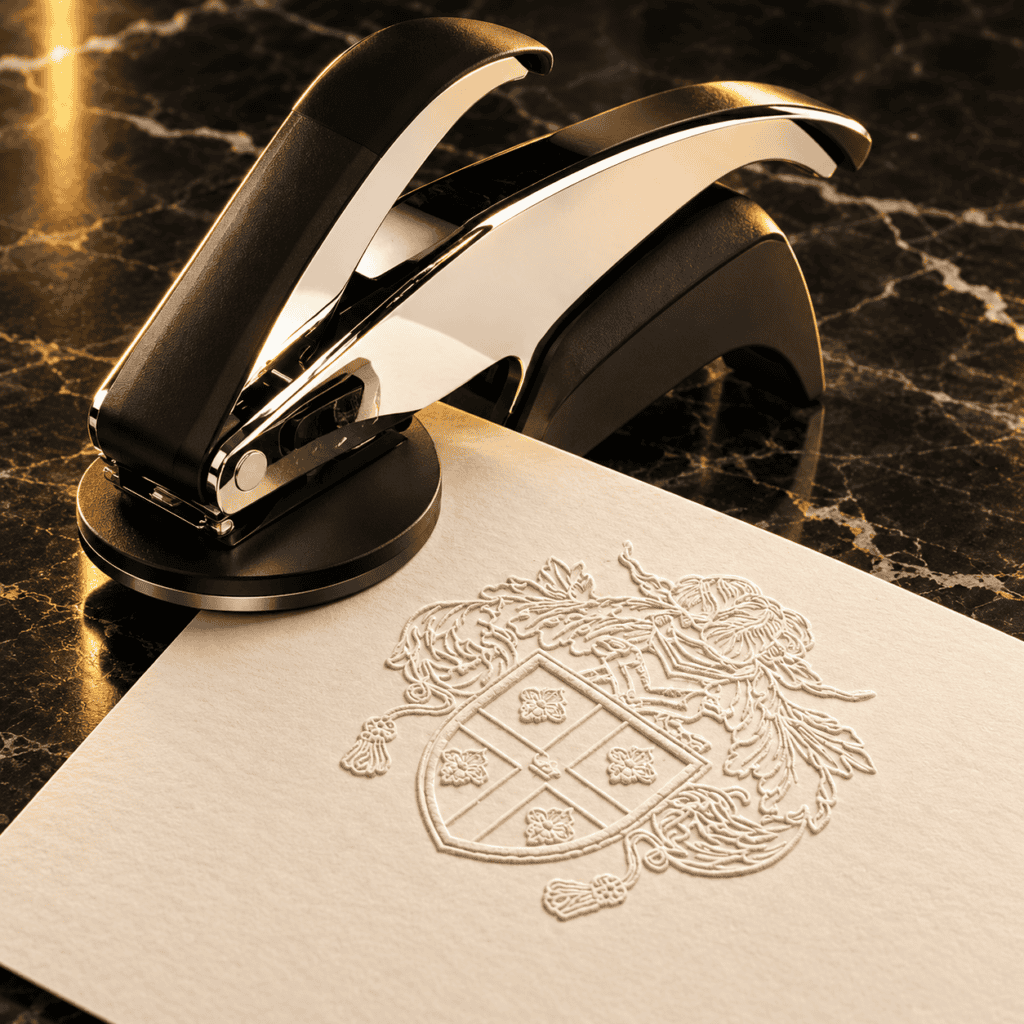
Precision pliers
The elegant embossing pliers embellishes letterheads or documents with a tactile, colourless relief embossing.
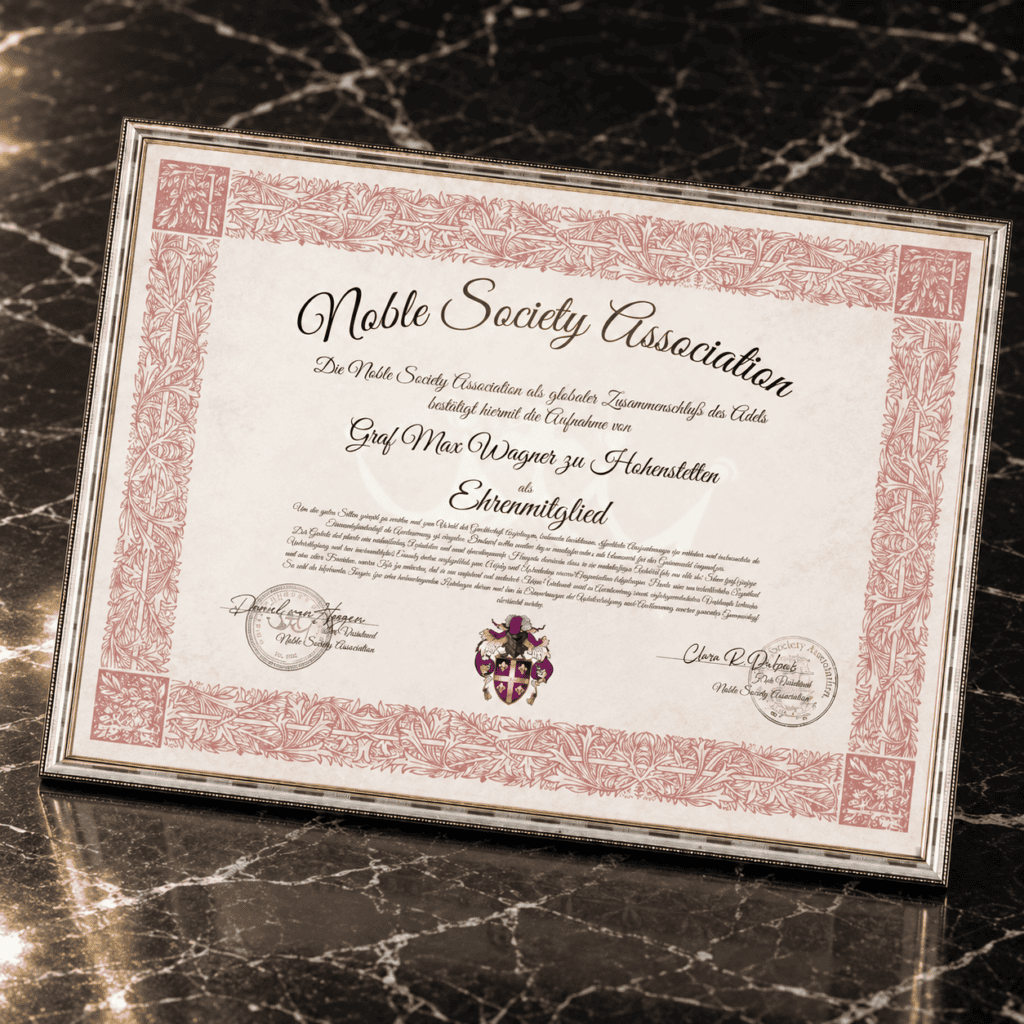
Honorary membership
Membership of the Noble Society Institute enriches your title with another dimension of exclusive representation. Validated by a magnificent certificate in your name, with no ongoing fees or obligations.