
The birth of the National Theatre: When an entire country reinvented itself
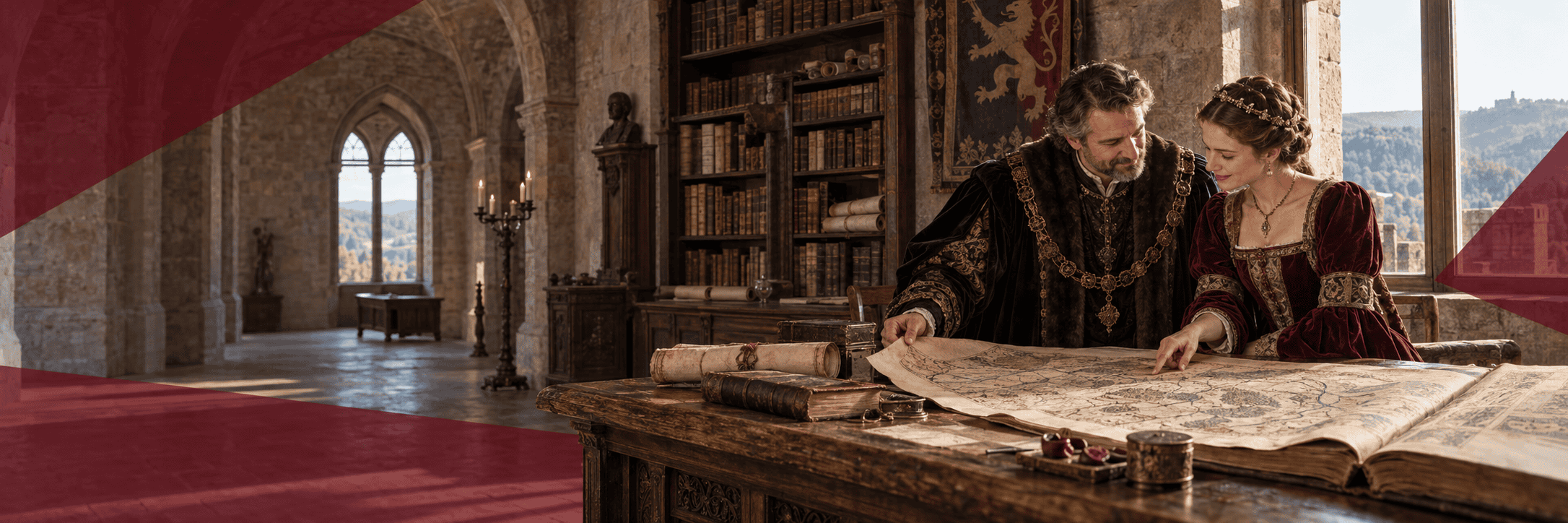
In the summer of 1919, Germany resembled a huge ant heap in which someone had stumbled upon a thick branch. The lost First World War had only been over a few months, and the Kaiser had hastily sought the wide open spaces; in the streets of Berlin, angry demonstrators were engaged in heated battles. Because things were too dangerous in the capital for quiet deliberations, hundreds of parliamentarians grabbed their briefcases and headed to the peaceful Thuringian cultural city of Weimar. There, where Goethe and Schiller were otherwise celebrated on stage, the constituent National Assembly met to establish the first genuine German democracy on the ruins of the Kaiserreich.
The atmosphere in the venerable German National Theatre was charged, and the politicians’ to-do list seemed almost endless. It was about fundamental issues such as women’s suffrage, the eight-hour workday, and the fundamental rights of every individual. But amidst these enormous upheavals, a theme hovered like a gigantic castle ghost over the velvet seats of the theater hall: What should actually be done with the princes, dukes, counts, and barons who had ruled the country for many centuries?
Until the collapse of the monarchy, the world for the noble families had finally been a paradise of fixed privileges. They appointed the generals, occupied the ambassadorial posts, and naturally enjoyed special legal and financial rights. Now, however, members of parliament were sitting in the theater, determined to clean up once and for all this permanent injustice. The National Assembly faced a historic crisis between the anger at the old elite and the pragmatic desire not to plunge the country into even greater chaos.
Out of this tension arose one of the most passionate debates in German legal history behind the scenes in Weimar. The question at stake was nothing less than whether a centuries-old social system could be completely erased with a single stroke of the pen, or whether there was a wiser, more measured way to move toward a modern republic.
The dispute over five words: „The nobility is abolished“
When the debate over the nobility finally reached the grand stage of the theater hall in July 1919, the theater programs flew through the air in a figurative sense. The social democratic and left-wing members of parliament wanted to draw a radical, clean end to the centuries-long dominance of the old elite. Their proposal was short, painless, and of disarming severity: the nobility should be declared abolished with a single terse sentence. No ifs, no buts, no compromises.
At that time, with a certain shiver, we looked at Russia, where the Bolsheviks had solved a very similar problem with bloody consequences, and at the same time we looked at Vienna, where the newly founded Republic of Austria had just passed the strict law abolishing nobility. There, they not only banned the title, but simply erased every single word of nobility from the birth registers. Anyone who wanted to continue being addressed as a count in Vienna risked hefty fines or found themselves in court.
Part of the German MPs also called for exactly this iron fist to be applied to Weimar. But on the other side of the plenum, massive resistance immediately formed from the bourgeois and conservative camp. The Moderates argued that one should not throw the child into the bath. Removing a status and its political privileges was one thing, but taking away citizens’ ancestral family names went too far, encroaching too deeply on the fundamental right to personal identity.
The vote on July 15, 1919, turned into a real political crime. When the votes were counted, it became clear how deep the rift ran through the country. The radical proposal to completely eliminate the nobility through a decree failed by a hair’s breadth. This razor-thin result forced the politicians to sit down at a table and devise a typically German, masterful compromise formula.
Article 109: The Century Compromise
Because neither the radical cull nor the adherence to old privileges found a majority, the assembly agreed on a legal trick that has shaped legal history to this day. The fate of the nobility was encapsulated in few, crystal-clear sentences that eventually became Article 109 in the Weimar Constitution. Before the law, it was solemnly declared at the top of the article that all Germans are equal. With that, the old nobility system was officially and irrevocably ended.
However, the real genius of the provision lay in the second paragraph. There, the authors stipulated that public-law privileges or disadvantages of birth or status should be abolished. In the same breath, they determined that noble titles would henceforth only be considered part of the name and could no longer be granted. They took away the political power from the old houses, but left them their dignity and their soundly named reputation.
From the proud count who commanded his own subjects and sat in the manor house by birth, with the enactment of the constitution on August 11, 1919, he became an ordinary citizen. The word "count" was suddenly no longer a title of authority that a monarch could grant or revoke, but simply the first syllable of a bourgeois surname. For the bureaucracy, the castle lord henceforth became Herr Count of Soundso, just as the baker became Herr Meier.
With this elegant compromise, Germany avoided the Austrian ban chaos and created an astonishingly peaceful coexistence. Democracy had enforced its principle of equality without forcibly removing the family histories of millions of citizens from the official records. The nobility as the ruling caste was history, but the poetry and the historical sound of its names remained forever preserved.
From the castle owner to the taxpayer: The hangover after the festival
For many members of the former nobility, the morning after the decision was like a cold bucket of water in the face. For centuries, they had been accustomed to doors opening by themselves simply because a certain ring on the finger flashed. Now, the proud gentlemen suddenly found themselves in a world that showed little interest in family heirlooms and instead demanded rigid administrative documents.
The most noticeable change affected the aristocratic treasury. In the past, many princely households enjoyed extensive tax exemptions and diligently collected taxes from the people on their lands. With that, everything came to an abrupt end. The young financial office of the Republic showed no mercy to the princely families and treated the castle on the Elbe in principle the same way as the tenement barracks in Berlin. Land taxes, income taxes, and property taxes poured into the aristocratic letterboxes, and many castle lords were dismayed to discover that a roof with three hundred rooms consumed a real fortune when no one paid any more dues.
A completely new wind was blowing in the offices as well. In the Prussian army or in the imperial diplomatic service, an Title of nobility earlier status was almost like an automatic ticket to the top management. Anyone called Count rarely started as a simple junior officer. The new constitution made this a snap process: promotions would henceforth be based on merit, performance, and ability, not on the sound of one’s name.
Some noblemen fled into nostalgic lamentations about the decline of the Western world, while more pragmatic spirits quickly grasped how the new era worked. They founded companies, managed their forests in a modern way, or became involved in economic life. They soon realized that the loss of state power in no way meant that the social fascination faded. Respect for style, attitude, and history remained intact; only one had to earn it through actual action rather than being served on a silver platter.
The end of the knicksel: Prussia's farewell to court ceremonial
Although the Weimar Reich Constitution clearly outlined the limits in August 1919, there was initially a state of blissful confusion in the offices of government. For years, Prussian officials had learned to address petitioners with flattering titles such as Your Most Gracious Highness, Your Grace, or Your Excellency. Now, the scribblers were before their forms and simply no longer knew how to address the former sovereign without either violating the new republic or offending the castle lord too deeply.
To put an end to the chaos, the Prussian Interior Ministry took drastic action in 1920 and issued an implementing decree that ensured order within the bureaucratic maze. The instruction was as sober as it was unambiguous: In all correspondence with authorities, all formal titles and subordinate phrases had to be immediately removed. From now on, all citizens were automatically addressed with the simple title of Frau or Herr.
Anyone who used to stroll through the castle park as a prince now received their tax bills addressed to Herr Fürst. The old title formally slipped directly behind the word Herr and merged with the surname. For the proud aristocrats, this was undoubtedly a severe blow to their egos; for the young democracy, however, it was the visible proof that before the laws of the state, all people were finally on equal footing.
What happened in the long run with this bureaucratic trick is particularly interesting. When the Basic Law for the Federal Republic of Germany was formulated after the Second World War, the provisions of the Weimar Constitution regarding the right of naming were literally taken over in Article 123. To this day, this Prussian pragmatism remains the legal basis throughout Germany: No bowing to the authorities in the town hall, but the inviolable protection of the soundly named name that one can proudly and confidently bear.
A brilliant move: How history remains alive today
In retrospect, the Weimar Compromise of 1919 was a real stroke of luck for cultural history. Had Austria chosen the radical path at that time, centuries-old names, traditions, and heraldic treasures would simply have been erased with bureaucratic rigour. Instead, the Republic created a system that guaranteed political equality without destroying the historical resonance and charm of old family lineages.
What was once thought of as a lifeline for the old nobility has transformed over the decades into a wonderful playground for modern style. Today they Title of nobility are decoupled from any political power. They no longer mean oppression, unfair tax advantages, or the display of power. What remains is the pure charm of grandiosity, composure, and historical elegance.
That is precisely why these names enjoy an enduring fascination today. Those who wear a title or give it away do so not to determine others, but to set a symbol of good taste, respect, and joie de vivre. It is proof that one does not have to lock history away in a dusty archive, but can celebrate it with ease and a smile in everyday life.
The Weimar Republic disempowered the nobility, but it also bestowed upon them immortality. Today, it is entirely up to you to choose the sound you prefer and the amount of noble attitude you wish to bring into the modern world. The legal path has been paved for over a century – with style and character, you yourself fill it with life.