
The historical duke – From military leader to the highest secular title
From the military leader to the highest secular position
The title of Duke is one of the oldest and most prestigious in Europe. Its origins date back to a time when political leadership meant primarily military leadership. The Old High German word herizogo consists of here for the army and foot For those who lead or move forward. A duke was therefore initially the leader of an army.
A corresponding root is also found in the Latin language area. The dux was a leader, often a military commander. With the transition from Late Antiquity to the early Middle Ages, this concept was associated with the new Germanic ruling orders. Those who led larger groups in war, secured borders, or governed a region on behalf of a king could be called a duke.
In the early Middle Ages, the duke was therefore not yet a uniformly governed family figure. He stood at the head of a larger association and enjoyed particularly strong support. His position was based on military experience, personal prestige, wealth, and the ability to maintain alliances. In a time without a fixed administrative network, such a leader was of great importance to a king or emperor.
From these early leadership roles developed the major tribal principalities. Saxony, Bavaria, Swabia and Franconia became political spaces, whose counts exerted considerable influence. They possessed castles, followers, lands and connections to the most important families of the empire. A duke could serve a king, but also be his strongest rival.
This tension shaped German history over the centuries. A powerful duke was not merely a high-ranking noble at court. He represented a region, could command armies, and often had enough power of his own to influence political decisions. The great dukes therefore always stood at the center of imperial politics: as allies, as adversaries, or as potential successors to the throne.
Over time, the title of Duke became increasingly tied to specific houses and territories. The military leader became a dynastic ruler. The title remained high-ranking, but its significance shifted. It now stood for the connection between family, land, and inherited status. A duchy was not just an area on a map; it was the visible expression of a house, its history, and its position in the empire.
The major duchies of the Empire
For a long time, the tribal duchies formed the largest political units in the German Empire. Bavaria, Saxony, Swabia, and Franconia were not states in the modern sense, but they did possess their own traditions, powerful families, and extensive connections. Those who ruled as dukes there were at the head of a region that extended far beyond a single castle or county.
Bavaria was one of the oldest and most enduring duchies. Its history dates back to the early Middle Ages, when the Agilolfing dynasty ruled the land. Later, the duchy passed between different houses. The Wittelsbach dynasty took it over in 1180 and made Bavaria their political and dynastic center for many centuries. From their history emerged later electors, kings, and European rulers.
Saxony held a special position within the empire. The duchy encompassed a large part of northern Germany in the early Middle Ages and was closely connected to the Ottonians. Otto the Great, who later became Emperor, came from this Saxon environment. In the 12th century, Henry the Lion became one of the most influential figures of his time. By uniting Duke of Saxony and Bavaria, he created or promoted cities such as Munich, Lübeck, and Braunschweig. His power was so great that it eventually came into open conflict with Emperor Frederick Barbarossa.
Swabia was the homeland of the Staufer dynasty. The duchy was located in the southwest of the empire and connected important trade routes, fertile lands, and significant monasteries. Frederick von Staufen received the Swabian duchy in 1079. His son Frederick Barbarossa later also held the title, before becoming king and emperor. Under the Staufer dynasty, Swabia became a focal point of imperial policy and a center of courtly culture.
Franken developed differently from the other tribal principalities. Its political unity disintegrated relatively early, but the name remained alive in the landscape, language, and regional identity. Numerous ecclesiastical and secular rulers shared the territory. Bishops, counts, knights, and later margraves shaped Franken with a particularly dense variety of castles, cities, and residences.
The counts of these large territories had to constantly maintain their prestige. They led armies, mediated conflicts, granted offices and managed the administration of their possessions. At the same time, they were in close contact with the king or emperor. A count could be his most loyal ally. He could also pursue his own interests and thus decisively influence imperial policy.
In the High Middle Ages, the old order of the tribal principalities began to change. After the overthrow of Henry the Lion in 1180, Saxony and Bavaria were reorganized. Large territories were divided up, new principalities emerged, and smaller princes gained in importance. The title of duke remained of exceptional rank; it continued to combine military tradition, territorial size, and the memory of the old ruling class of the empire.
From the tribal principality to the territorial state
After the High Middle Ages, the face of the duchies changed fundamentally. The large tribal territories lost their former unity. In their place came territories that were organized more closely around a house, a residence, and an administration. A duke now often ruled over a clearly delineated land whose borders, cities, and revenues were more precisely defined.
This development was closely linked to the expansion of administration and the writing of documents. Law offices kept records, officials supervised taxes, and courts were more regularly organized. From the personal allegiance of a duke emerged a more durable structure of rule. Castles remained important, but residence cities gained in importance. There, the administration, the court, and the most important artisans sat.
Württemberg illustrates this change particularly well. The counts of Württemberg built their power in the southwest of the empire over generations. In 1495, Eberhard im Bart received the title of duke at the Reichstag in Worms. From a county, this became a duchy, with Stuttgart as its center. The new rank made visible what had already developed politically: Württemberg had become a significant territorial power.
Dukehood also arose in Jülich, Kleve, and Berg, whose history was closely linked to the Rhine Valley and Westphalia. These lands were located on important trade routes and had economically strong cities. Their dukes moved within a political space between the Empire, the Netherlands, and France. Marriages and inheritance treaties were particularly important here, because they could connect or reorganize entire countries.
In northern Germany, the Dukes of Brunswick-Lüneburg developed into one of the most important dynasties. From their various lines, the House of Hanover later emerged. As Elector of Hanover and later as Kings of Great Britain, members of this house achieved European significance. History shows how a ducal house could exert influence far beyond its original region.
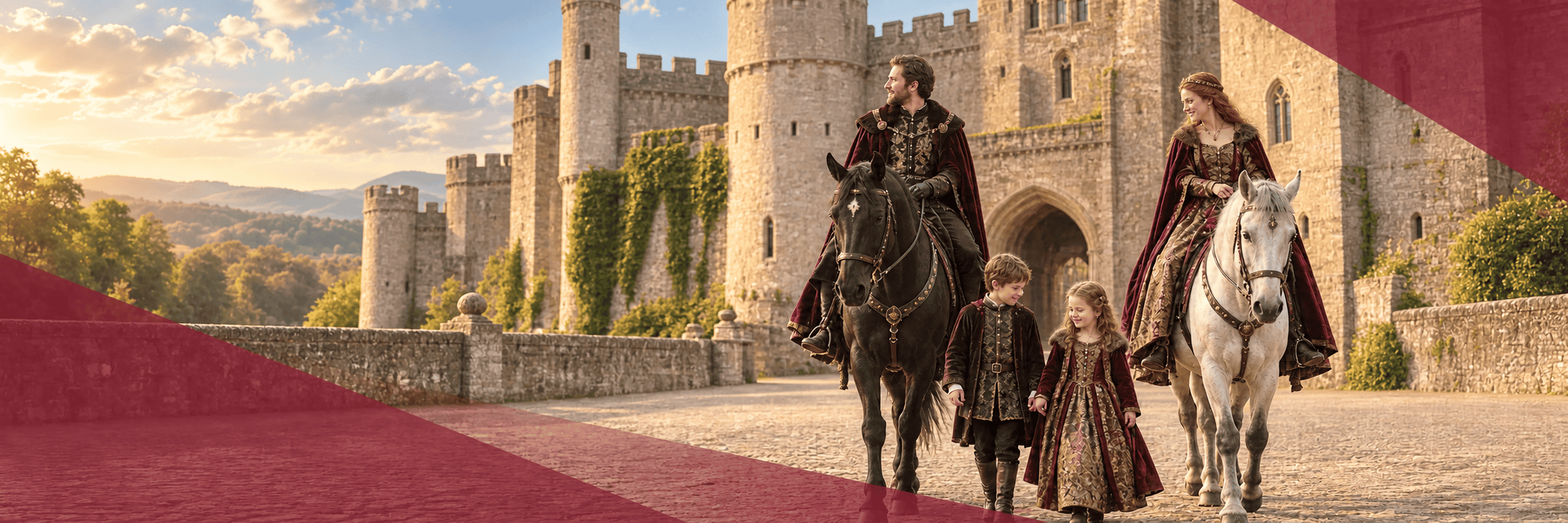
The title of Duke now stood for a connection between the land, the family and the court. A duke was the lord of a territory, the center of a dynasty and the representative of a political claim. His residence made this claim visible. Castles, churches, squares, garden complexes and collections were deliberately designed to show the history and position of the house.
With the rise of the territorial states, the Duchess also gained public importance. She stood by the Duke, led the court staff, represented the house at festive occasions, and often influenced cultural or religious matters. In some cases, widows led the government affairs for minor heirs. Other Duchesses adorned their residences as builders, funders, or sponsors of art and education.
Thus, the title of Duke transformed from a military leadership role into a dynastic status with a clear territorial basis. Its history connects the early Middle Ages with the great residential cultures of the modern era.
Residences, courtyards and imperial culture
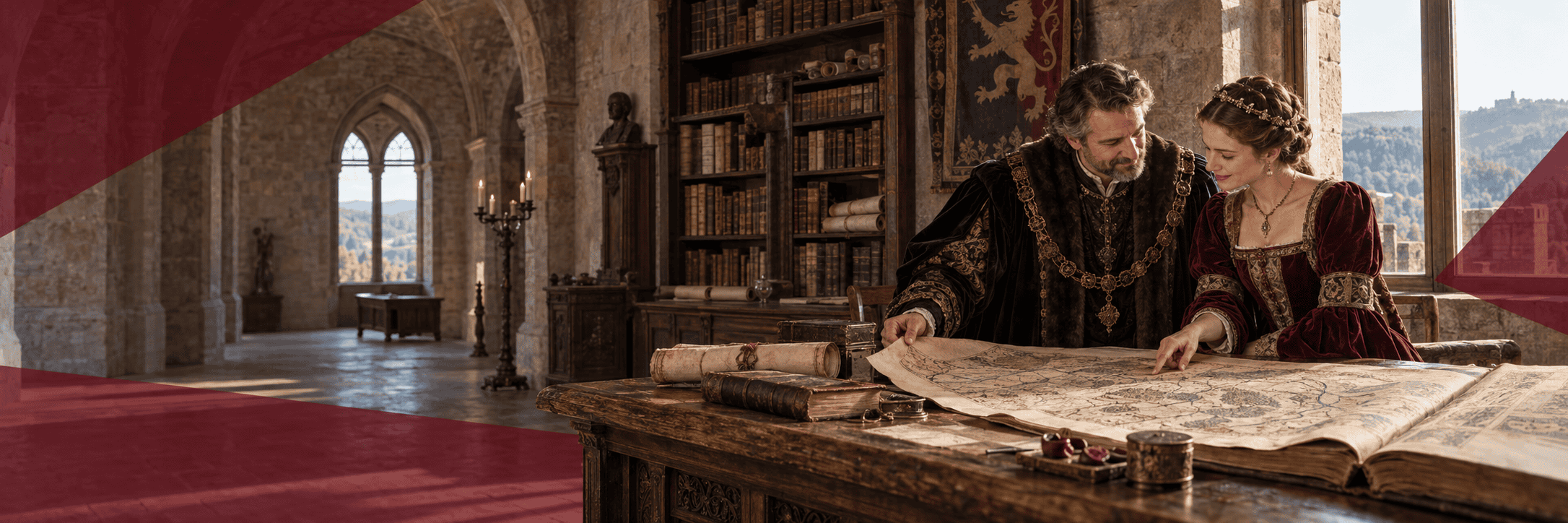
A duchy did not demonstrate its importance solely on the battlefield or in a palace Certificate. It was also built, staged, and made visible in everyday life. The residence of a duke was the place where power, family, administration, and culture converged. Anyone who entered a ducal court encountered a carefully organized world of ceremony, offices, art, and representation.
In the Middle Ages, the castle was initially the focal point. It offered protection, was located at strategically important points, and served as the seat of the family. With the expansion of the territories, the demands changed. A duke needed space for administration, receptions, celebrations, and his growing court. Therefore, fortified castles were often converted into castles, town residences, or extensive complexes with gardens, chapels, and farm buildings.
Under the rule of the Dukes of Württemberg, Stuttgart developed from a fortified settlement into a residence city. The Old Castle still bears witness to this development. It was initially a castle, later the seat of the ducal administration and the stage for the court. With the increasing demands of the house, the city itself also changed. Officials, artisans, artists, and merchants settled in its vicinity.
Similarly, the Wittelsbachs made Munich their home. The Bavarian Dukes turned the city into a political center and continued to expand it over the centuries. The Munich residence grew from a medieval castle into one of the most important castle complexes in Europe. Its courtyards, halls, and collections reflect the ambition of a house that rose from the duchy status to become a grand ducal and later royal one.
There were far more people working at the ducal court than can be seen in a painting. Chancellor, councillors, chamberlains, stablehanders, cooks, musicians, clergy and servants kept the operation running. The court was both administrative, workplace and social centre. Contracts were prepared, guests were received, marriages were negotiated and political news exchanged there.
Festive and ceremonial occasions had an important function. Weddings, baptisms, hunts, tournaments and receptions made the status of a house visible. They brought together other families, envoys and representatives from cities. Clothing, music, table arrangements and furnishings followed a clear hierarchy. Where one sat, who was greeted first and who held a particular office could be a political statement.
The Duchess also shaped this court. She represented the connection between her own ancestral home and the home of her spouse. Her dowry, her connections and her cultural interests could have far-reaching consequences. Many Duchesses supported monasteries, founded foundations, promoted artists, or designed their own living quarters within the residence. Some left a particularly clear image of their personality in letters, buildings, and portraits.
Royal culture did not remain confined to castles. It extended into the cities and landscapes. Churches, theaters, libraries, streets, and garden complexes often arose under the protection or initiative of a royal house. Even today, many former royal residences can be seen to demonstrate how strongly a monarchy shaped its surroundings.
The title of Duke in Europe
The title of Duke influenced much more than the history of the German Empire. In almost all European countries it developed its own forms, but remained associated with special rank, territorial dominion and great representation everywhere. The language changed, as did the political order – the high sound of dignity remained.
In France, the Dukes were early among the most powerful lords of the Kingdom. The Duchy of Burgundy became a political and cultural center of European stature in the Late Middle Ages. The Dukes of Burgundy ruled an area that extended from eastern France to the rich cities of Flanders. Their courts in Dijon, Bruges, and Brussels were centers of art, trade, and court splendor. Philip the Good and Charles the Bald are among the most famous Burgundian Dukes.
In Italy, the title of Duke gained a special significance during the Renaissance. The Dukes of Milan from the Sforza family made their city a center of trade, architecture, and art. Under their rule, artists, engineers, and scholars worked at the court; Leonardo da Vinci spent important years in Milan. The Medicis in Florence later also held the title of Duke and associated it with their role as patrons of art and science.
On the Iberian Peninsula, the Dukes were in the closest circle of the Crown. Spanish and Portuguese ducal domains were often associated with large estates, ancient families, and a strong position in the court. Names like Alba, Medina Sidonia, or Bragança still carry the sound of this tradition today. The House of Bragança even rose to become the Portuguese royal house in the 17th century.
In Great Britain, the Duke remains the highest rank of hereditary nobility below the King or Queen. Titles such as Duke of Norfolk, Duke of Devonshire or Duke of Marlborough are closely associated with well-known families, historic residences and large estates. As Earl Marshal, the Duke of Norfolk still plays an important ceremonial role at state occasions.
A large number of ducal lines also emerged in the German-speaking world. Besides Bavaria and Württemberg, houses such as Saxony, Mecklenburg, Anhalt, Nassau and Brunswick-Lüneburg influenced their respective regions. Their residences, churches, theaters, and collections are still visible testimonies to ducal culture.
The Duke's European history shows how versatile this rank could be. He stood for military leadership, territorial power, courtly culture, and the ability of a house to keep its history visible over generations. From Burgundy to Bavaria, from Milan to London, the title connects a world of residences Coat of arms and great family lineages.
Duchesses: Power, Education and Court Culture
The history of the duchies cannot be told solely through the stories of their male rulers. Duchesses were at the center of dynastic connections and shaped the political, religious, and cultural life of their time. Their origins could open new alliances for a house, their dowries brought possessions or claims, and their relationships created direct connections to other courts.
A ducal marriage was almost always also a political alliance. It linked two families and often two territories. In negotiations, the question of what dowry a bride brought and what inheritance she possessed played an important role. A duchess could thus take on far more than a representative position: she was at the center of a relationship between houses that could have political consequences over decades.
At the court, the Duchess maintained her own household. This included court ladies, servants, clergy, secretaries, and often artists or teachers as well. She organized receptions, travel groups, and festivities. Her influence was evident in the selection of staff, the design of their living quarters, and the cultural projects she promoted. Especially in small and medium-sized courts, her hand was often clearly visible.
Many Duchesses emerged as patrons. They supported monasteries, churches, hospices, and schools. Some built chapels or funded altarpieces, books, and religious foundations. These traces have survived to this day: in foundation documents, on tomb markers, in art collections, or in church spaces. They show that court culture was shaped not only by great rulers but also by women who purposefully used their opportunities.
Particular roles were assigned to Duchesses when an heir was still a minor. In such cases, as guardians, they could conduct governmental affairs, appoint councilors, and oversee the administration of the country. Their position was by no means symbolic; they had to make decisions, conduct negotiations, and ensure the cohesion of the house.
Anna Amalia of Brunswick-Wolfenbüttel is a well-known example of this combination of power and culture. As Duchess mother and regent of Saxony-Weimar-Eisenach, she initially led the government for her son. Later, under her promotion, Weimar became an important cultural center. Music, theater, and literature received special attention at the court.
Elisabeth of Brunswick-Lüneburg also showed how influential a Duchess could be in the tension between politics and religion. As regent of Calenberg-Göttingen, she fought for the Reformation in the 16th century and led the government during a period of great upheaval. Her correspondence and political decisions make clear how actively Duchesses intervened in the affairs of their countries.
The title Duchess therefore connects to much more than the feminine form of a high rank. It refers to a unique history of family politics, education, art, and responsible leadership. In the residences of Europe, Duchesses have left visible traces – in gardens, churches, libraries, foundations, and the stories of their homes.
The title of Duke as a cultural sign
The title of Duke remains one of the most powerful images in European noble history. It evokes great landscapes, royal cities, and dynasties. Bavaria, Saxony, Württemberg, Burgundy, or Milan – many of these names are closely associated with ducal history and still shape the cultural image of their regions.
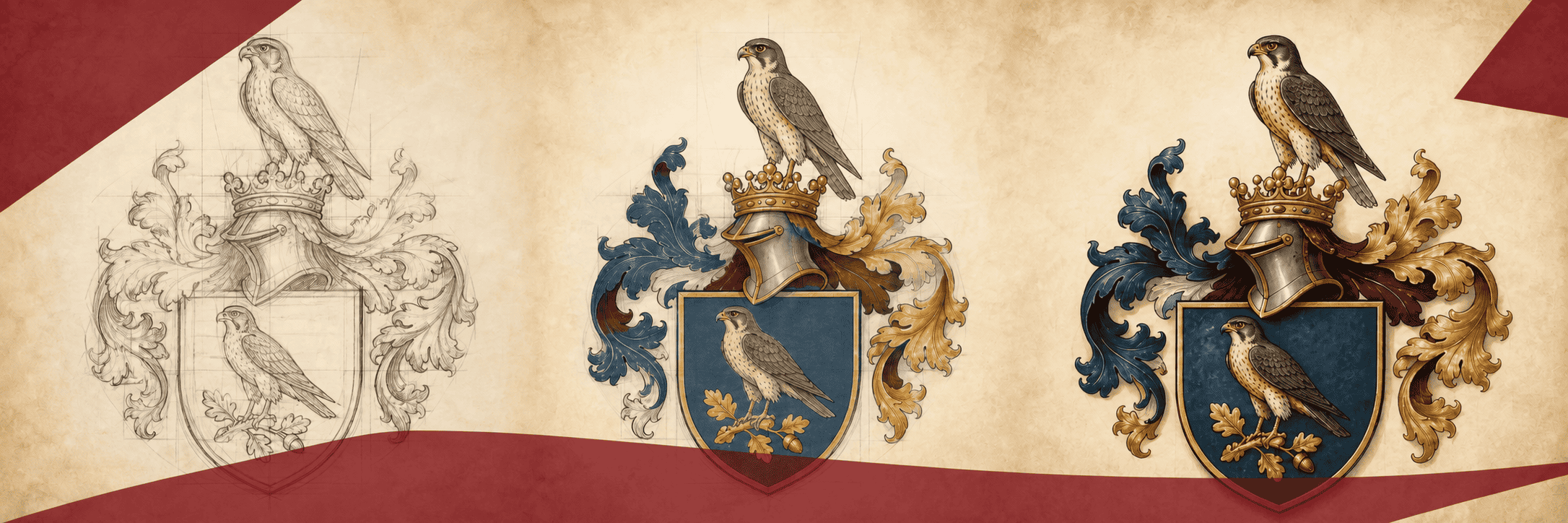
Its effect lies in the combination of size and origin. Traditionally, a ducal house stood for a wide political area, military leadership, and a visible court culture. At the same time, each ducal house was tied to a specific location. The history of a house is reflected in its residences, churches, garden complexes, and monuments Coat of arms that have survived on gates, facades, or tombstones.
The title remains present in literature, music, and art as well. Historical novels tell of dukedoms and court intrigues, operas are performed at royal residences, and museums preserve portraits of royal families. The title carries an atmosphere that transcends the individual person: it evokes responsibility, representation, and the long journey of a dynasty through history.
For understanding the European hierarchy, the Duke therefore forms an important starting point. He connects the world of the early military leader with the later world of territorial states and residencies. His history spans from the tribal principalities of the Middle Ages to the great courts of the modern era.
Anyone who deals with a royal house almost always encounters a particularly dense body of tradition. Chronicles Coat of arms, buildings, and family lineages give the title its depth. Each story of a duke leads into its own historical context – and this is precisely what gives this rank its enduring appeal.