Description
Information about the family history and the coat of arms
Family history
▼
Family history Bey of Tunis
Die Beys von Tunis – Das husainidische Herrscherhaus
The history of the Husaynids began in 1705 during a period of political unrest. Husain ibn Ali, an Ottoman officer of Cretan origin, organized the resistance against an army advancing from Algiers and was subsequently proclaimed Bey of Tunis. He founded a dynasty that would dominate the country for more than two and a half centuries. Formally, Tunisia remained part of the Ottoman Empire, but in practice the beys largely ruled independently.
Husain stützte sich auf einheimische Notabeln, andalusische Familien und erfahrene Verwaltungsleute. Nach frühen Nachfolgestreitigkeiten stabilisierten Ali Bey und besonders Hammuda Pascha im späten 18. Jahrhundert das Reich. Landwirtschaft, Handwerk und Mittelmeerhandel blühten; Paläste, Moscheen, Schulen und das Familienmausoleum Tourbet el Bey bereicherten Tunis. Sommerresidenzen der Dynastie machten auch Sidi Bou Saïd zu einem bevorzugten Ort der höfischen Gesellschaft.
Im 19. Jahrhundert begegnete das Haus wachsendem europäischem Druck mit bemerkenswerten Reformen. Ahmad Pascha Bey baute eine moderne Armee und Verwaltung auf. Zwischen 1841 und 1846 schloss er die Sklavenmärkte, befreite versklavte Kinder und erklärte schließlich die Sklaverei für aufgehoben – ein früher Schritt in der islamischen Welt. Muhammad Bey verkündete 1857 den Sicherheitspakt, der Rechte und Gleichheit der Untertanen stärken sollte. Unter Muhammad as-Sadiq entstand 1861 die erste moderne Verfassung in der arabischen Welt.
Finanzielle Schwierigkeiten und ausländische Einflussnahme führten 1881 zum französischen Protektorat. Die Beys blieben Staatsoberhäupter und bewahrten Zeremoniell sowie kulturelle Patronage, während Frankreich die politische Macht ausübte. Muhammad VIII. al-Amin, bekannt als Lamine Bey, erlebte 1956 die tunesische Unabhängigkeit. Als 1957 die Republik ausgerufen wurde, ging die Herrscherrolle in die neue Staatsordnung über.
Die Familie besteht in zahlreichen Nachkommen fort. Ihre Architektur, Reformdokumente und Kunstsammlungen erzählen bis heute von einem Haus, das Tunis zwischen osmanischer Tradition, mediterranem Austausch und Moderne gestaltete.
Sources: UNESCO, Nationalarchiv Tunesiens, Encyclopaedia of Islam, Library of Congress
Coat of arms & Heraldry
▼
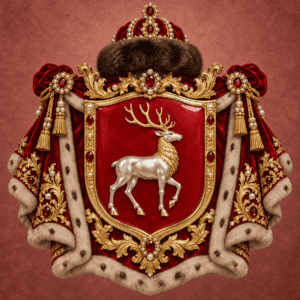
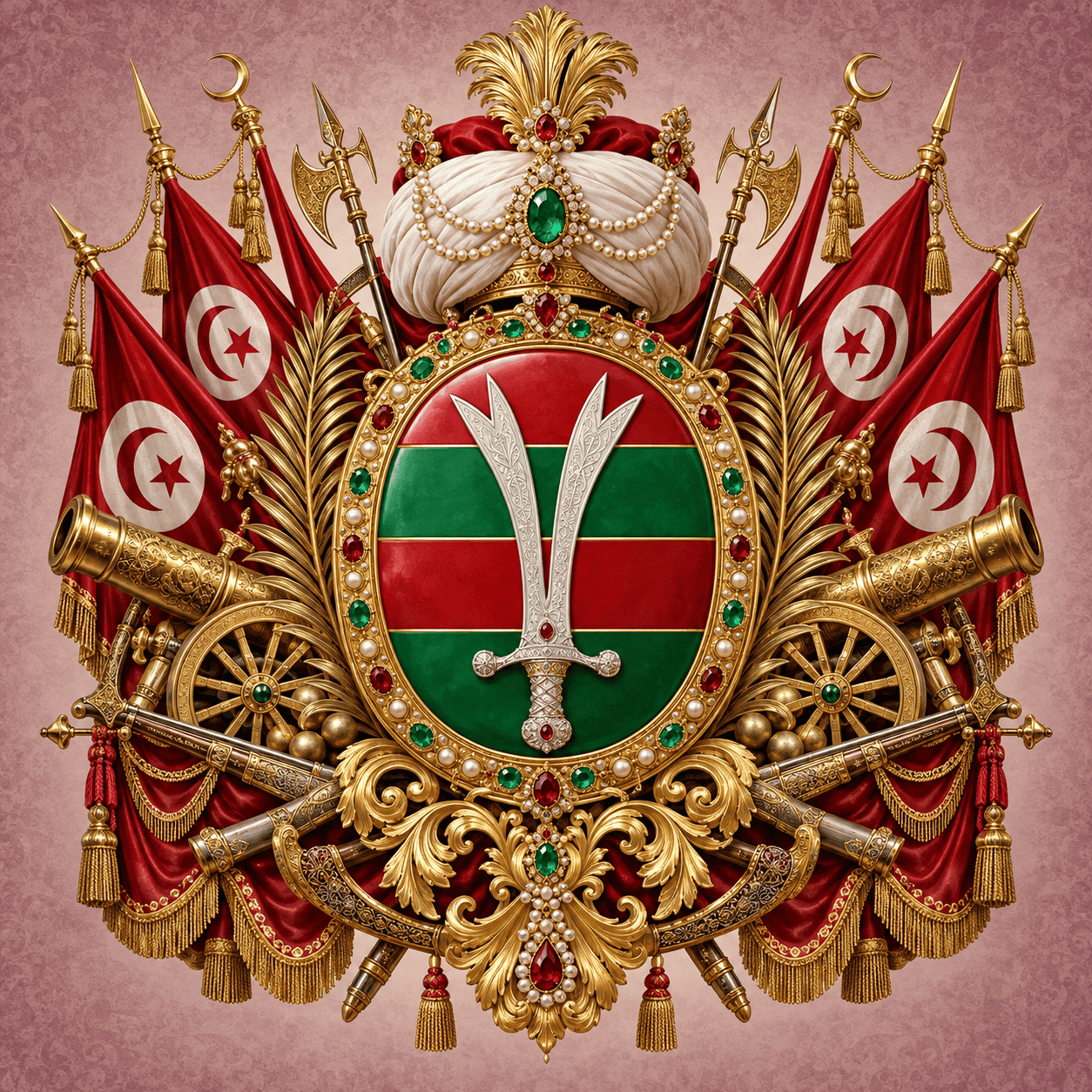
Family coat of arms Bey of Tunis
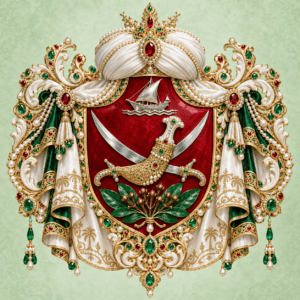
Die Darstellung folgt der husainidischen Herrschaftssymbolik der Beys von Tunis. Mittelpunkt ist das rot-grün gestreifte Feld mit dem weißen Dhu-l-Faqar, dem gegabelten Schwert, das auf den historischen Flaggen der tunesischen Beys erscheint.
Ein ovaler Schild viermal waagerecht geteilt von Rot und Grün, darüber ein silberner, waagerecht liegender Dhu-l-Faqar mit gegabelter Spitze. Über dem Schild ein juwelenbesetzter osmanischer Turban; seitlich Fahnen, Lanzen, Krummsäbel und weitere militärische Trophäen, eingefasst von goldenem Rankenwerk.
Die Husainiden regierten Tunis von 1705 bis 1957. Ihre Herrschaft blieb zunächst formal in das Osmanische Reich eingebunden, entwickelte jedoch eine weitgehende politische Eigenständigkeit.
Sources: Historische Standarten der Husainiden im Nationalmuseum Bardo, Flaggen- und Wappendarstellungen des Beyliks von Tunis, Hubert de Vries, Tunisia, Encyclopaedia of Islam
Overview of your title package
What the title of nobility contains
Discover the fascination of historical noble titles. With each appointment, you receive a first-class package that perfectly combines tradition, personal recognition, and stylish representation:
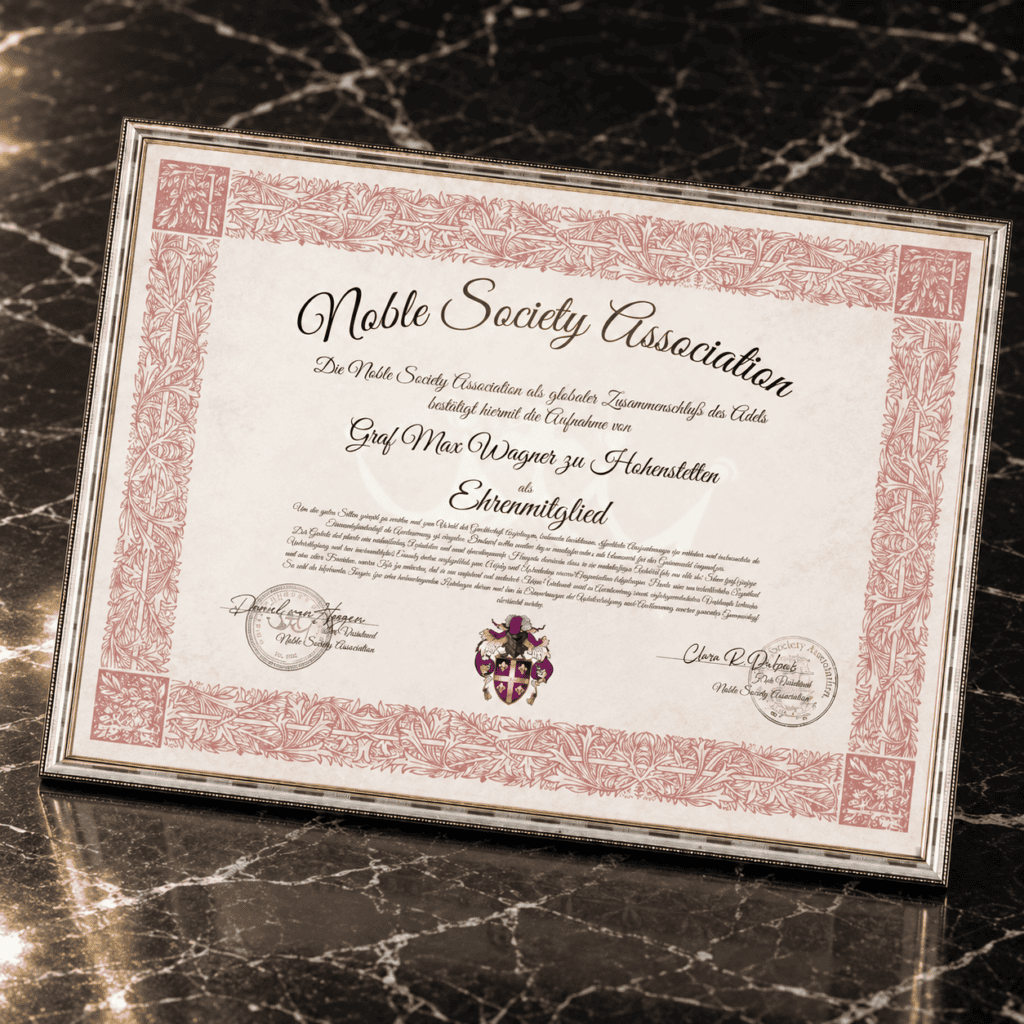
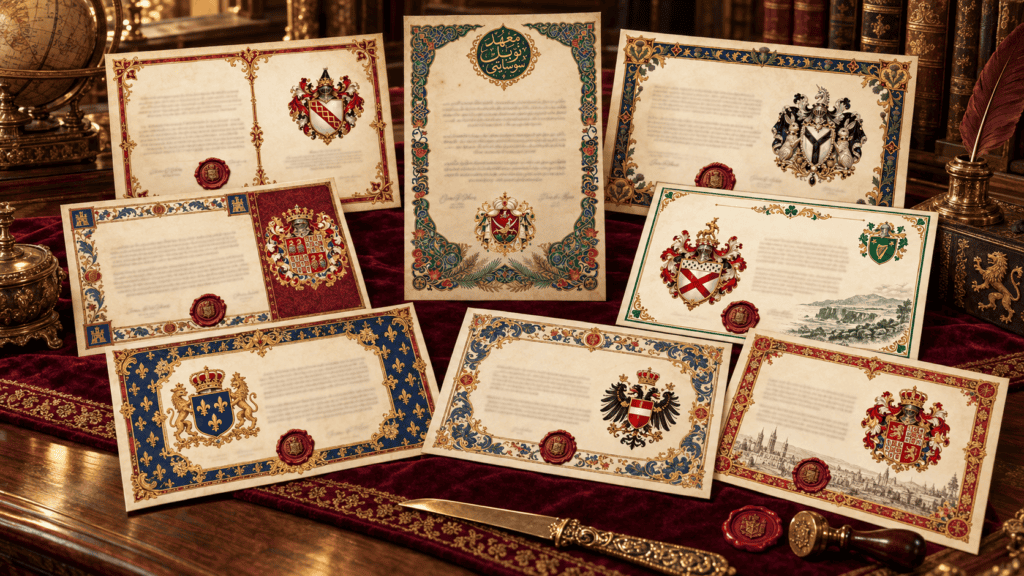
Your certificate
Authentic design with a historic flair: For each region, we create a certificate of appointment in the distinctive, country-specific style – complete with the appropriate coat of arms of your chosen title.
Share this special moment: Upon request, you will receive a free partner certificate and certificates for your children, so that the whole family can participate in the tradition.
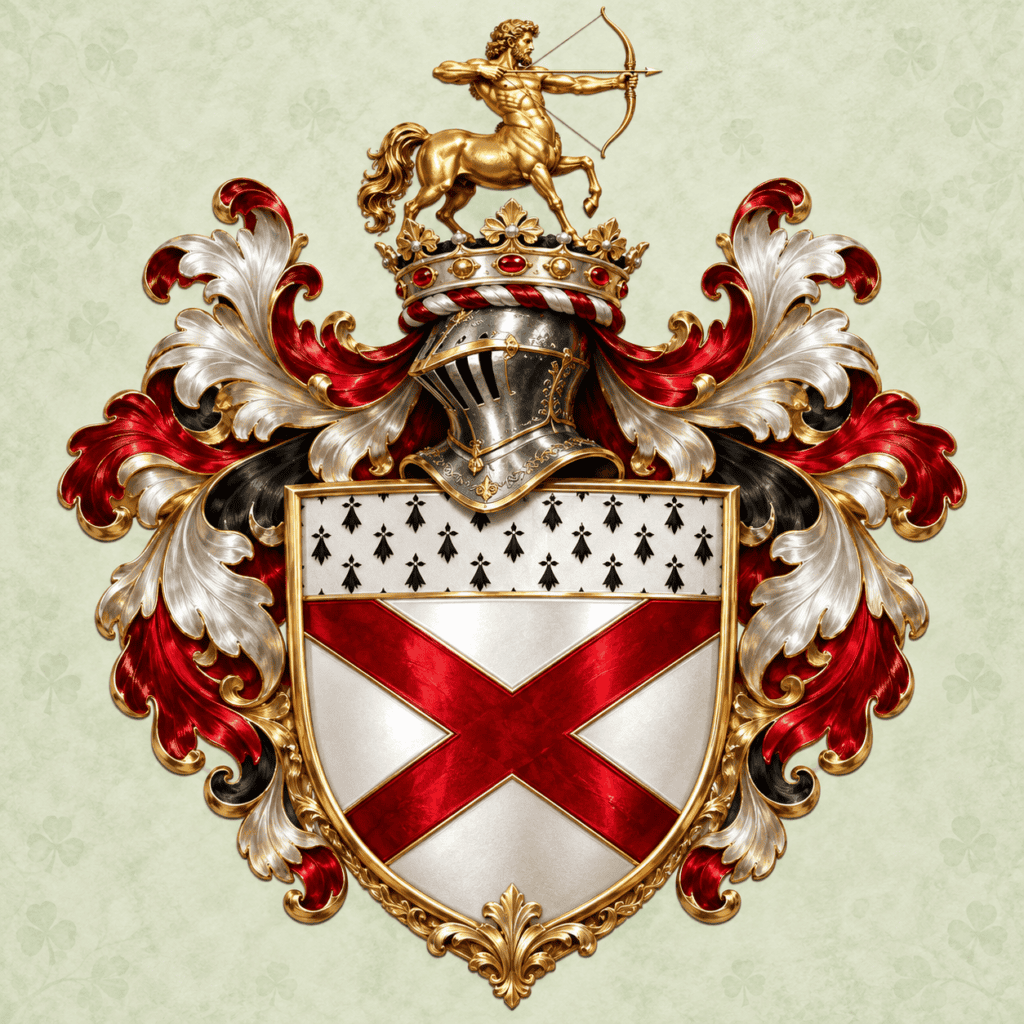
Your own coat of arms
Each title comes with the corresponding historical coat of arms, which you receive as a high-resolution file. You can use it completely freely in private and professional contexts – whether on letterhead, business cards, or seals.
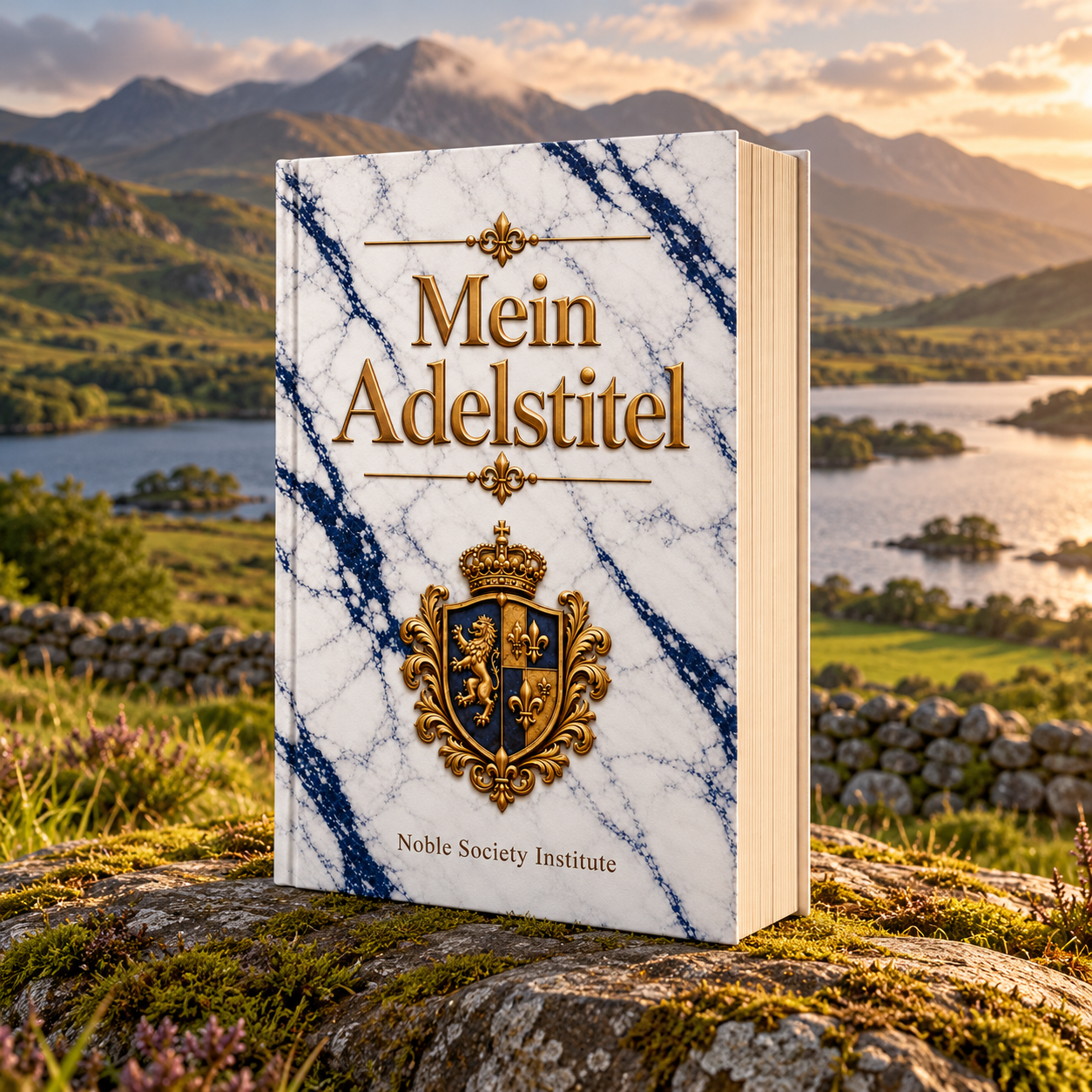
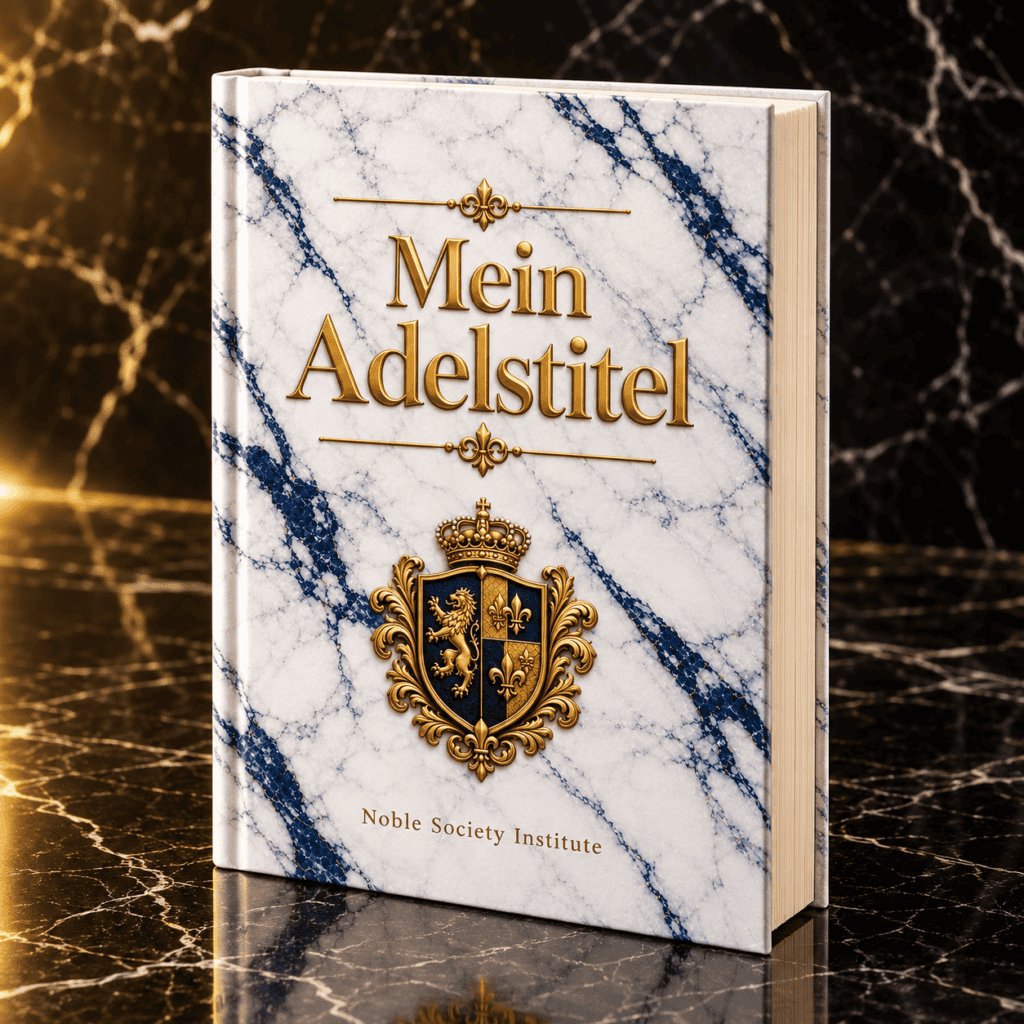
The Companion Book
The book „My Title“ takes you in detail into the multifaceted world of your new aristocratic title and offers valuable practical tips for everyday life, stylish guidance, and background information on history.
Our accessories
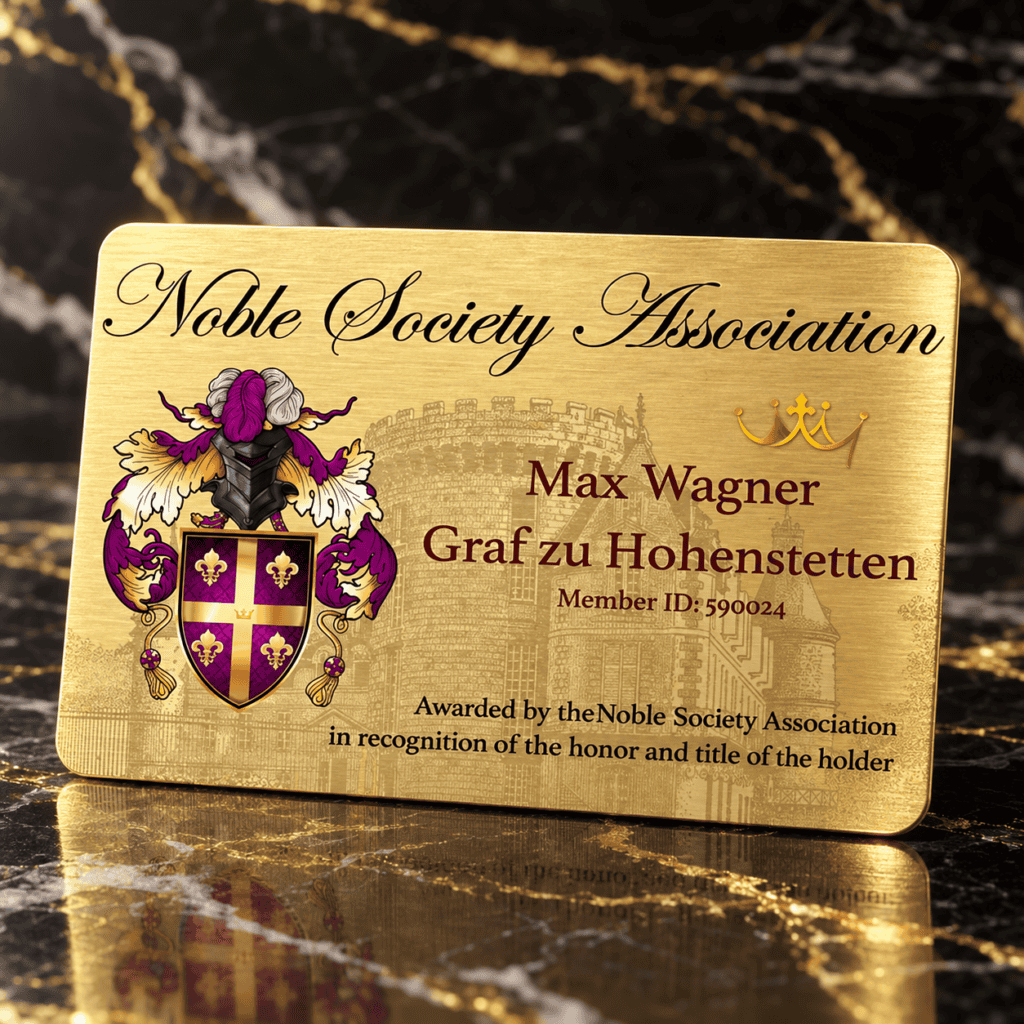
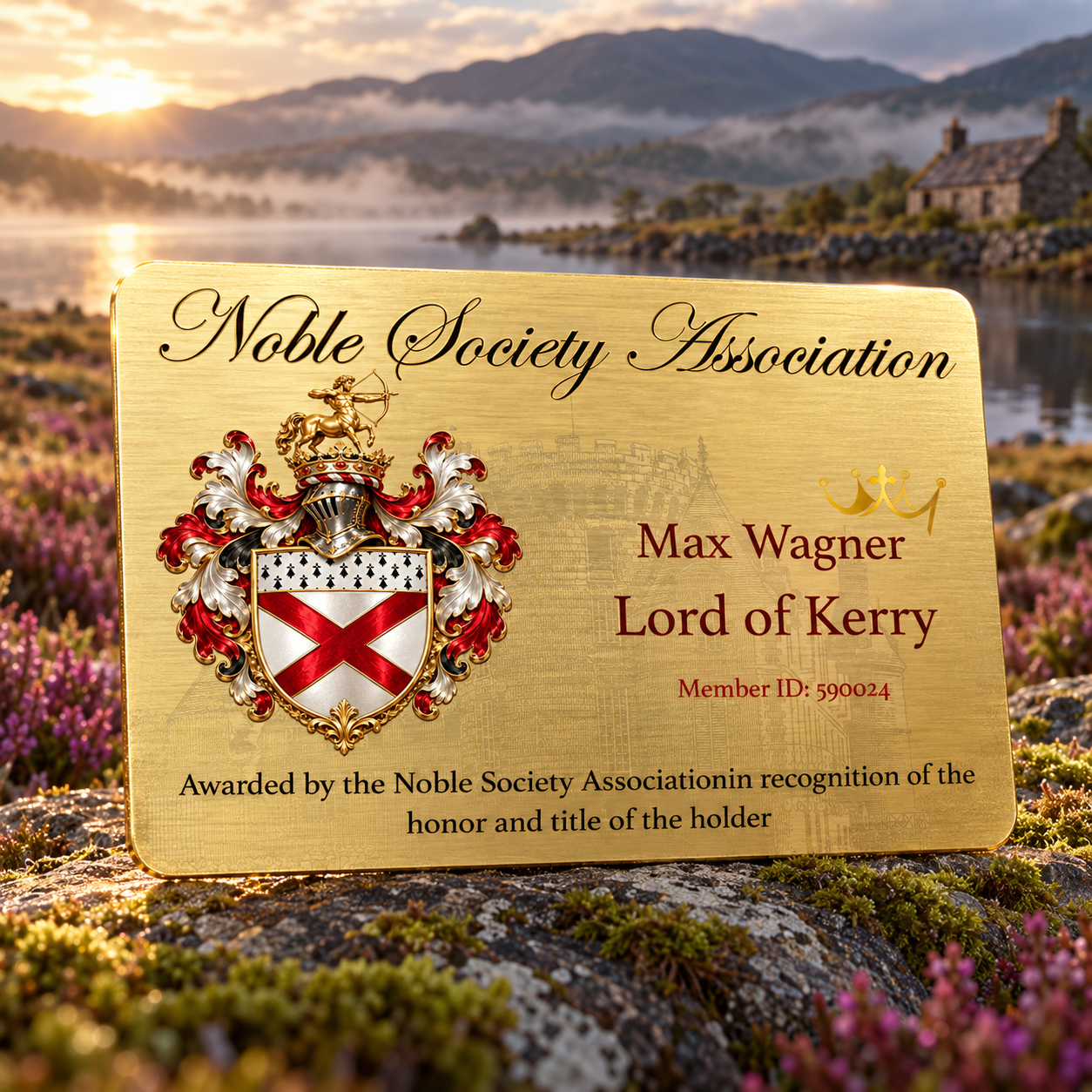
Golden ID Card
Crafted from premium aluminum in business card format, the gold ID Card makes your title look stylish and mobile.
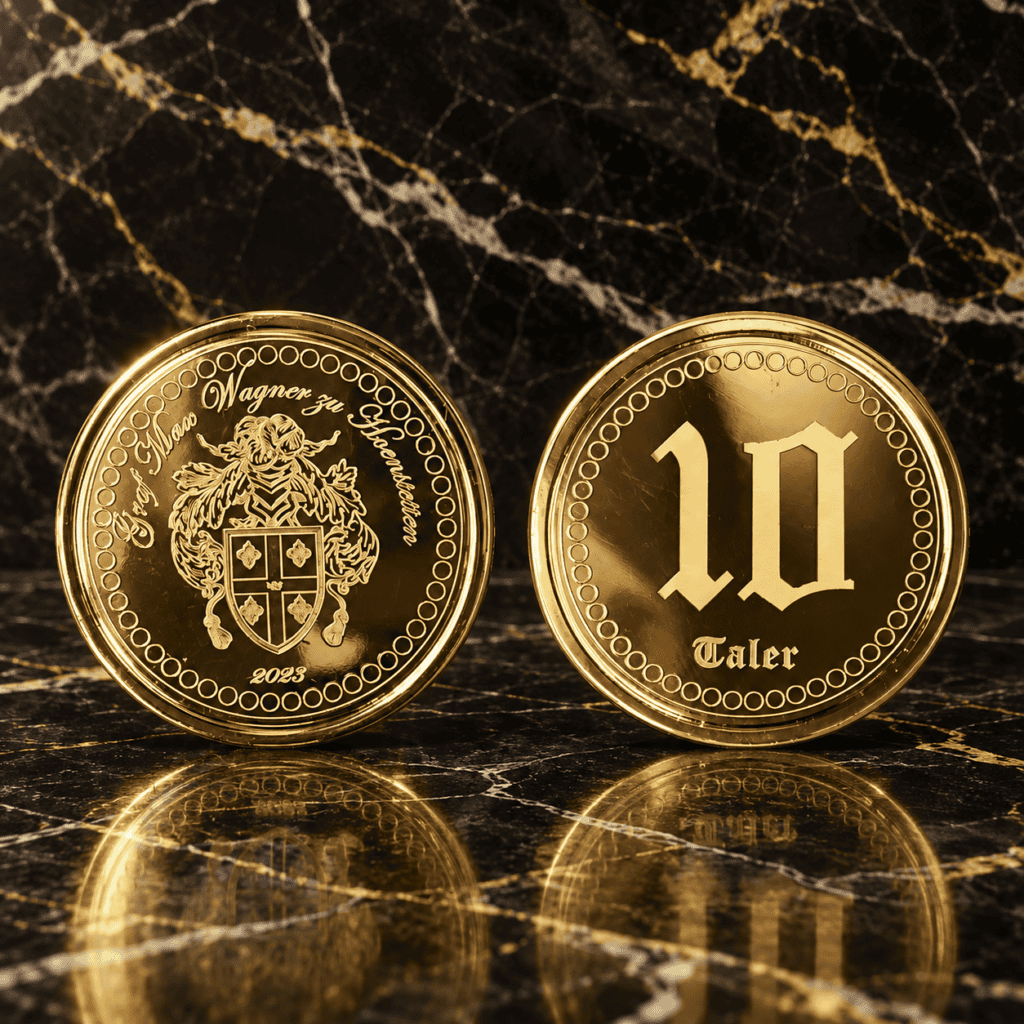
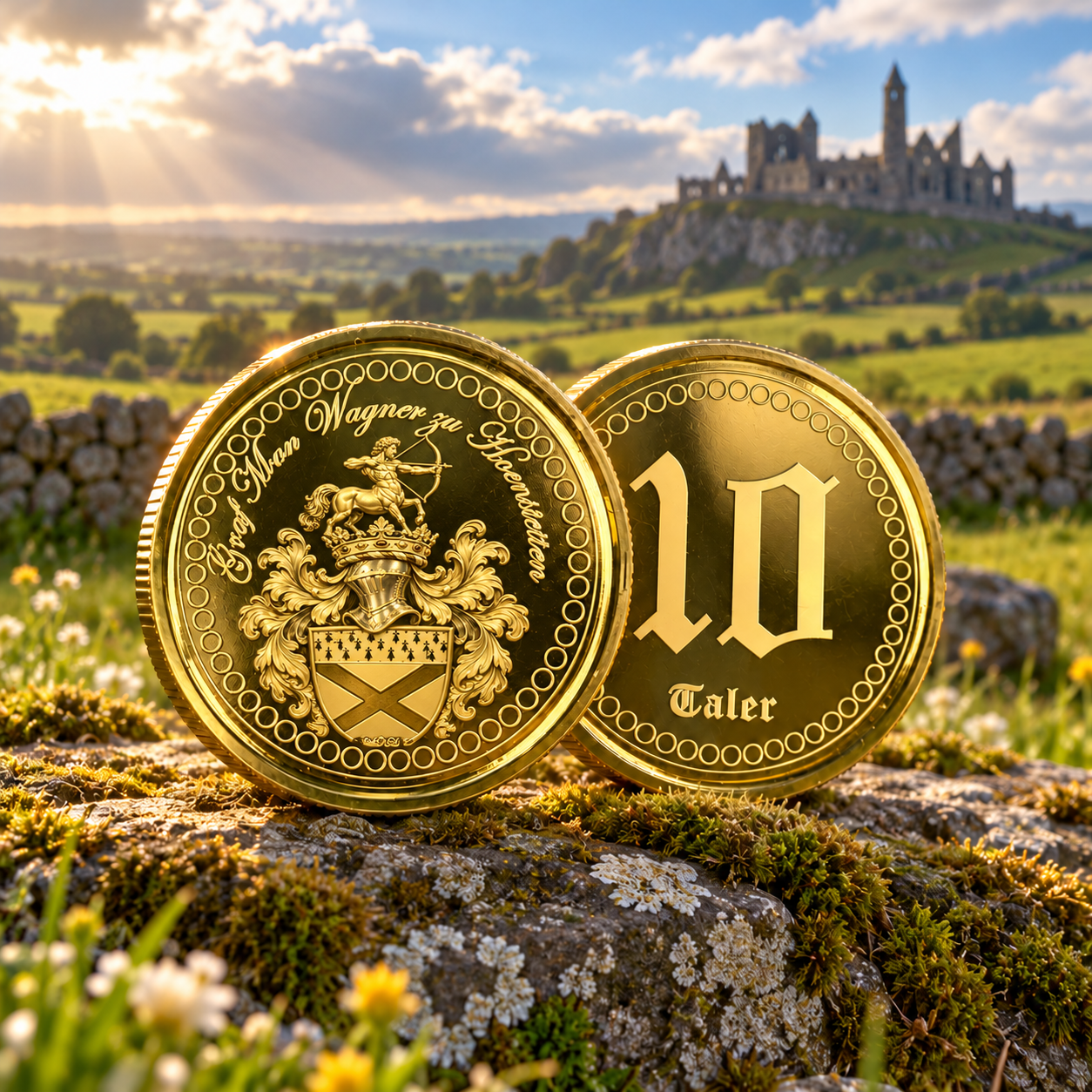
Gold coins
Fine gold and silver-plated medallions combine coats of arms, names and titles in a glossy, unique design.
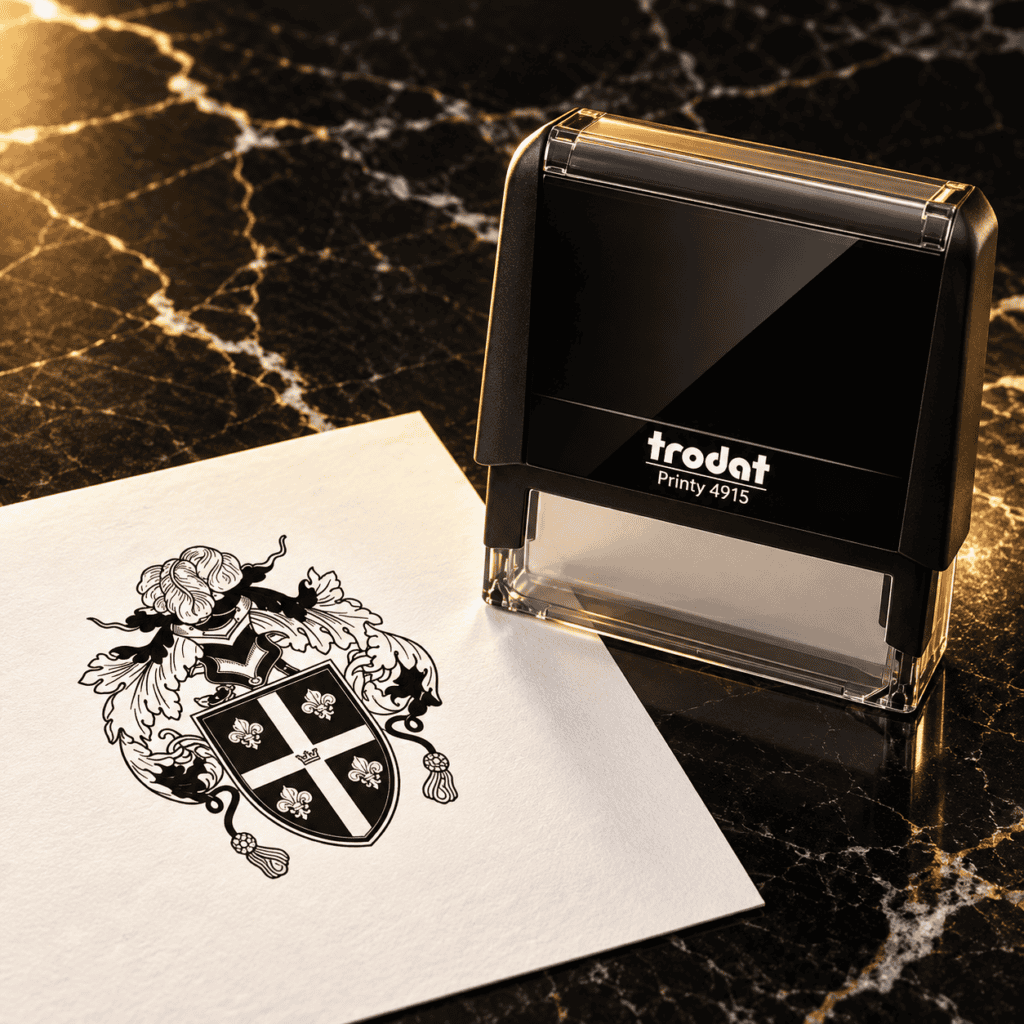
Emblem stamp
The self-inking stamp quickly, cleanly and precisely transfers your personal emblem onto letterhead paper.

My own wine
Choose fine red or white wine with an elegant, personalized label for a stylish look.

Wappen Gläser
The masterfully engraved wine glasses display their coat of arms, name and title in stunning brilliance.
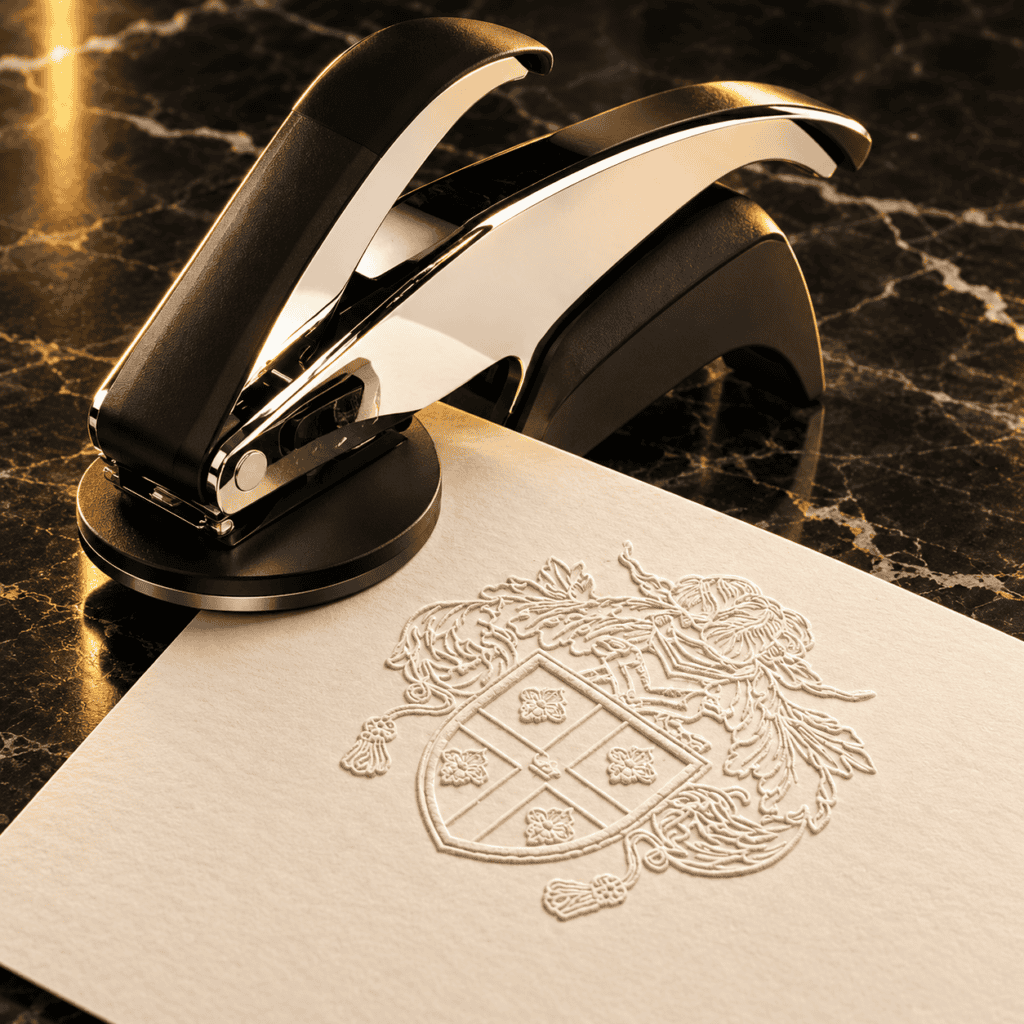
Precision pliers
The elegant embossing pliers embellishes letterheads or documents with a tactile, colourless relief embossing.
Honorary membership
Membership of the Noble Society Institute enriches your title with another dimension of exclusive representation. Validated by a magnificent certificate in your name, with no ongoing fees or obligations.