The German nobility: History, hierarchies and heritage in the heart of Europe
The Holy Roman Empire and the Fragmentation of the Ruling Structures
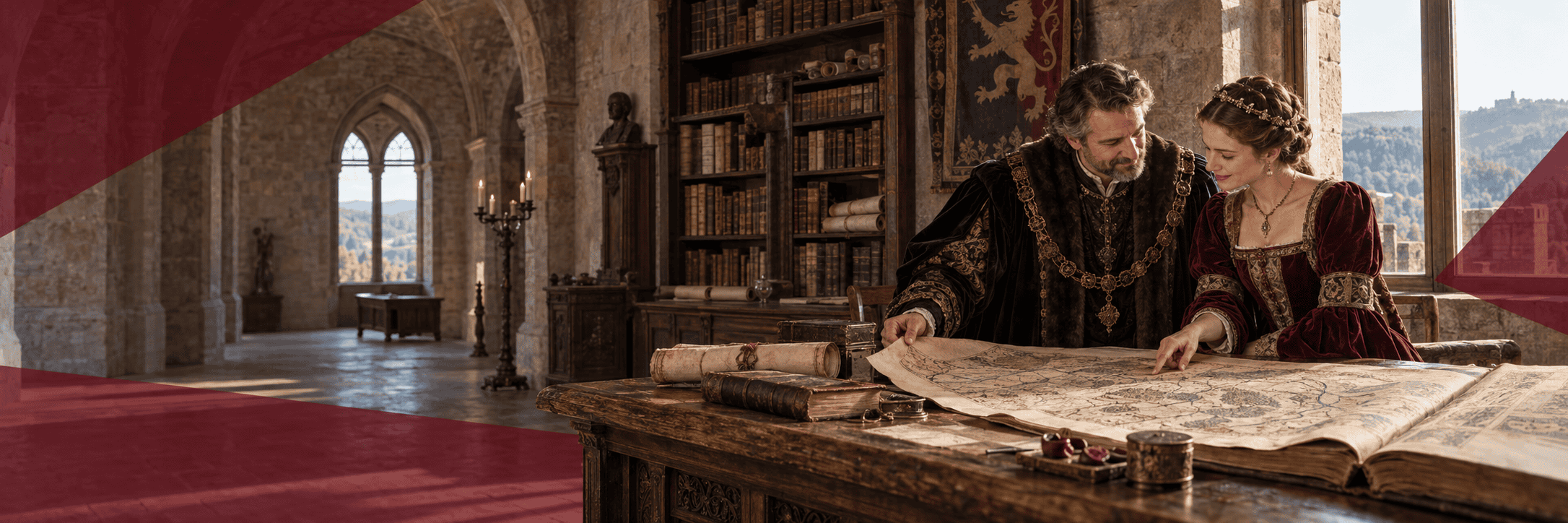
German nobility traces its history back to a centuries-long period characterized by the unique territorial peculiarities of the Holy Roman Empire of the German Nation. Unlike centralized monarchies like France or England, the German realm was never a unified national state; rather, over the centuries it was characterized by extreme fragmentation into hundreds of principalities, autonomous principalities, duchies, ecclesiastical bishoprics, and free imperial cities. This federal and fragmented political structure led to the formation of an immensely complex and finely layered social order in the German-speaking world. The nobility traditionally relied on hereditary land ownership, medieval feudalism, and the knightly military service. A special pillar was the Imperial Equestrian Order, whose members were directly subordinate to the Emperor and thus occupied an exclusive position in the structure of the Empire that was completely independent of the respective provincial princes. Membership in the nobility was defined by birth, imperial titles, and recognition by the respective status, creating a tightly knit, Europe-wide network of aristocrats.
The ranks of nobility in detail: From the nobility to the emperor
The hierarchy of German nobility was organized into a precise scale of ranks and dignities that determined both the political influence and the social status of a family. At the top was the monarchical peak: the Emperor as elected, but sacrilegiously exalted head of the Holy Roman Empire, as well as the ruling Kings (such as in Prussia, Bavaria, Saxony or Württemberg), who ruled as sovereign rulers over their kingdoms and states. Below this highest level followed the great sovereign and ruling dynasties, led by the Herzog and Princes, They controlled large territories, possessed their own fiefdoms, and often, as kurfürsten, even had the right to elect the emperor.
The following ranking was established: Graphene and Baron (the latter were often also referred to as barons in Southern Germany). Counts originated historically from the Frankish county districts and occupied important key positions as local lords or powerful landowners. The peerage represented the old and highly diversified lower nobility, which possessed significant knightly estates and local courts of justice. The culmination of the aristocratic pyramid was formed by the Knight and the large mass of untitled nobility, whose members were distinguished by the simple title of nobility „of“ or „to“. Within these ranks there was also a strict distinction between The nobility, whose roots are demonstrably deep in the Middle Ages, and to which Letter writing differently, whose official records were not made until the Early Modern Period or the 19th century through imperial or royal diplomas.
Mediatization, the Fall of the Reich and the 19th Century
A dramatic turning point for German nobility was the year 1806, which sealed the destruction of the Holy Roman Empire under the pressure of Napoleon Bonaparte. In the following years, as part of the so-called Mediatization, a massive redistribution of the map of the land took place: Hundreds of small principalities, previously directly ruled by the Empire, principalities, and smaller principalities lost their independence and became subordinate to the larger kingdoms and grand duchies (such as Prussia, Austria, Bavaria, or Baden). Although the affected noble houses lost their sovereignty, they were granted, as so-called mediatized houses, special status within the nobility that secured them a special status at the court and in the parliamentary houses of the 19th century.
During the 19th century, German nobility had to face the challenges of industrialization, the rise of the wealthy bourgeoisie, and liberal constitutional reforms. While some aristocratic families successfully expanded their wealth through the founding of factories, mining, and modern agriculture, others lost economic dominance through the abolition of feudal fiefdoms and special privileges. Nevertheless, the nobility remained deeply entrenched in the officer corps of the army, in the higher diplomacy, and in the bureaucracy of the individual German states.
The historic turning point of 1919: Weimar Constitution and the right to name
The end of the First World War and the overthrow of the monarchy in November 1918 meant the final end of the traditional state of the nobility in Germany. With the entry into force of the Weimar Constitution In August 1919, Article 109 unequivocally stipulated that the public-law privileges or disadvantages of birth or status must be abolished and that no new Title of nobility ones may be granted.
This resulted in a worldwide unique legal regulation regarding the right of surname in Germany: The former components of Adelstiteln, such as the noble title „von“ or historical ranks (such as Count or Baron), were not simply erased as in Austria, but legally integrated into the bourgeois family names. The former noble title thus became a pure component of the surname. From then on, legally speaking, no one in Germany is any longer a bearer of an aristocratic title in the public sense; instead, the historical „von“ or „zu“ is carried as a completely normal, heritable component of the surname in the passport, while official ranks as titles have completely disappeared.
Present and traditional heritage
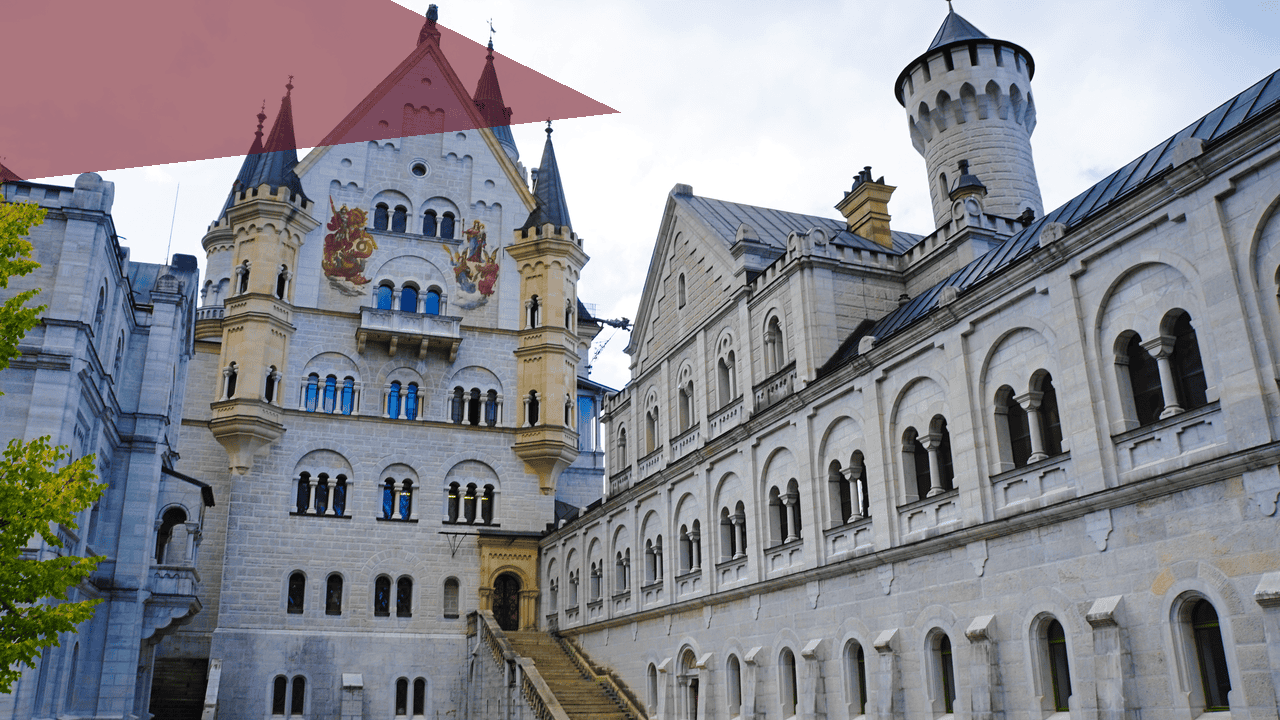
In the modern Federal Republic of Germany, noble families no longer possess any political privileges, tax special rights, or legal privileges. Nevertheless, the historical heritage is firmly rooted in the consciousness and cultural landscape of the country. Numerous families painstakingly preserve historical castles, fortresses, extensive family archives, and valuable art collections, which are often open to the public. A historical Title of nobility Although it no longer exists as a legal system in modern German law, the centuries-long history of dynasties, knights, and counts continues to fascinate as an important part of German and European cultural history.
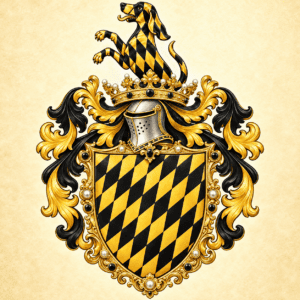
Duke of Teck
44,90 €
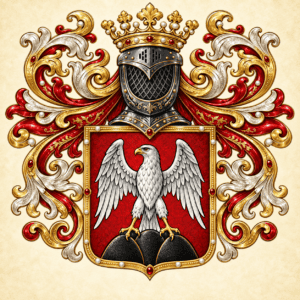
Count of Falkenstein
64,90 €
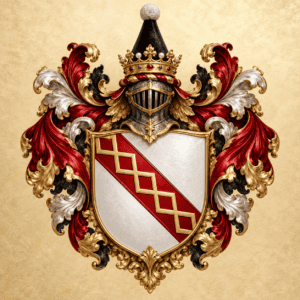
Baron of Rothensteyn
104,90 €
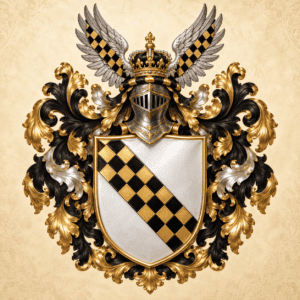
Prince of Schedingen
34,90 €
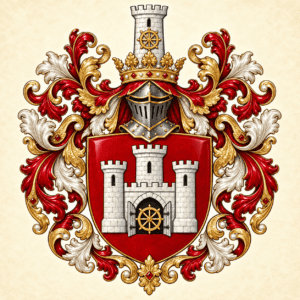
Duke of Katharienburg
54,90 €
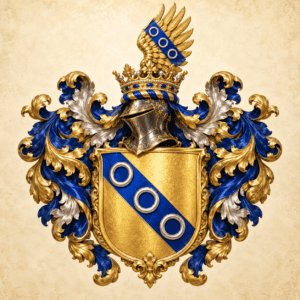
Duke of Berwangen
29,90 €