The British nobility
Peerage and Gentry: The Foundation Pillars of British Aristocracy
British nobility differs fundamentally from most continental European systems in its legal constitution, its historical development, and its social roots.. His most well-known and exclusive layer is the so-called Peerage, which forms the foundation of historical high nobility. The peerage traditionally consists of five clearly defined, ascending ranks: the Baron, the Viscount, the Earl, the Marquee or. Marquis and at the top the Duke (Herzog). Historically, membership in the peerage was closely linked to the country's political system, as hereditary peers held the automatic and indisputable right over the centuries to a seat in the British House of Lords. House of Lords, to take in.
In addition to the high-ranking peerage, the broader layer of the Gentry, which includes, among others, the titles of the Baronets and Knights as well as members of more traditional landholding families (County Gentry) count. One Knight (Ritter) does not Title of nobility constitute an hereditary title in the British system; rather, it is a personal award and lifetime honor conferred by the monarch for outstanding merits.. However, the formal ranks do not in any way alone explain the actual social or political influence of a family.. Comprehensive land ownership, close connections to the royal court, high levels of military command, political positions in the state apparatus, and economic activities in the shipping trade or the banking sector were often equally decisive factors in determining the power position of a family.. Many aristocratic lines linked their secular status to extensive landholdings (Manors) and magnificent town houses in London, while others rose to the nobility through administrative, diplomatic or scientific achievements.
From the Norman Conquest to the Magna Carta
The roots of English high society go deep into the Middle Ages and were decisively shaped by the Norman conquest in 1066.. William the Conqueror fundamentally reorganized the land ownership and feudal rights in England after his victory.. Powerful Norman vassals received vast landholdings, but in return were required to render loyal military service, military support, and political advice to the king.. From this tightly knit feudal structure developed the core of the English nobility.. At the same time, the English Crown was always striving to secure its own central authority and control over the powerful vassals, thereby creating a permanent tension between the royal claim to absolute power and the aristocratic right of participation..
A historic milestone in this ongoing dispute was the enactment of the Magna Carta in the year 1215 under King Johann Ohneland. Even though the Magna Carta was not a modern democratic document in the modern sense, it drastically restricted the arbitrary exercise of royal power, guaranteed the rights of the Church, and strengthened, above all, the political role of the leading barons.. It was from these institutional tensions and standing assemblies that the two chambers of the British Parliament developed during the Middle Ages.. The Upper House (House of Lords) became the central place where secular peers and religious dignitaries were actively involved in legislation, tax approval, and the governance of the state.
Tudor period, Civil War and the rise of the British Empire
During the Tudor dynasty in the 16th century, royal power experienced a significant strengthening.. King Henry VIII weakened the influence of the Catholic Church during the English Reformation and acquired extensive church property, fundamentally reorganizing the social and economic base of many noble families.. In the early modern period, a new elite of administrators emerged whose influence no longer rested solely on noble birth and land ownership, but increasingly on royal offices, legal education, and commercial success within the emerging trading companies..
In the 17th century, the constitutional and religious conflict between the Crown and Parliament escalated in the English Civil War, in which members of the nobility on both sides of the bloody conflict fought.. The Royalists supported the royal family, while the parliamentarians advocated for the rights of the people's representatives.. After the turbulent phase of the Republic under Oliver Cromwell and the restoration of the monarchy in 1660, the Glorious Revolution from 1688 final conditions. It was now permanently clear that the government was bound by the laws of Parliament.. In the 18th and 19th centuries, Great Britain rose to become a global power, and the British Empire extended over almost a quarter of the Earth's surface.. During this phase of expansion, the nobility remained highly involved in diplomacy, colonial administration, the military, and politics; however, it increasingly had to share its social preeminence with the bourgeoisie, which was strengthened by industrialization..
The monarchy and the British nobility through the centuries
The British monarchy has always been inextricably linked to the history and survival of the nobility.. The royal family itself forms the most prominent noble house in the country, and in earlier eras, noble families served as the most important advisors, commanders, and supporters of the throne.. Monarchs possessed the powerful authority to elevate deserving individuals to the nobility or to assign them Title of nobility to close confidants and government officials..
In modern British society, this traditional status quo has changed significantly.. The United Kingdom today functions as a modern parliamentary monarchy in which the Crown primarily performs representative, integrative, and constitutionally mandated duties, while the actual political decisions are made by the elected Parliament and the government.. The exclusive role of the Peers in the state has also undergone a profound transformation: through historical developments, the role of the Peers has become increasingly important. House of Lords Act 1999 automatic inheritance for the overwhelming majority of hereditary peers was abolished. Since then, only 92 hereditary peers still have a permanent seat in the upper house, while the vast majority of members are known as so-called Life Peers appointed for life for political or social merits.
The British nobility in the present day
British nobility today presents itself neither as a closed power bloc nor as a mere historical relic, but as a fascinating combination of medieval tradition and modern civil society.. Historical titles, magnificent country estates, extensive family archives, and charitable obligations remain firmly embedded in the public consciousness of the country.. A traditional one Title of nobility However, in the modern United Kingdom, it no longer grants any political special rights or legal privileges.. British nobility combines its centuries-long history with a modern democratic legal system in which public law and parliamentary institutions determine the framework of social life..
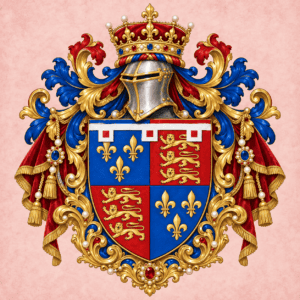
Duke of Clarence
69,90 €

Earl of Oxford
49,90 €
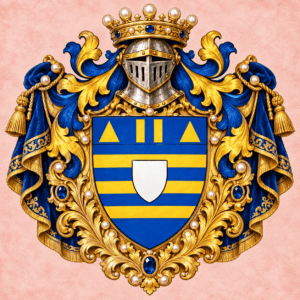
Baron Mortimer
64,90 €