German nobility
History, title and its current sound
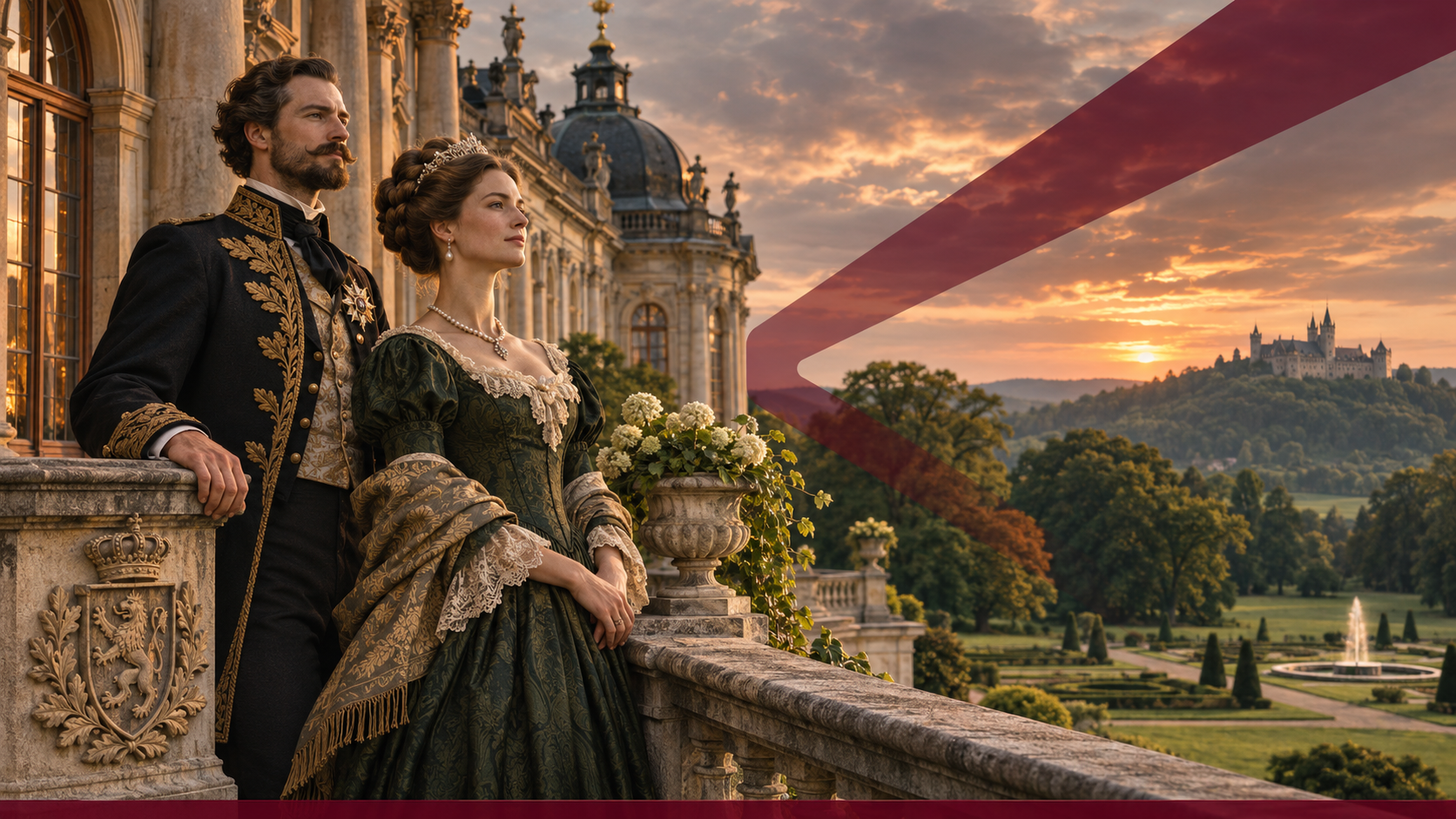
Anyone who thinks of German nobility today often immediately has images in their mind: castles Coat of arms, a resounding „von“ in the name – and perhaps a little too much Sissi in the film. The real story is more exciting and much more complex. It ranges from early medieval ruling structures, knights and vassals to the major upheavals of the 20th century.
Where it all began
Roman authors already described social differences among the Germanic tribes. In the early Middle Ages, this did not lead to uniform rules for the entire area of present-day Germany; instead, many regional centers of power emerged. Dukes, counts, and local lords organized protection, administration, and military operations in their respective regions.
Under Charlemagne, the Frankish system of counts spread far beyond its original core area. A count was initially primarily an official: he administered an area, spoke the law, and ensured order on behalf of the ruler. A title was therefore not just a decoration on a business card, but associated with very tangible duties.
Ranches, manors and old families
In the High Middle Ages, two groups grew increasingly closer together: the noble knights and the ministers. The ministers originally served a lord, but they were able to gain significant military and political influence. This combination of forces gave rise to the knightly class.
Families whose noble origins date back to this time are often referred to today as the Old Nobility. Their prestige was not based solely on rank, but on possessions, employment relationships, marriages, castles, and networks. Medieval society was not a neatly organized shelf with eight compartments. Rather, it was a rather complex web of rights, duties, and many people who were convinced that they had at least a little more to offer than their neighbor.
How Reich State became a power
In 1495, the political order of the empire took on a more solid form and the first German nobility titles Who held a large fief directly from the emperor, could permanently represent themselves in the Reichstag. This combination of possession and participation in decision-making led to the Reichstags. These included secular rulers such as Electorates, Dukes, Princes and Counts, as well as spiritual dignitaries.
These Reichsstände were not a unified group. Some ruled large territories, others had significantly smaller areas or special rights. Status, actual possession, and political influence did not always coincide. A high title might sound impressive – but without land, money, and allies, even the most magnificent title remained a mere title in everyday life.
Letter nobility and new opportunities for advancement
Not every German nobleman came from an ancient knightly family. Since the late Middle Ages, citizens could also be elevated to the nobility. Especially civil servants, lawyers, officers, and later professors or successful professionals received such awards. This form of elevation is called the peerage because it was Certificate conferred by a royal decree.
In the Holy Roman Empire, this right lay with the Emperor; later, the rulers of the individual German states were also able to levy land taxes. Thus, alongside the old landholding families, new noble lineages emerged, often closely linked to administration, the military, science, or diplomacy.
High nobility and lower ranks
Within the historical nobility, a distinction was made between high and low nobility. The high nobility included ruling and former ruling houses as well as certain noble families. Their history was often directly linked to states, territories, and dynastic connections.
The lower nobility, on the other hand, included a wide variety of families and ranks: lords, knights, nobles, and numerous regional clans. Over the centuries, many houses branched out. From one family, several lineages could emerge with different names, possessions, or ranks. Therefore, Title of nobility without the historical context, a story is often only half the story.
The transition after 1918
After the end of the monarchy, the Weimar Constitution of 1919 drew a clear line under the old privileges of the nobility. Article 109 made it clear: birth and rank did not confer any special rights over other citizens. Former titles were transferred into the family names; new noble titles could no longer be granted.
This removed old special rights from the state and administration. Names such as „von“, „zu“ or „Graf“ remained in many families, but no longer had the political or legal function of earlier centuries. There is also no special protocol requirement for German citizens with such name components today when addressing them.
Why the fascination has nevertheless remained
Today, German nobility is primarily a part of cultural and family history. Castles, archives Coat of arms, place names, and historical narratives evoke families that have long influenced regions. At the same time, titles still exert a linguistic effect: Herzog sounds powerful, Graf classically, Baron internationally, and a „von“ instantly gives a name a different rhythm.
That is still the appeal today. Not because one needs a throne, a carriage, or a personal falconer to do so, but because a well-chosen title brings history, style, and personality together in just a few words.
German nobility today
Continuity, known families and the living heritage in the 21st century
German nobility has undergone profound changes throughout the 21st century and today presents itself as a multifaceted part of modern civil society. Since the historic turning point in 1919, when the Weimar Reich Constitution abolished all public-law privileges, distinctions of status, and official title conferral and transferred the former titles to the civil law as mere elements of the name, the nobility no longer exists in the legal sense of the word.
Nevertheless, German nobility has by no means disappeared from the public eye. Many historical families have successfully managed the balance between their traditional history and the modern economic and professional world. Today, they act as entrepreneurs, managers, cultural preservationists, foundation founders, or landowners and foresters.
Instead of political privileges, today’s presence of the nobility is based primarily on a conscious approach to cultural heritage, family cohesion, networks, and the preservation of centuries-old values such as duty consciousness, discretion, and entrepreneurial responsibility.
Prominent noble dynasties and their current spheres of influence
A look at prominent German noble families shows how strongly tradition and modern economic power can be intertwined.
The House of Hohenzollern: As one of the historically significant dynasties of Germany, which over the centuries produced Electorates of Brandenburg, Kings of Prussia and German Emperors, their descendants continue to shape the public image to this day. While parts of the historical Prussian possessions were expropriated after the turmoil of the 20th century, the Swabian line of the house, under the leadership of Karl Friedrich Prince of Hohenzollern, today successfully manages medium-sized corporate groups, industrial and service companies, as well as the headquarters, the world-famous Hohenzollern Castle.
The House of Thurn and Taxis: This traditional family is known primarily for its historical role in establishing the European postal system. Today, the family is one of the most prominent and wealthy noble families in Germany. Based at Schloss St. Emmeram in Regensburg, the family manages a diverse portfolio of real estate, art collections, forestry, and capital investments, with the preservation of cultural heritage at the heart of its activities.
The Haus Fürstenberg: The princely house, originally from Swabia and Bohemia, has a long history as a royal family. To this day, the family is economically deeply rooted and socially active, among other things with the prestigious Fürstenberg Brewery, extensive forestry operations, and historical landholdings in Baden-Württemberg.
The House of Waldburg: The various lines of the Princes and Counts of Waldburg belong to the ancient Swabian noble families, which to this day are among the wealthiest and most influential aristocratic families in the southern German region. They manage large agricultural and forestry estates and are involved in regional cultural and social projects.
The importance of culture, castles, and family memories
In addition to large business enterprises and estates, German nobility today is primarily guardians of an invaluable cultural heritage. Hundreds of castles, fortresses, historic gardens, valuable art collections and archives are in private possession of noble families. Since the maintenance of these monumental structures consumes astronomical sums in the 21st century, many owners have taken innovative paths: castles are restored grandly and made accessible to the public as museums, hotels, venues for events, or for cultural festivals.
Foundations safeguard the preservation of libraries and works of art from deterioration.
The preservation of family history is carried out through traditional associations such as the German Equestrian Society or the Knights of St. John, which bring values such as Christian charity, preservation of tradition, and chivalric honor into the modern era.
Even if an elegant name or a historical one is Title of nobility today legally recorded in passports as a mere surname, the fascination for the underlying cultural history, the refined style and the timeless elegance in society remains undiminished.
Five famous castles and fortresses in Germany: Architecture, history and present
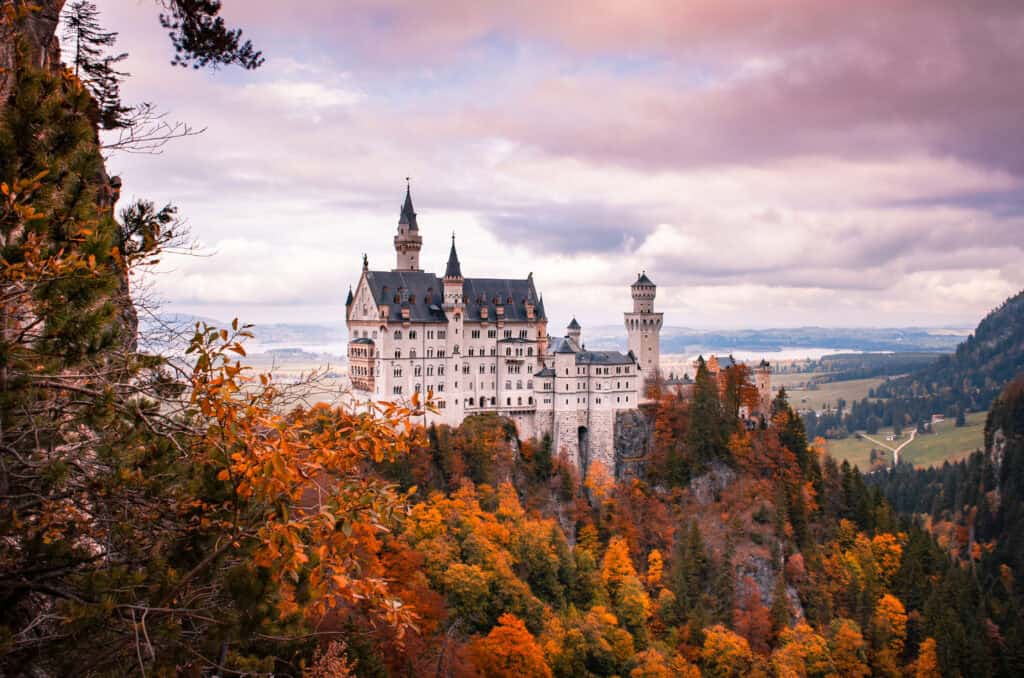
Germany boasts an unparalleled density of historical castles, residences, and palaces that serve as stone testimonies to bygone eras and mark the landscape. They bear witness to the power of dynasties, the mastery of historical architects, and a architecture that continues to fascinate to this day. Five outstanding monuments reflect this rich history in all its facets.
Neuschwanstein Castle (Bavaria)
Burg Hohenzollern (Baden-Württemberg)
High on the distinctive Zollerberg on the edge of the Swabian Alb lies the main castle of the Prussian royal house and the princes of Hohenzollern. The historic original structure was destroyed in the Middle Ages before King Friedrich Wilhelm IV of Prussia had the castle magnificently rebuilt in the mid-19th century by the architect Friedrich August Stüler in the style of English Neo-Gothic and Romantic Historicism. The complex impresses with its robust, multi-towered silhouette, the treasury with historical relics, and the magnificent graphic and royal rooms.
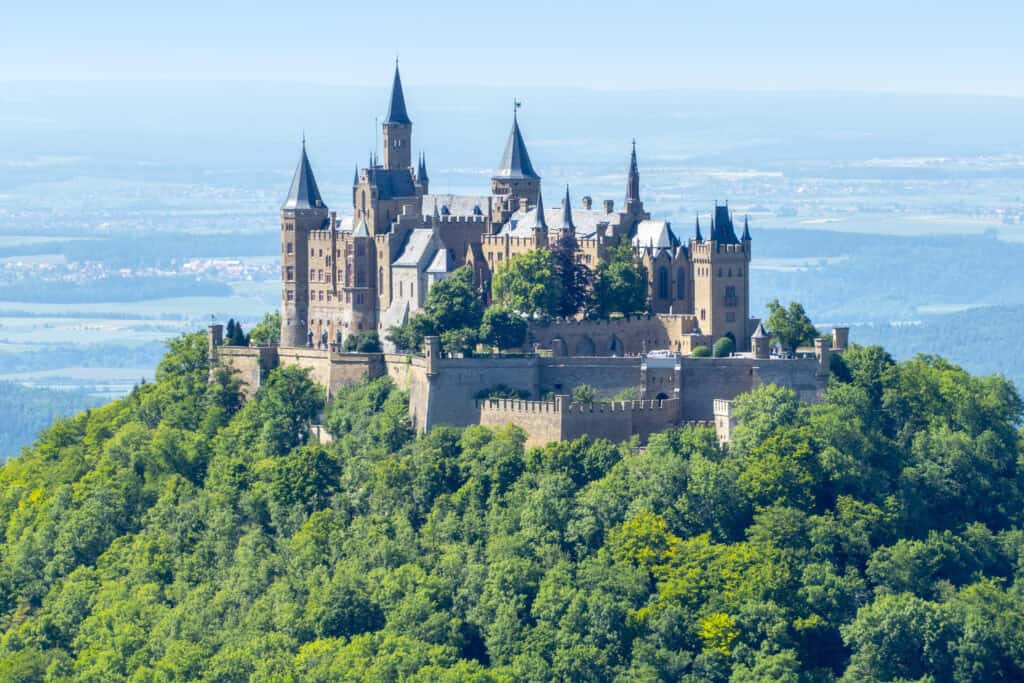
Current use and location: The castle is in the sole ownership of the House of Prussia (under the leadership of Prince Georg Friedrich) and is open all year round as a living museum, venue for concerts, as well as for high-profile cultural events and Christmas markets.
Schloss Herrenchiemsee (Bavaria)
On Herreninsel in the Chiemsee, King Ludwig II built his third and most pompous building from 1878 onwards: the New Palace Herrenchiemsee, which was designed as a deliberate replica and monument to the French sun king Louis XIV. The architect Georg Dollmann designed an estate on behalf of the king that was intended to surpass the Parisian Palace of Versailles in splendor and scale. The breathtaking mirror hall, which even exceeds the French model in length, is especially famous, as is the magnificent parade rooms and the Baroque garden complexes with their magnificent water features and fountains.
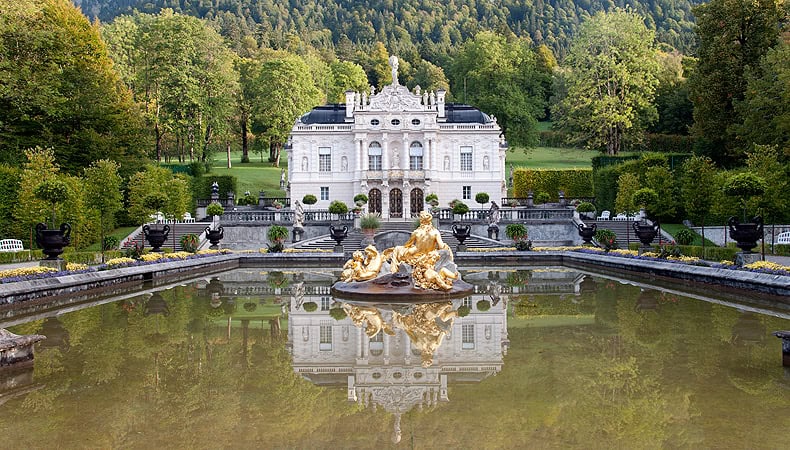
Current use: The castle remained unfinished upon the death of Ludwig II in 1886, but today it is maintained by the state castle administration as a highly frequented museum and as one of the cultural highlights of Bavaria.
Heidelberg Castle (Baden-Württemberg)
Majesticly rising above the Neckar valley and the old town of Heidelberg are the world-famous ruins of Heidelberg Castle, which for centuries was the luxurious residence of the Electorates of the Palatinate. The complex combines features of Late Gothic and Renaissance architecture and is considered one of the most important Renaissance buildings north of the Alps. During the Palatine Succession War in the late 17th century, the castle was repeatedly destroyed by French troops and finally reduced to ruins by lightning strikes. The Ottonian and Henryesque buildings, the magnificent Ottonian building and the famous Great Foyer in the basement are particularly noteworthy.
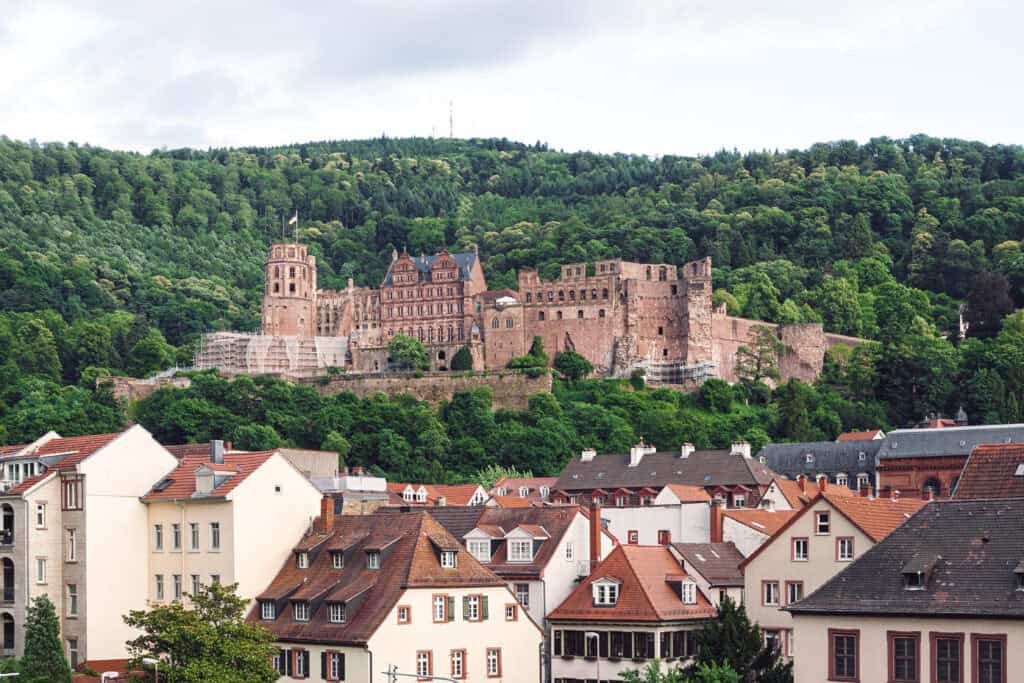
Current use: The partially ruined complex attracts millions of visitors from all over the world every year. It is used for theatrical performances, concerts, fireworks displays and festive events and is the landmark of the traditional university city of Heidelberg.
Charlottenburg Palace (Berlin)
In the heart of the federal capital Berlin lies Schloss Charlottenburg, the largest and most important former royal residence of the Prussian kings in the city. It was built from 1695 onwards as a Baroque summer residence for Sophie Charlotte, the wife of the Elector and later King Frederick I of Prussia, after the Italian and French model and was expanded in the 18th century by the striking Great Dome building and the Neue Wingert-building. The interior features magnificent Baroque furniture, precious porcelain collections and paintings.
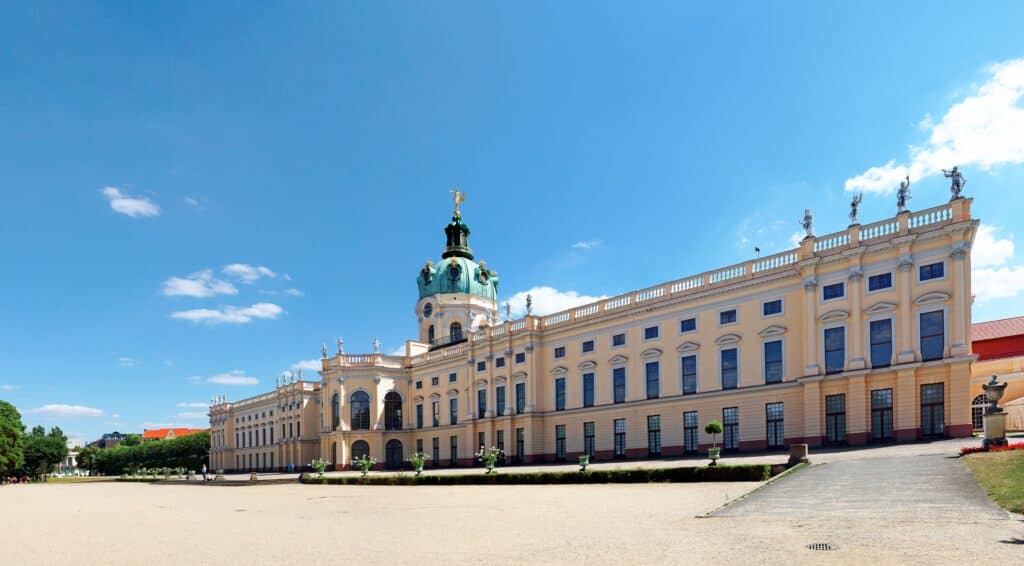
Current use: After severe damage during the Second World War, the castle was reconstructed faithfully to its original appearance. Today, it is managed by the Preußische Schlösser und Gärten Berlin-Brandenburg Foundation and serves as a high-ranking museum that makes its historical rooms and the extensive Baroque gardens accessible to the public.
In the 21st century, German nobility embodies a fascinating combination of centuries-old tradition, cultural responsibility, and modern entrepreneurial foresight. Although legal privileges and official titles have long since become a thing of the past in terms of civil law and historical titles are continued as mere bourgeois surnames, noble families continue to actively shape social and economic life. As custodians of important cultural monuments, castles, archives, and agricultural assets, they contribute significantly to the preservation of historical heritage. A noble name and a commitment to one’s own family history stand for timeless elegance, discretion, and a stylish expression of lived-in identity.