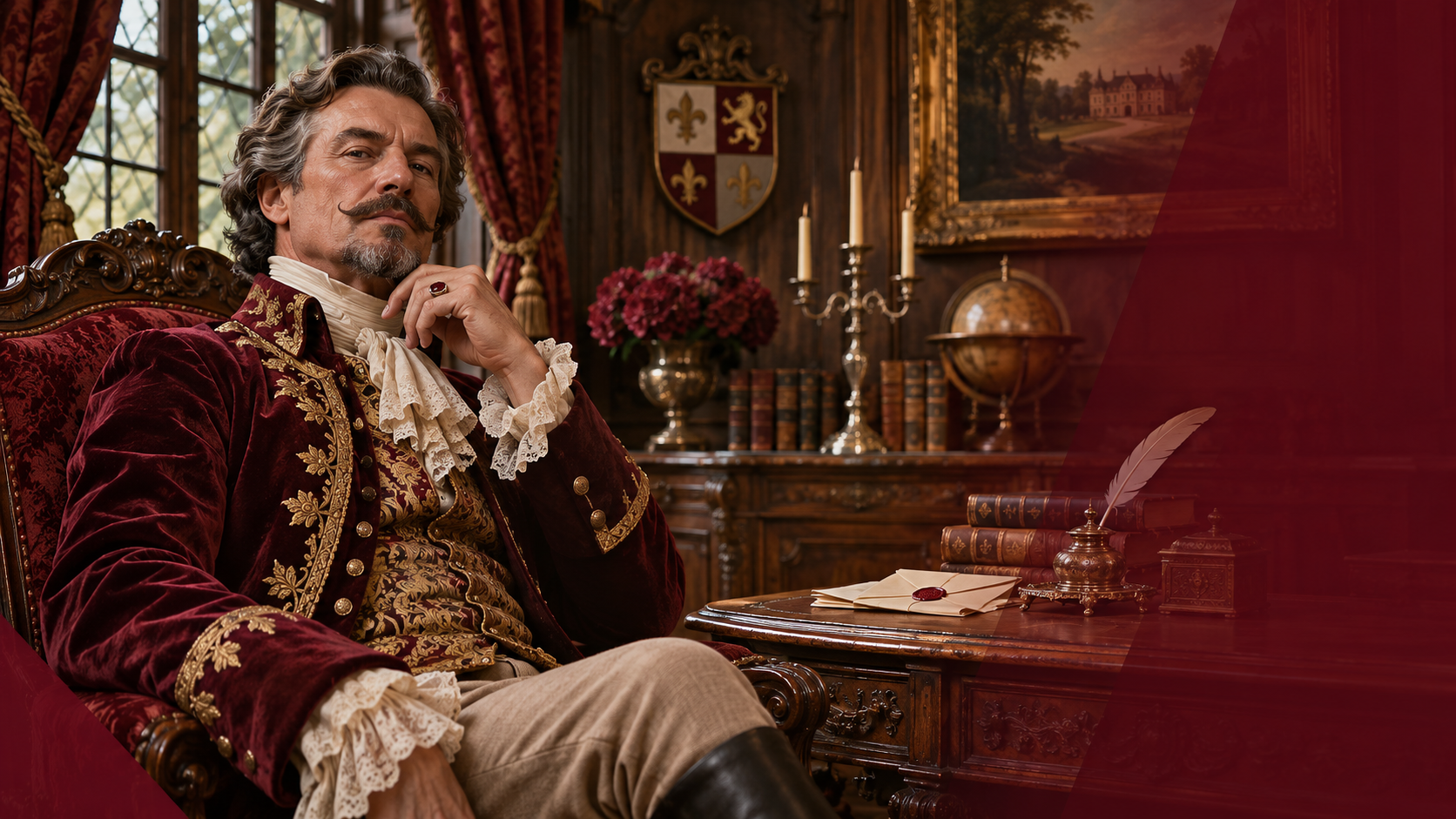
The Historical Baron – Freedom, Landdomination and European Autonomy
A title between freedom, land and independence
The title Baron has a particularly international sound. It is encountered in German, French, British, Italian and Eastern European noble histories, but its roots lie in the Germanic language area. The word comes from the Germanic word "baron", which means "lord". baro back, a term for a free man, a fighter or an esteemed follower.
In the early Middle Ages, a baron was not initially a clearly defined rank within a uniform ranking system. The term could refer to a free lord who possessed land, followers, and his own rights. In the countries of the Frankish Empire, this gradually evolved into a noble status. The baron represented a lord who acted independently and possessed prestige and influence within his territory.
In the German-speaking world, the corresponding title was often given as Freiherr. Both terms are closely related, although their use varied regionally. While Freiherr represents the traditional German form, Baron became the preferred European and internationally understood term. In many family chronicles, both forms appear side by side.
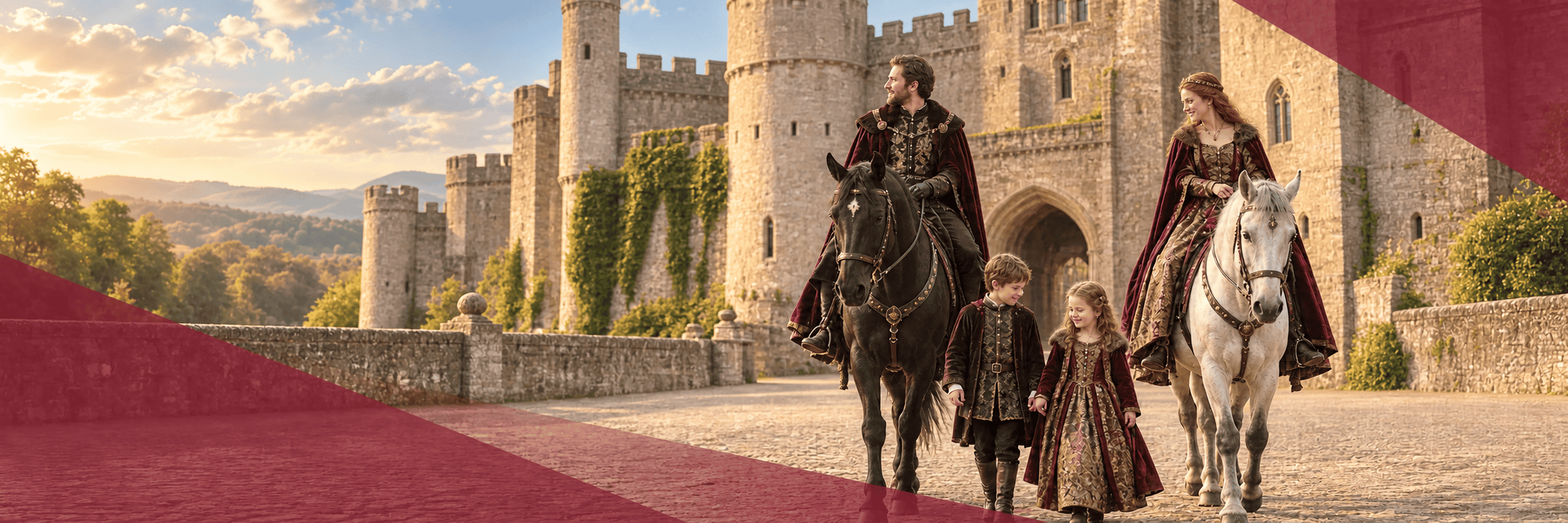
The status of a baron was below that of a count or prince in the historical hierarchy, but it was by no means insignificant. Barons owned estates, castles, and domains, served as officers, diplomats, or civil servants, and were often closely related to larger princely houses. Their history often took place in the regions where they were rooted: on a manor, in a small residential city, on a trade route, or in a landscape with a long family history.
It is precisely this combination of independence and closeness that makes the title Baron so interesting. It stands for more than just great territorial power; it represents a house that had found its place through possession, service, education, or regional importance. A Baron was often closely connected to his land, his people, and his surroundings.
In European nobility, the title developed many of its own forms. In France, the baron to a fixed designation of the lower nobility. In Great Britain, the Baron remains part of the Peerage system to this day. In Italy, Spain, Austria, Hungary and Russia, numerous families held comparable titles. Each region gave the rank its own historical character.
Baron and Baroness therefore associate commonness with elegance. The title bears the memory of free lords, of land and responsibility, of castles and family lines. Its history is less the history of great royal houses than the history of many independent houses that have shaped their regions for a long time.
Barone as the lords of their region
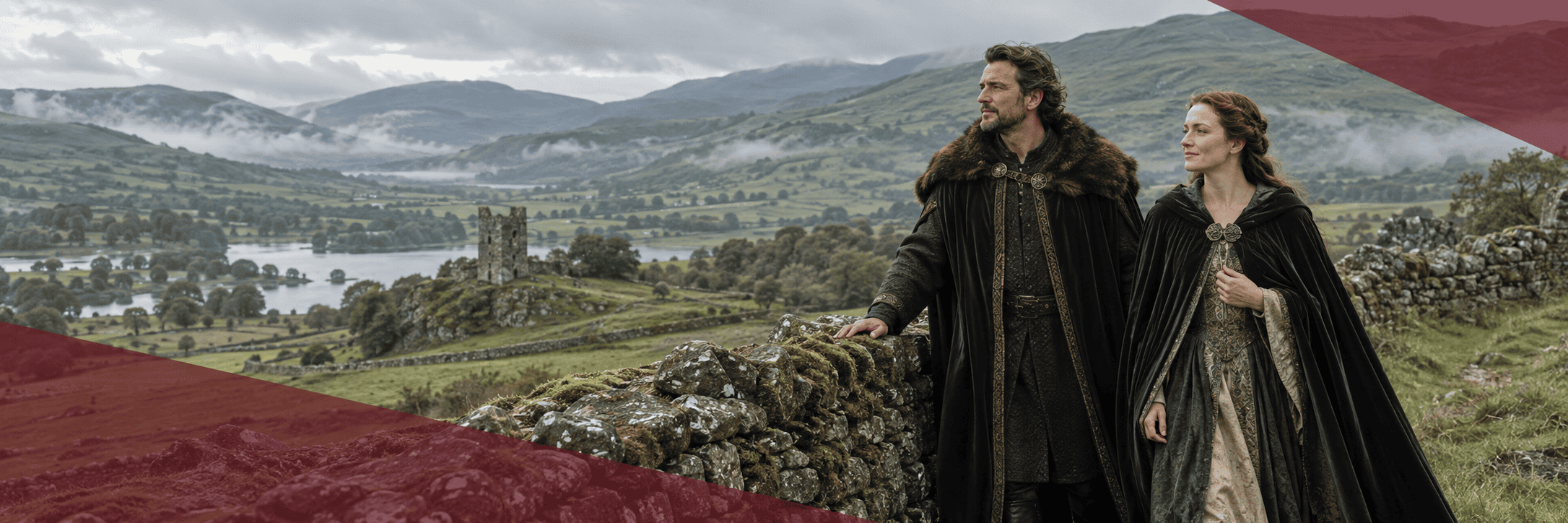
The history of the baron is closely linked to the history of the country. While counts and princes often ruled over larger territories, the strength of many baron houses lay in their immediate regional roots. Their possessions consisted of farms, forests, manor houses, mills, vineyards or smaller fiefdoms. These possessions were the economic foundation of the house and at the same time the focal point of their daily life.
A baronial estate was a small world in itself. The manor house included business buildings, stables, storerooms, workshops, and often a chapel. In the surrounding area were fields, villages, forests, or leasehold lands. The baron or his administrators kept books of income and expenses, regulated the maintenance of buildings, and liaised with artisans, tenants, and neighbors. The rank was therefore closely linked to practical responsibility.
Many barons served a larger lord. They served as officers, councillors, diplomats, or civil servants and brought their experience from the region to the court of a duke or prince. Conversely, after years of military or civil service, they returned to their estates and there combined courtly education with local roots. This dual role shaped numerous family histories.
In the Holy Roman Empire, the circumstances were particularly diverse. One baron could be directly under the emperor and have unlimited power. Another was a vassal of a prince or belonged to the nobility of a larger territory. Some families owned only a single estate, others several possessions in different regions. The common term therefore tells less about the size of a house than about its position within a historical order.
The Rhineland, Franconia, Swabia, Westphalia and the Austrian states possessed particularly dense landscapes of baronial houses. Castles and manor houses were often located only a few days’ journey from each other. Families met at country days, at church festivals, in military service, or through marriage. From this network, close connections emerged, but also rivalries over possessions, offices and influence.
A well-known example is the house of and to Guttenberg. Its history leads to Franconia, where the family owned land and rights for centuries. The family of Münchhausen also stands for the connection between a baronial origin, regional history, and cultural memory. The name became well-known far beyond Lower Saxony thanks to Hieronymus Carl Friedrich von Münchhausen, although the literary character of the „lying baron“ later developed its own life.
Baronial houses often shaped their regions through foundations and buildings. They supported churches, established family heirlooms, founded schools, or promoted local institutions. A Coat of arms church in a village, a tombstone in the choir room, or a name on a manor house can still evoke this connection. Such traces are often less monumental than stately residences, but precisely because of that they are particularly accessible.
The Baron title in Europe
In France, the title of Baron took early on a firm place within the feudal order. A Baron was often the lord of a fief that was directly or indirectly connected to the Crown. His position was determined by land ownership, military obligations, and his allegiance to a more powerful lord. Over the centuries, the title evolved from baron to a well-known rank of French nobility, which was associated in many regions with castles, wine-growing areas, and ancient family lineages.
In Great Britain, the Baron remains part of the system of peerage to this day. He ranks below Viscount, Earl, Marquess, and Duke. Historically, Barons could be great landowners, royal advisors, or military leaders. Many sat in the House of Lords and directly influenced the policies of the Kingdom. The title Lord is also often used in social discourse to refer to Barons, which gives them a special presence in the British language area.
English history is replete with barons whose names are associated with political upheavals. The barons who urged King John to sign the Magna Carta represent the early development of rights and obligations between the Crown and the nobility. Their demands were directed against arbitrary power and shaped the political history of England far beyond the Middle Ages.
In Austria and the countries of the Habsburg Monarchy, the title of Baron also enjoyed great popularity. Families from Bohemia, Moravia, Hungary, Galicia, and the Alpine countries carried it through generations. Many served as officers, diplomats, or high officials of the monarchy. Their possessions ranged from small manor houses to extensive estates with castles, forests, and agricultural enterprises.
The title was also carried out in different forms in Italy and Spain. The Italian barone was often associated with a fief or a local dominion. In Spain, the baron to designate a house with long service to the Crown. The history of these families is closely linked to regional traditions, cities, monasteries, and estates.
The title of Baron thus shows particularly clearly how different a rank could develop in Europe. It always remained a sign of origin and prestige, but took on different positions depending on the country. In some regions it stood for an independent land lord, in others for a court official, officer, or political advisor. It is precisely this diversity that gives the title its European depth.
Baronesses and the art of the house
Baronesses shaped the lives of their families in ways that only become apparent upon closer examination in many chronicles. They ran households, managed property, organized festivities, raised children, and nurtured relationships with other families. Their role was particularly direct on smaller estates, because the manor house, the economic enterprises, and the social environment were closely intertwined.
A baroness brought more than one new name into her husband's household with her marriage. She brought along connections of kinship, education, personal experiences, and often also a dowry. This could consist of money, jewelry, movable goods, land, or inheritance. A marriage contract regulated what happened with these assets and how the baroness would be provided for in the event of a widowhood. Such agreements were of great importance for the security of a family.
In the everyday life of a baronial estate, much responsibility lay in the hands of the baroness. She oversaw the supply of the house, took care of staff and guests, and often supervised the supplies, clothing, and interior spaces. In the absence of the baron for extended periods, she could coordinate the ongoing affairs and speak with administrators, tenants, or artisans. Her knowledge of the estate was often as precise as that of her husband.
Many baronesses were active in their communities. They supported the village church, donated an altar, financed a school, or helped establish a hospital. In times of need, war, or illness, they organized aid for families on the estates and in the surrounding villages. This commitment was recorded in foundation documents, church records, and family archives.
The education of the children also belonged to her sphere of influence. Baronesses decided on educators, languages, music lessons, and preparation for later duties. Sons were to be prepared for military service, administration, or further studies. Daughters learned languages, music, correspondence, and the social forms that were important in other courts or in their future families. The household of a baroness was thus also a place of education and the transmission of family traditions.
An example of the cultural impact of Baronial women is the world of salons in the 18th and 19th centuries. Baronesses invited writers, musicians, officers, and travelers, held discussions about books and politics, and created spaces for encounters between the nobility and the bourgeoisie. Some became known as authors, patrons, or travelers themselves. Their letters provide insight into a world characterized by education, relationships, and personal attitude.
The title Baronin therefore refers to a distinct history of responsibility, hospitality, and design. It connects the world of the house with the world of the region. In many family chronicles, Baronesses are those who maintained relationships, preserved traditions, and gave a personal, human side to the name of their house.
Coat of arms Good and family memory
The culture of many Baronial houses condensed into a few, but significant places: the manor house, the village church, the family archive, and the Coat of arms. These elements linked the name of a house to a specific landscape. They made visible where a family lived, what responsibilities they assumed, and what memories they passed on.
The manor house was often the center of this world. It did not have to be the size of a princely residence to radiate importance. A manor house with a gatehouse, outbuildings, a park, and a chapel could carry the history of a family over the centuries. Portraits hung in its rooms, books stood on shelves, letters were kept, and guests were received. Each object told something about travels, marriages, military service, or cultural interests.
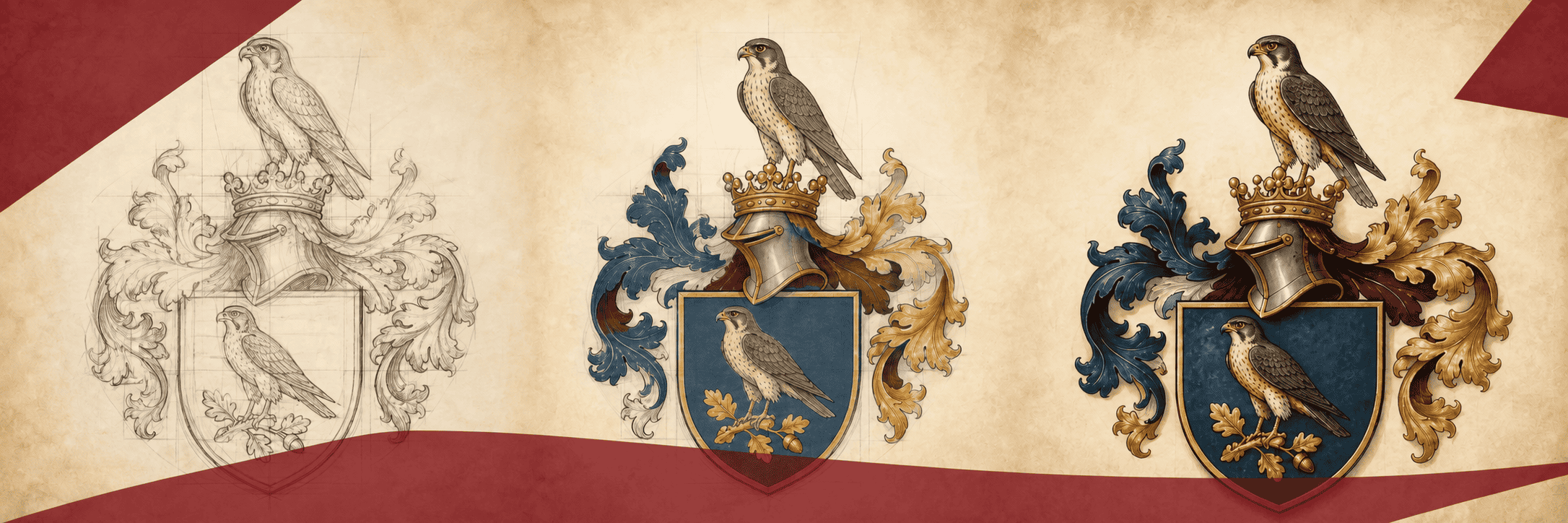
This Coat of arms gave this story a visible sign. It appeared on doors, seals, letterheads, gravestones and church windows. Its colors and figures could recall a place, an ancient tradition or a connection to another house. For families, this was Coat of arms a form of continuity: it remained recognizable, even as ownership, generations and life circumstances changed.
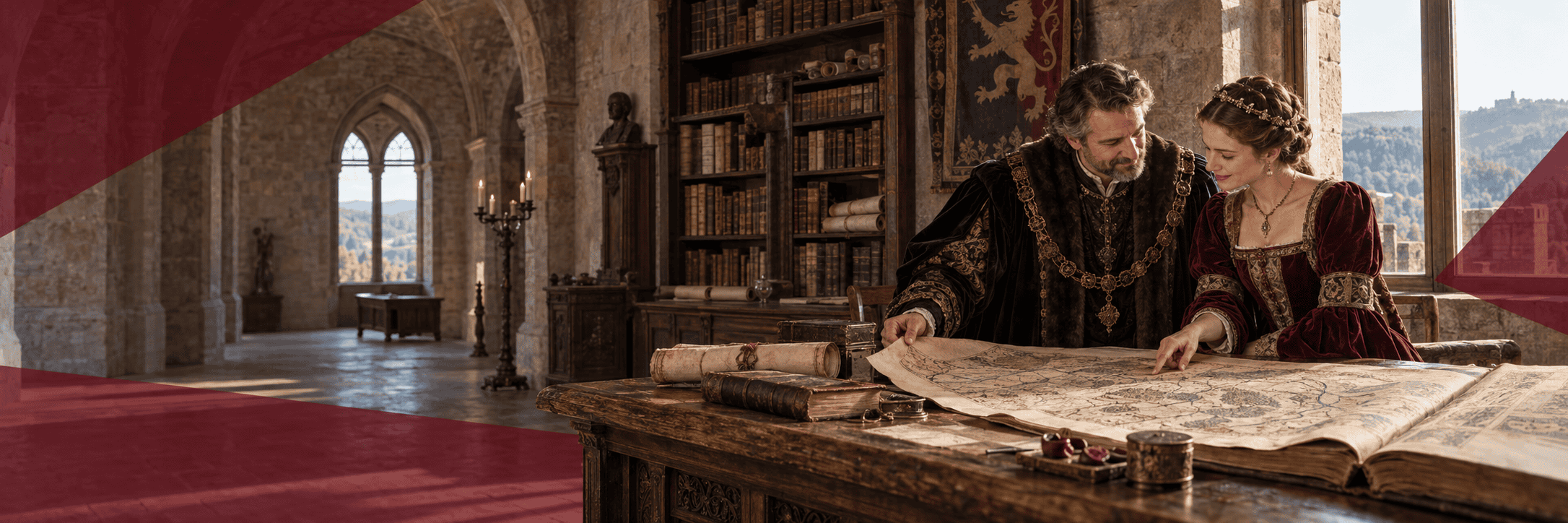
The family archives preserved documents, family trees, maps, and correspondence. They contained purchase contracts for goods, letters from military service, invitations to weddings, and records of foundations. These documents do not present history as a large series of annual dates, but as the lives of individual people with decisions, obligations, and relationships.
It is precisely this closeness that makes the baronial tradition so vivid. It tells of houses that were firmly rooted in their region but remained connected to the wider European world through marriage, education, and service. A baron title therefore often leads to a particularly personal story: to a estate Coat of arms, a family, and the traces it has left in its surroundings.